
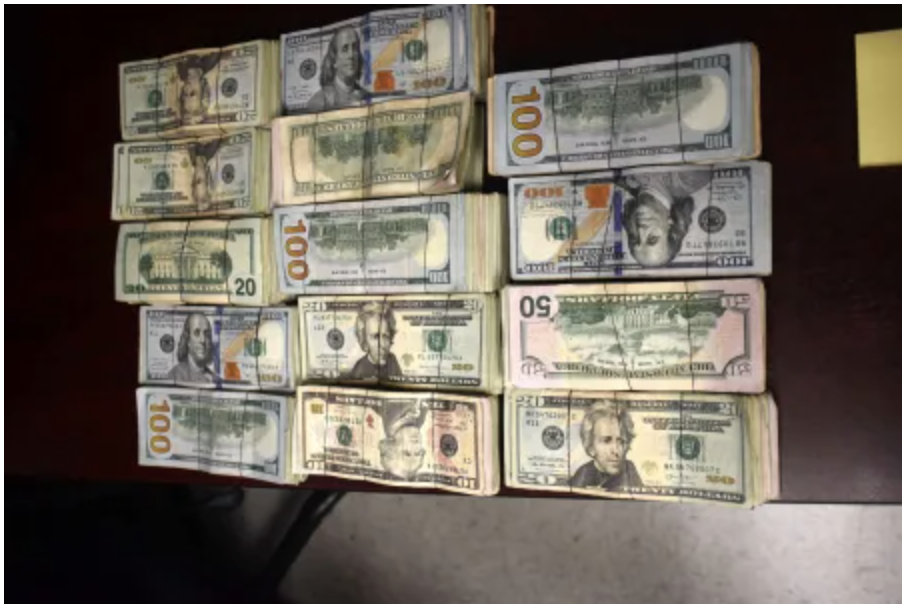
CBP officers at the Brownsville Port of Entry stopped a driver trying to smuggle $70,749 in unreported cash into Mexico on Tuesday, November 18. It was a routine outbound vehicle inspection that turned into another major currency seizure.
This is the pattern at the Texas border: smugglers constantly try to move bulk cash south. And CBP keeps catching them.
What Happened
On November 18, CBP officers working at the Gateway International Bridge selected a southbound vehicle for a routine outbound inspection. The vehicle was referred to secondary inspection. Using a canine unit and nonintrusive inspection technology, officers discovered $70,749 in unreported bulk U.S. currency hidden in the vehicle.
The money was seized. Homeland Security Investigations was notified. An investigation was initiated.
Why This Matters
It’s not a crime to carry more than $10,000 across the border. But it is a federal crime not to declare it. The law is simple: currency or monetary instruments totaling $10,000 or more must be declared to a CBP officer upon entry or exit from the U.S.
When someone doesn’t declare it, CBP seizes it. And when CBP seizes unreported bulk currency, it’s usually because that money is illicit proceeds.
The Pattern at Brownsville
This $70,749 seizure is not unique. In fact, it’s part of an alarming pattern. In recent months alone, Brownsville CBP officers have seized:
- $70,749 (November 18)
- Approximately $71,000 (November 22)
- $107,152 in two separate actions (earlier in the year)
- $184,095 (May 2)
- $78,781 (March 26)
- $78,040 (May 30)
- $74,103 (May 21)
That’s over $650,000 in just a handful of seizures. And these are just the ones that get caught.
What This Cash Represents
Port Director Tater Ortiz said it clearly: “CBP officers’ duties not only involve inspecting inbound traffic but also stopping unreported bulk currency which are often proceeds from illicit activity.”
When someone tries to smuggle $70,000 in unreported cash into Mexico, that money is almost always:
- Drug trafficking proceeds
- Human trafficking profits
- Cartel money
- Money laundering operations
- Corruption payments to Mexican officials
This isn’t legitimate commerce. This is criminal organizations moving money to finance their operations.
The Scale
These seizures at Brownsville are part of a much larger pattern. Across all U.S. ports of entry, CBP intercepts hundreds of millions in unreported currency every year.
But here’s the frustrating reality: CBP only catches the money that gets inspected. Most vehicles don’t get secondary inspections. Most concealed cash gets through.
For every $70,000 seizure at Brownsville, multiple smuggling attempts probably succeed.
Why Criminals Do This
Transporting cash is cheaper than banking it. Banking triggers reporting requirements. Banks have to report deposits over $10,000. Banks share information with law enforcement. Banks can freeze accounts.
But cash? Cash crosses borders invisibly. Cash can’t be traced. Cash funds criminal operations without leaving a paper trail.
That’s why cartels move millions in bulk cash across the Texas border. And that’s why CBP is constantly trying to intercept it.
The Investigation
Homeland Security Investigations special agents will investigate the November 18 seizure. They’ll try to determine:
- Who was the driver?
- Who owns the vehicle?
- Who sent the money?
- Where was it supposed to go in Mexico?
- Is this part of a larger smuggling network?
These investigations can take months. They often lead to arrests. They can dismantle smuggling organizations.
But it all starts with a CBP officer selecting a vehicle for secondary inspection.
The Legal Consequence
When CBP seizes unreported currency, the government can keep it. The owner has to prove the money is legitimate and that they have a legal right to it. That’s incredibly difficult when you’re trying to smuggle it.
Most people who get caught don’t fight it. They lose the money.
The Bottom Line
$70,749 in unreported cash was seized at the Brownsville Port of Entry on November 18. It was hidden in a vehicle heading into Mexico. It represented illicit activity and criminal proceeds.
CBP caught this one. But the smuggling continues. Every day, cartel money moves across the Texas border. Every day, CBP tries to intercept it.
The seizure on November 18 was successful. But it’s one drop in an ocean of criminal cash flowing south.
And as long as there are cartels, there will be money smuggling. And as long as there’s money smuggling, CBP will be catching it—one $70,000 seizure at a time.