

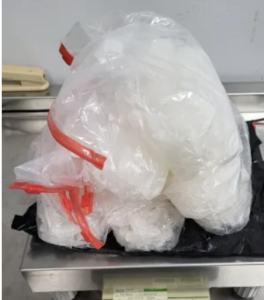
On December 2, CBP officers at an international shipping service facility in Delaware County, Pennsylvania discovered something alarming: nearly 7 pounds of crystal methamphetamine headed to the Netherlands.
An X-ray examination detected an anomaly in a parcel. Officers opened it. Inside were several zip-lock bags filled with a cloudy crystalline substance. Testing confirmed it was methamphetamine hydrochloride. The total weight: 3.05 kilograms (nearly 6 pounds and 12 ounces). Street value in the United States: approximately $240,000. In the Netherlands, where high-quality meth commands premium prices, it could be worth significantly more.
Why This Matters
This seizure reveals something critical: America’s methamphetamine problem isn’t just about domestic supply and demand. It’s about global drug trafficking networks that are exporting American-produced meth to Europe and beyond.
The Larger Pattern Philadelphia Is Seeing
Philadelphia CBP officers have been intercepting an unprecedented number of drug-laden parcels headed internationally. Recent seizures include:
- 170 pounds of marijuana destined for the United Kingdom
- 343 additional pounds of marijuana destined for the UK in just a few days
- Nearly 73 pounds of ketamine shipped from Europe to South Florida (manifested as car parts)
- Nearly 300 pounds of dried opium poppy pods from Spain
- Multiple shipments of methamphetamine and other narcotics
The pattern is clear: international shipping facilities are being used as distribution hubs for illegal drugs going in both directions across the Atlantic.
How It Works
Criminals use express mail services and international shipping facilities to move drugs in small, inconspicuous parcels. They disguise shipments as legitimate goods—air filters, car parts, decorative items. X-ray screening catches some. But how many get through?
CBP Area Port Director Cleatus Hunt noted the unprecedented volume: “Consumers around the world can essentially get whatever they want and from wherever they want at the price that they want to spend, even if the product violates the export or import nation’s laws.”
The Global Drug Economy
This methamphetamine was heading to the Netherlands. Why? Because drug markets operate globally. American meth producers, retailers, and criminal organizations are shipping their product worldwide where it commands higher prices.
The economics are simple: meth worth $240,000 in Philadelphia might be worth $500,000+ in Amsterdam, depending on purity and local market conditions.
The Enforcement Challenge
CBP officers are inspecting parcels. They’re using technology. They’re catching drugs. But the volume is staggering.
Every day, CBP officers seize an average of 2,339 pounds of dangerous drugs at American ports of entry. That’s roughly 850,000 pounds per year across all air, sea, and land borders combined.
And that’s just what gets caught.
What This Means for America
When American methamphetamine is being exported to Europe, it means:
- Domestic supply chains are connected to international criminal networks
- Production is significant enough to export
- Profits are flowing back into criminal enterprises
- The drug crisis isn’t just a border issue—it’s a global trade issue
The Bottom Line
CBP officers in Philadelphia intercepted 7 pounds of methamphetamine destined for the Netherlands on December 2. The street value was $240,000 in the U.S., potentially much more in Europe.
This represents one seizure among thousands happening across American ports every single day. International drug trafficking networks are operating 24/7. And while CBP officers are doing their job, the volume of drugs flowing in and out of America suggests they’re only catching a fraction of what’s actually being moved.
That 7 pounds of meth that made it to the Netherlands? It represents a failure of the system. A drug that should never have left American soil. And a reminder that America’s drug crisis has gone global.