
U.S. Customs and Border Protection said agriculture specialists found the banned stimulant plant hidden in a shipment labeled as spices from Ethiopia
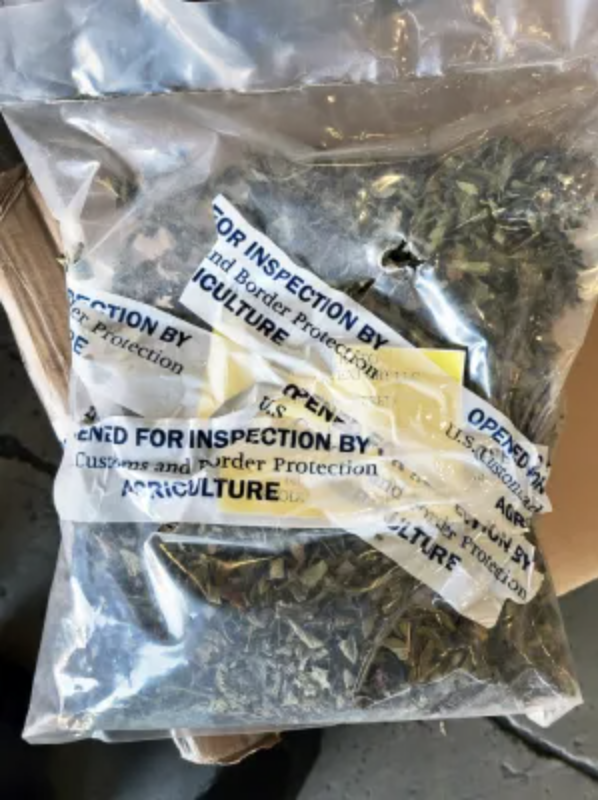
U.S. Customs and Border Protection said its officers at Washington Dulles International Airport seized about 139 pounds of khat, a banned stimulant plant, that was being shipped from Ethiopia to Sacramento, California.
According to CBP, the seizure happened on June 4, when agriculture specialists inspecting a shipment manifested as a variety of spices found leafy plant material inside 10 of the shipment’s 102 boxes. The agency said samples were sent to a U.S. Department of Agriculture botanist, who confirmed the material was khat. CBP said the khat had a street value of about $17,000 and was destroyed.
CBP said khat — also known as Abyssinian tea or African salad — is typically grown in East Africa and the Arabian Peninsula and is chewed for an amphetamine-like effect, or boiled into a stimulant tea. According to the agency, the plant contains two stimulants, cathinone and cathine. CBP said the Drug Enforcement Administration classifies cathinone, the principal active stimulant and structurally similar to d-amphetamine, as a Schedule I drug with no accepted medical use and a high potential for abuse, while cathine is a Schedule IV controlled substance.
The agency said symptoms of khat toxicity can include delusions, loss of appetite, difficulty breathing, and increased blood pressure and heart rate, and that the World Health Organization classified khat as a drug of abuse in 1980.
“The khat plant is prohibited from being imported to the United States because its active chemical ingredients are controlled substances,” said Christine Waugh, CBP’s Area Port Director for the Area Port of Washington, D.C. Waugh said narcotics interdiction remains a priority for the agency and that seizing such substances helps keep communities safe.
CBP said its officers seized about 46,000 pounds of khat in the last fiscal year, which ran from October 2024 through September 2025, and roughly 10,000 pounds during the first seven months of the current fiscal year. The agency said its officers seized an average of about 1,600 pounds of dangerous drugs per day last year at and between the nation’s air, sea, and land ports of entry.