
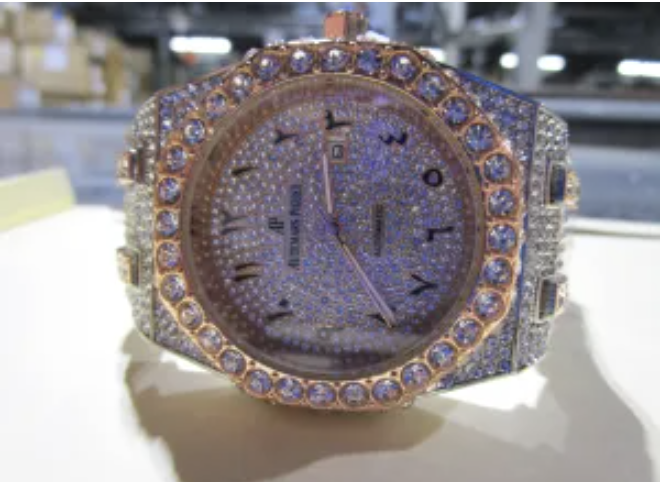
LOUISVILLE, Ky. — U.S. Customs and Border Protection officers at the Port of Louisville seized a shipment containing 375 counterfeit luxury watches that authorities say would have had a combined manufacturer’s suggested retail price of more than $54 million if they had been authentic.
According to U.S. Customs and Border Protection (CBP), officers intercepted the shipment on June 18 after it arrived from Hong Kong and was destined for a residence in New York.
CBP said officers selected the package for inspection and discovered 375 watches bearing the Audemars Piguet trademark. The agency’s Centers of Excellence and Expertise, which specialize in trade enforcement, determined the watches were counterfeit. The shipment was subsequently seized for bearing counterfeit versions of registered trademarks.
“Intellectual property theft threatens America’s economic vitality and funds criminal activities and organized crime,” Louisville Port Director Philip Onken said in a statement. “Our officers protect private industry and consumers by removing these kinds of shipments from our commerce.”
According to CBP, counterfeit goods remain one of the most profitable forms of transnational crime. The agency said counterfeiters often market imitation versions of popular products through online marketplaces, affecting legitimate businesses while exposing consumers to potentially unsafe products.
CBP said counterfeit merchandise can include medications, cosmetics, perfumes, children’s toys, electronics, automotive parts, jewelry, fashion items and other consumer goods. The agency warns that counterfeit products are often manufactured with substandard materials and, in some cases, may pose health or safety risks.
What This Means for Consumers
Although this seizure occurred in Kentucky, it highlights a growing issue affecting shoppers across the country, including Texas.
Counterfeit luxury goods are increasingly sold through online marketplaces, social media advertisements, and third-party sellers. While many buyers intentionally purchase imitation products, others may unknowingly pay for items advertised as authentic.
CBP recommends consumers purchase products from reputable retailers and authorized dealers, particularly when buying high-end brands at unusually low prices.
The agency also noted that the growth of e-commerce has contributed to a significant increase in small international shipments entering the United States. According to CBP, more than 90% of counterfeit seizures occur in international mail and express shipping environments, where individual online purchases are commonly delivered.
Ongoing Efforts to Combat Counterfeit Goods
CBP said protecting intellectual property rights is a key part of its trade enforcement mission. The agency works to prevent counterfeit goods from entering U.S. commerce and investigates suspected trademark violations through its Intellectual Property Rights enforcement program.
Consumers and businesses can report suspected intellectual property violations through CBP’s Trade Violations Reporting system.
To report suspected intellectual property rights violations, contact the National Intellectual Property Rights Coordination Center at 1-866-IPR-2060.