
From a prairie hunter missing since 1963 to a cactus you might spot on a hike, the state’s wildlife needs more eyes, more habitat, and more neighbors who care.
Texas Parks and Wildlife Department, statewide
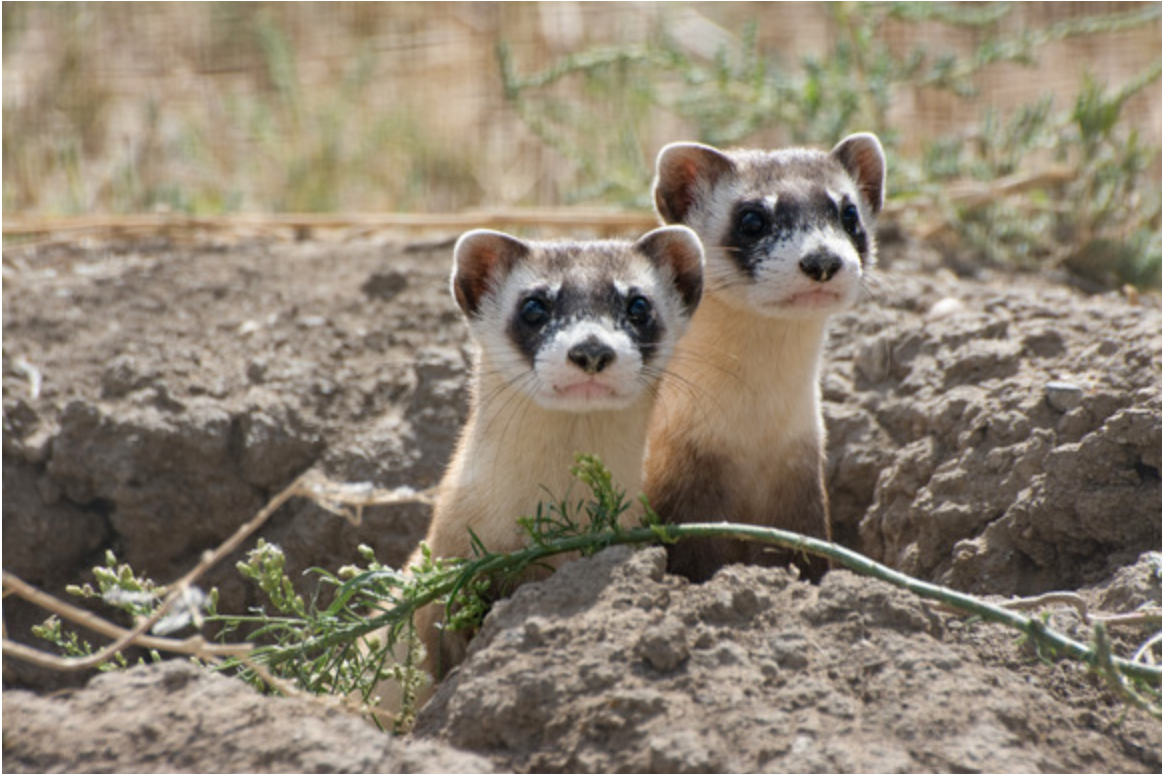
Somewhere on the High Plains, a prairie dog pops up from its burrow and looks around. Its old enemy never shows. The black-footed ferret, a masked, black-footed hunter that lived on those prairie dogs, hasn’t been confirmed in Texas since 1963, according to Texas Parks and Wildlife. It’s one of the state’s most famous missing neighbors, and it’s a good reason to meet the plants and animals that need us most.
Meet the Species of Greatest Conservation Need
Texas Parks and Wildlife keeps a list of plants and animals called Species of Greatest Conservation Need. These are species that are rare, declining, or in need of attention before they slip into the endangered category. Today the list holds 1,124 species, from birds, mammals, and reptiles to fish, insects, and wildflowers. Some already carry state or federal protection. Others, like the southern crawfish frog and the Mexican burrowing toad, aren’t listed but still need help.
Names on the list read like a roll call of Texas. The whooping crane and Kemp’s ridley sea turtle are there. So are the Houston toad, the Texas horned lizard, and the Texas tortoise. Look closer and you’ll find Texas wild rice, Texas trailing phlox, and star cactus. Yellow bumble bees and southern plains bumble bees are on the list too.
Why the ferret still matters
The ferret’s story starts with prairie dogs. According to TPWD, the animals relied on prairie dog towns across the High Plains, Rolling Plains, and Trans-Pecos. As prairie dog towns shrank, the ferrets lost their food and homes. TPWD points to rangeland turned into cropland, towns wiped out, development, and sylvatic plague. Black-tailed prairie dogs once lived across 78 Texas counties, and the biggest colonies today sit mostly in the Panhandle.
Prairie dog towns also shelter burrowing owls and mountain plovers, so saving them helps a crowd of wildlife. Texas biologists studied bringing ferrets back and held a public meeting in Dalhart in 2013, but drought and plague stalled a planned 2014 release. TPWD has said a breeding population of 40 to 60 adults needs about 6,000 acres of prairie dog towns, so it takes a lot of land and a lot of cooperation.
What Texas is doing
TPWD launched what it calls the nation’s first all-digital State Wildlife Action Plan in spring 2026. The online plan shows what species need and what actions can help, and it lets people send in information year-round. TPWD’s land and water plan also calls for rechecking the status of 25 of these species every year and restoring the range of five by 2028.
What you can do
You don’t need a lab coat to help. Texas Nature Trackers, a TPWD program, invites everyday Texans to record sightings with the free iNaturalist app. The projects focus on species such as horned lizards, whooping cranes, monarchs and milkweed, and freshwater mussels. TPWD publishes a list of target species it most wants to find, so check it before your next hike or backyard stroll.
Want to go deeper? If a high-priority species lives near you, you can commit to monitor its population. That requires a TPWD advisor and at least two years.
Every photo gives biologists data to decide where to put their time and money. Find the species list, the digital plan, and the Nature Trackers projects at tpwd.texas.gov. You can reach the Texas Nature Trackers team at [email protected], and TPWD is at 4200 Smith School Road in Austin.
Want the full story? Texas Parks & Wildlife magazine tells it in “The Species That Need Us the Most,” part of its Jan/Feb “Wildlife” issue. A subscription costs just $2 a month, and subscribing or gifting one by Dec. 1 gets you that issue. Sign up at tpwmagazine.com, email [email protected], or follow the magazine on Facebook, X, and Instagram at tpwmagazine.
Next time you spot a horned lizard or a strange wildflower, snap a picture. It might be the clue that helps a species that needs us most.