
On December 16, 2025, Peter Karasev, a 39-year-old engineer from San Jose, was sentenced to 120 months—10 years—in federal prison for bombing electrical transformers.
On December 8, 2022, and January 5, 2023, Karasev detonated homemade explosives at PG&E electrical infrastructure. The attacks caused over $200,000 in damages, knocked out power to more than 1,500 households, and disrupted critical power to 15 families who depend on electricity for life-sustaining medical equipment.
This is what a critical infrastructure attack looks like. And it’s being treated as a serious national security crime.
What Karasev Actually Did
Karasev is an engineer with specialized knowledge of explosives. He researched bombmaking extensively. He built homemade explosive devices. Then he used them.
December 8, 2022: He bombed a PG&E electrical transformer, causing widespread power outages across San Jose.
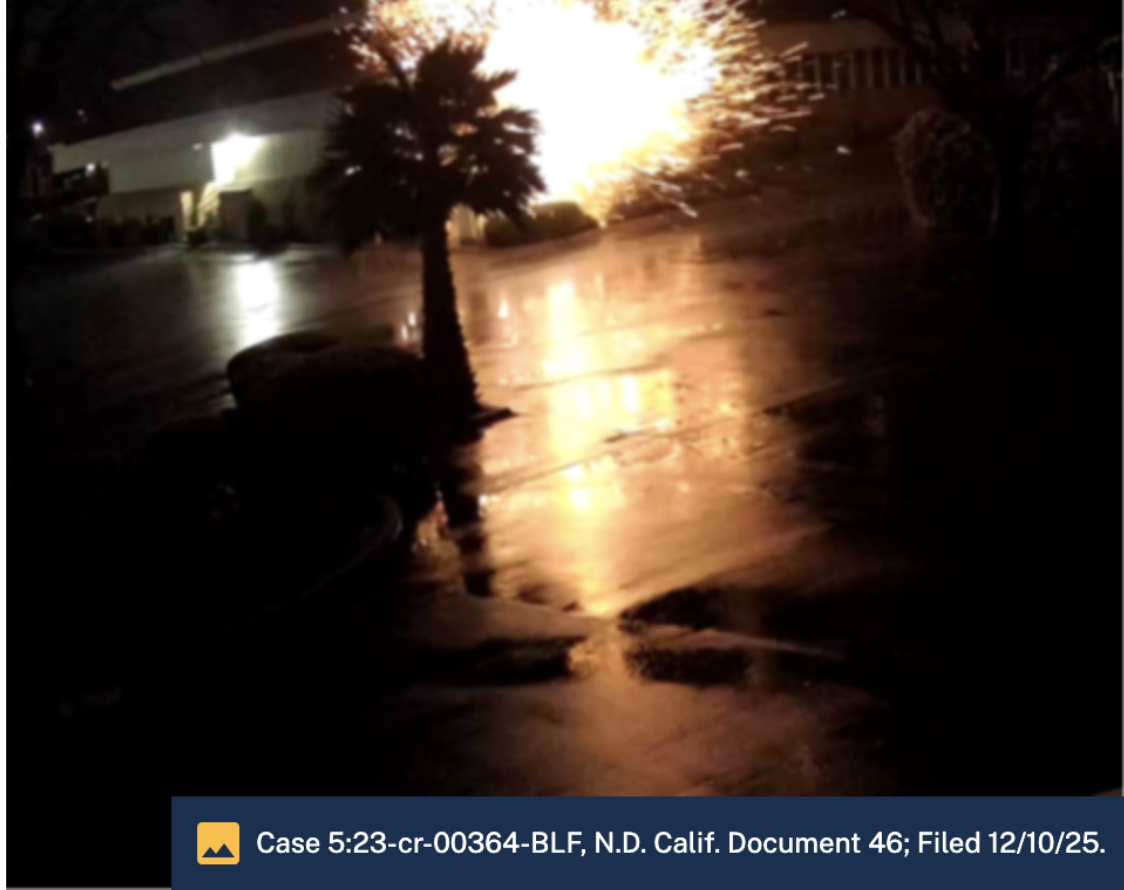
January 5, 2023: He bombed another transformer near the Plaza Del Ray shopping center on Snell Avenue. This attack was captured on surveillance footage.
Both attacks were deliberate. Both were premeditated. Both caused significant damage and disruption.
The Damage
The two bombings caused:
Over $200,000 in property damage to local businesses.
Power outages to 1,500+ households in the San Jose area.
Life-threatening disruption to 15 families enrolled in PG&E’s Medical Baseline Program—people whose medical equipment requires continuous electricity to function. If power goes out, people with ventilators, dialysis machines, or other life-sustaining devices are at immediate risk of death.
That’s not theoretical harm. That’s actual danger to people’s lives.
Why This Is National Security
Attacking critical infrastructure—power plants, electrical grids, water systems, communications networks—is treated as a federal crime and a national security threat.
Here’s why: modern society depends on continuous electrical power. Hospitals need it. Water treatment plants need it. Communications systems need it. Emergency services need it.
When someone attacks electrical infrastructure, they’re not just causing property damage. They’re potentially threatening lives.
“Karasev’s specialized knowledge in explosives, the vast quantity of bombmaking materials discovered in his home, and his readiness to deploy both against our Nation’s energy infrastructure made him a very dangerous individual who posed a significant risk to public safety,” said Assistant Attorney General John A. Eisenberg for National Security.
The Investigation
The FBI and San Jose Police Department investigated. They found:
- Extensive internet searches by Karasev regarding explosive materials
- Research into infrastructure attacks
- Research into geopolitical conflicts
- A vast quantity of bombmaking materials in his home
- Homemade explosive devices he constructed
- Surveillance footage of at least one explosion
This wasn’t a spontaneous act. This was planned, researched, and executed with deliberation.
The Guilty Plea
Karasev pleaded guilty on April 29, 2025, to two counts of willful destruction of an energy facility. He admitted everything:
- The December 8, 2022, bombing
- The January 5, 2023, bombing
- That both were premeditated and deliberate
- That he had conducted extensive research on explosives and infrastructure attacks
There was no trial. No dispute about facts. He admitted guilt.
The Sentence
U.S. District Judge Beth Labson Freeman sentenced him to:
- 120 months (10 years) in federal prison
- 3 years of supervised release after prison
- $214,880.67 in restitution to cover damages
- $200 special assessment
- Immediate remand to custody to begin serving the sentence
This is a serious sentence for a serious crime. Ten years in federal prison is substantial.
Why This Matters Beyond San Jose
Critical infrastructure attacks are a growing national security concern. Electrical grids, water systems, communications networks, and transportation infrastructure all face potential threats.
This case demonstrates that:
- People attack infrastructure. It’s not just theoretical. Karasev actually did it.
- The consequences are severe. Over $200,000 in damages. 1,500+ households without power. Medical patients at risk.
- Federal law enforcement takes it seriously. The FBI, the Justice Department’s National Security Division, and U.S. Attorneys prosecute aggressively.
- Sentences are substantial. Ten years in federal prison is a major consequence.
That message matters for anyone considering similar attacks.
The Texas Connection
Texas has significant electrical infrastructure—power grids, transformers, substations across the state. Texas also has critical water infrastructure, petrochemical facilities, and other vital systems.
The Karasev case shows that attacks on critical infrastructure are prosecuted as federal crimes with serious consequences. Anyone considering such attacks in Texas or anywhere else should understand: federal agents will investigate, prosecutors will pursue maximum penalties, and prison time will be substantial.
The Motivation Question
The document mentions Karasev conducted research on geopolitical conflicts. But it doesn’t explicitly state his motivation for the attacks.
Was he motivated by:
- Anti-government ideology?
- Environmental activism?
- Protest against PG&E?
- Extremist beliefs?
- Personal grievance?
The sentencing documents don’t clearly specify. But whatever his motivation, it’s not a legal justification for bombing critical infrastructure.
The Life-Sustaining Power Angle
What’s particularly troubling: 15 families depend on continuous electricity for medical devices. When Karasev bombed transformers, he directly endangered people whose lives depend on that power.
If someone on a ventilator lost power during those outages, that could have been fatal. Karasev’s actions put lives at direct risk—beyond just property damage or inconvenience.
The Broader Message
This case is a federal prosecution message to anyone considering attacks on critical infrastructure:
- Attacks are investigated federally
- Evidence is comprehensive (internet searches, materials, surveillance)
- Prosecution is vigorous
- Sentences are severe (10 years)
- Restitution is ordered
That’s the consequence of attacking critical infrastructure in America.
What Happens to Karasev
He’s now in federal prison serving a 10-year sentence. After release, he faces 3 years of supervised release. He owes $214,880.67 in restitution.
His specialized engineering knowledge and explosives expertise won’t be used against infrastructure again—at least not for a decade.
The Bottom Line
Peter Karasev, an engineer with expertise in explosives, built homemade bombs and detonated them at electrical transformers in San Jose on two separate occasions. The attacks caused over $200,000 in damages, knocked out power to 1,500+ households, and endangered 15 families dependent on continuous electricity for life-sustaining medical equipment.
He pleaded guilty and was sentenced to 10 years in federal prison plus restitution.
This is what happens when someone attacks critical infrastructure in America: federal investigation, federal prosecution, federal prison, and substantial consequences.
The message for anyone considering similar attacks anywhere in the country, including Texas: it won’t work. Federal law enforcement will catch you. Federal prosecutors will convict you. Federal judges will sentence you to significant prison time.
Critical infrastructure is protected. Attacks on it are serious federal crimes. The consequences are severe.