


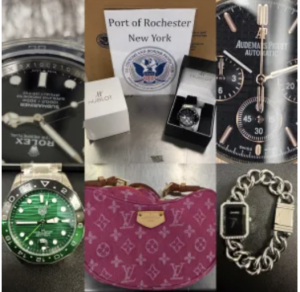
On December 5, CBP officers at the Rochester port of entry intercepted a shipment that looked like a treasure trove of designer deals. Counterfeit Rolex watches. Fake Gucci handbags. Knockoff designer shoes and jewelry—all bearing fake trademarks.
If these items had been genuine, they would’ve cost shoppers $425,125. But they weren’t real. Every single one was seized.
This is just one shipment. But it’s part of a bigger problem that explodes every holiday season.
The Holiday Counterfeiting Surge
Right now, as you’re hunting for deals on designer brands, criminals are flooding the market with fakes. CBP sees it happening constantly during the holidays. People want deals on luxury items. Smugglers know this. So they send wave after wave of counterfeit products across the border hoping some slip through.
The demand is there. The profit margins are huge. And the risk? Most counterfeiters figure it’s worth it.
Why Fake Isn’t Just a Bad Deal—It’s Dangerous
When you buy counterfeit goods, you think you’re getting a bargain. What you’re actually getting is a product that skipped quality testing. That fake designer watch might overheat or fail. Counterfeit cosmetics could contain harmful chemicals. Knockoff electronics can catch fire.
These items aren’t made to safe standards. They’re made to look real enough to fool you.
Plus, your money goes to criminal networks running these operations—not to the American designers and companies creating jobs here.
How to Spot a Fake Before You Buy
Before you click “buy” on that suspiciously cheap designer item, stop. Ask yourself three questions:
Is this from an official retailer? Real designer brands don’t randomly drop 80% off on their websites. If the deal seems too good to be true, it probably is.
Does the packaging look cheap? Spelling mistakes on the label? Poor stitching? Sloppy branding? Those are dead giveaways.
Are you buying from a place you trust? Stick to official brand websites and major retailers like Nordstrom or Saks Fifth Avenue. Yes, you’ll pay more. But you’re actually getting what you paid for.
What Happens to These Fakes
Every counterfeit watch and fake purse that CBP seizes gets destroyed. Gone. Out of circulation. It’s one way the government keeps knockoffs out of your hands and protects both consumers and the companies losing millions to counterfeiting every year.
That seizure at Rochester? It prevented $425,000 worth of fake goods from reaching store shelves and online marketplaces where unsuspecting shoppers would’ve bought them.
The Real Impact
Counterfeiting isn’t a victimless crime. It funds organized crime. It puts unsafe products in your home. It costs legitimate businesses billions every year. And it funds criminal networks that do much worse than sell fake watches.
This holiday season, do yourself a favor: buy from places you trust. Your wallet will thank you. Your safety will thank you. And you’ll actually get what you paid for.
Report Counterfeits: If you spot fake goods being sold, report it anonymously to CBP at 1-800-BE-ALERT or through their E-Allegations website. You can also call the National Intellectual Property Rights Coordination Center at 1-866-IPR-2060.