


On December 5 and 8, CBP officers at Louisville made three seizures that should make anyone shopping for designer goods this holiday season pause and think twice.
Fake Cartier watches. Counterfeit Rolex timepieces. Phony Moncler and Chrome Hearts hats. All bearing luxury brand names. All completely fake. All headed straight for American addresses—including two shipments destined for Texas.
If these items had been real, they would’ve cost shoppers $18.6 million. Instead, they’re destroyed.
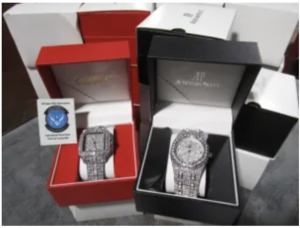
What Got Intercepted
On December 5, officers opened two shipments from Hong Kong. The first parcel heading to Staten Island contained 400 fake Cartier watches, 26 counterfeit Moncler hats, and 30 fake Chrome Hearts hats. The second shipment heading to Irving, Texas held eight more fake Cartier watches and 13 phony Audemars Piguet timepieces.
Three days later on December 8, another parcel arrived from Taiwan headed to Houston. Inside: 160 counterfeit Rolex watches—80 Cosmograph models and 80 Day Date models.
Every single item was examined by CBP’s trade experts. Every single item was deemed fake. Every single item was seized.
The Pattern Is Clear
This isn’t random. These aren’t one-off shipments. During the holiday season, the volume of counterfeits flooding into America spikes dramatically. Criminals know shoppers are hunting for deals on luxury brands. So they send waves of fakes through the mail system hoping enough slip through to make the operation profitable.
Louisville caught three major shipments in four days. That’s just what made it to inspection. How many packages are getting through unseen?
Why Fake Designer Goods Are Dangerous
You think you’re getting a bargain. What you’re actually getting is a product made in an unregulated facility with zero quality standards.
Counterfeit watches might use materials that corrode on your skin. Fake luxury items can contain lead or other toxic substances. Knockoff consumer electronics can overheat or catch fire. These products skip every safety test that real merchandise goes through.
Plus, when you buy counterfeits, your money goes directly to criminal networks—not to the American designers and companies who created the brands.
How to Actually Spot a Fake
Before you buy that “designer” watch for half the normal price, stop. Ask yourself these three questions:
Is this from an official retailer? Real luxury brands don’t randomly discount 50-80% off on their websites or through random online sellers. That’s not how retail works.
Does something feel off about the packaging or the product? Cheap materials? Poor stitching? Spelling mistakes? Sloppy branding? Those are dead giveaways you’re holding a fake.
Am I buying from someone I trust? Stick to official brand websites, authorized retailers, and major department stores like Nordstrom or Saks Fifth Avenue. Yes, you’ll pay full price. But you’re getting what you actually paid for.
The Numbers Don’t Lie
In fiscal year 2025, CBP seized nearly 79 million counterfeit items. That’s 79 million fakes that didn’t reach store shelves. That’s 79 million opportunities for criminals to profit off your wallet.
The combined value of those seized items? Over $7.3 billion if they’d been real. That’s real money flowing to real crime networks.
And Louisville just grabbed a fraction of that in four days. Imagine what’s getting through.
The Real Impact
Every counterfeit watch that gets destroyed is a watch that won’t end up on someone’s wrist. Every phony luxury handbag seized is one that won’t end up in someone’s closet. Every fake item intercepted is money that didn’t go to organized crime.
But CBP can’t catch everything. They can’t inspect every package. And the cartels know it. So they keep sending shipments, knowing that even a 5-10% success rate makes the operation wildly profitable.
This Holiday Season, Make a Choice
You’ve got options. You can hunt for deals on counterfeits and risk buying fake goods that could harm you, your family, or your wallet. Or you can buy from places you trust and actually get what you paid for.
The choice affects more than just you. When you buy real, you support real companies. You support real jobs. You keep your money out of criminal networks.
When you buy fake, you’re betting that this time the counterfeit is good quality. That this time there are no toxic materials. That this time you’re not getting scammed.
Three shipments from Asia just proved those aren’t good bets.
Report Counterfeits: If you spot fake designer goods being sold online or in stores, report it to CBP at 1-800-BE-ALERT or through their online reporting system. You can also call the National Intellectual Property Rights Coordination Center at 1-866-IPR-2060.
Timeline: Dec. 5 – Two shipments from Hong Kong seized | Dec. 8 – Shipment from Taiwan seized | All items destroyed