

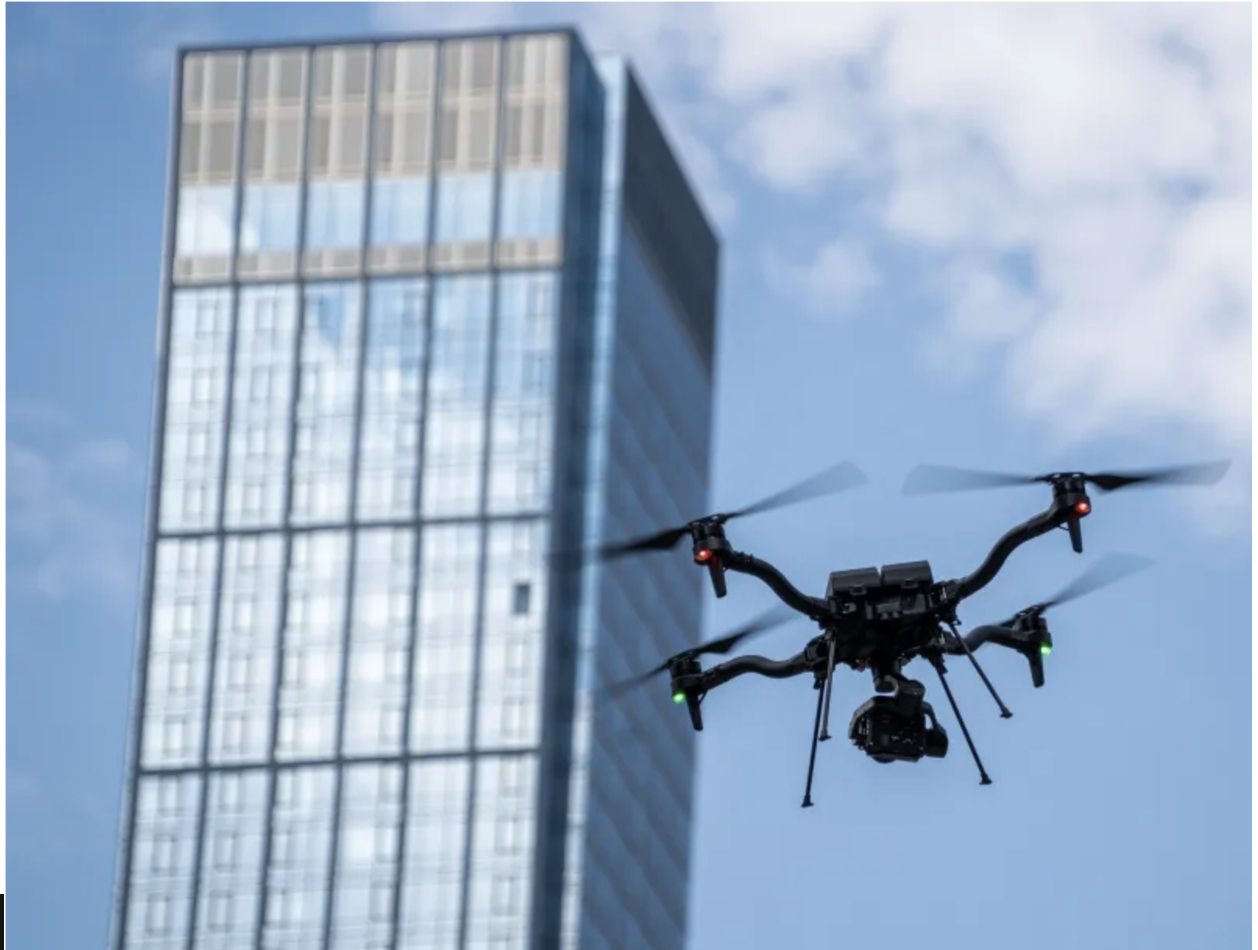
Ever wonder what happens when your neighborhood police or fire department needs eyes in the sky during an emergency? The breakthrough testing that could revolutionize emergency response across America actually started right here in Texas. Last year, federal experts put cutting-edge drones through their paces in the sweltering heat of College Station, and now those same tests have expanded to Manhattan – proving these technologies work everywhere from Texas plains to concrete canyons.
Why This Started in Texas and Matters to You
When emergency crews rush to help during a crisis, every second counts. These aren’t your weekend hobby drones – we’re talking about military-grade technology that helps firefighters see through smoke, lets police assess dangerous situations before putting officers at risk, and speeds up search and rescue operations that could save someone’s life.
In June 2024, the Department of Homeland Security’s National Urban Security Technology Laboratory (NUSTL) chose Texas A&M University’s Engineering Extension Service (TEEX) campus in College Station as the very first location to test these revolutionary drones. Why Texas? Because our state’s vast rural landscapes, extreme heat, and diverse terrain represent the kind of challenging conditions where first responders need reliable technology most.
Texas first responders from across the state joined federal experts for a week of intensive testing in conditions that would make lesser equipment fail. The collaboration brought together Mississippi State University’s specialized drone testing program, Texas A&M University, and others to determine if Department of Defense-vetted drone systems could meet the growing needs of our nation’s responders.
The catch? Many of the drones our first responders rely on come from countries we can’t fully trust with our security. The Texas tests launched a nationwide program to find American-made alternatives that work just as well – or better.
From Texas Heat to Manhattan Canyons
The testing program that started in College Station’s summer heat has now proven these drones work in three completely different environments. After the successful Texas evaluation, the program moved to tropical Miami, then tackled the ultimate challenge: New York City’s concrete canyons.
New York City throws everything at these flying helpers that could possibly go wrong. Imagine trying to fly a drone between towering skyscrapers where GPS signals bounce around like ping-pong balls, radio waves clash with every WiFi network and cell tower, and millions of people create electronic noise that can scramble communications.
“New York City has unique complexities that challenge the capabilities of drones,” explains Project Lead Kris Dooley. “The urban canyon effect between skyscrapers, underground and elevated public transportation, dense populations, limited line of sight and radio frequency noise are all factors that can interfere with drone use during response operations.”
But here’s the thing: if a drone can handle Texas heat AND work reliably in Manhattan, it can work anywhere your local first responders might need it.
Real Heroes, Real Tests
The evaluation wasn’t just tech experts playing with gadgets. Real firefighters, police officers, and emergency responders from New York, Connecticut, Texas, and Florida put these five drone models through realistic scenarios. They launched them from tight spaces between buildings, tested how quickly they could get crucial video feeds to command centers, and pushed every feature that matters when lives hang in the balance.
The drones tested included:
- Freefly Astro
- Skydio X10D
- Teal 2
- Ascent AeroSystems Spirit
- Parrot ANAFI USA GOV
Each one had to prove it could handle the basics that make or break emergency response: crystal-clear cameras, long flight times, reliable connections, lightning-fast deployment, and controls so intuitive that a stressed-out first responder could operate them effectively.
What Makes These Drones Special
These aren’t just any flying cameras. Every drone tested sits on something called the “Blue List” – meaning they’ve passed strict cybersecurity checks and comply with laws designed to keep foreign adversaries from potentially accessing sensitive information about our emergency response capabilities.
But being secure doesn’t automatically mean they’re practical for the split-second decisions that define emergency response. That’s exactly what this real-world testing aimed to discover.
Your Safety, Their Mission
Alice Hong, who directs the National Urban Security Technology Laboratory, puts it perfectly: “Amid increasing restrictions on purchasing and operating drones from covered nations, the demand for reliable alternatives manufactured in the United States or by allied nations has never been more urgent. The stakes are especially high in public safety, where first responders rely on these technologies to perform critical operations.”
When your local fire department gets an alert about a possible person trapped on a roof, or police need to assess whether a suspicious package poses a real threat, these drones become the difference between sending heroes into unknown danger versus giving them the intelligence they need to respond safely and effectively.
Texas Leading Innovation Again
This isn’t just another federal program – it’s Texas leading the way on technology that protects Americans nationwide. The same spirit of innovation that made Texas a leader in energy and aerospace is now making our state the testing ground for the future of emergency response.
Texas Department of Public Safety recently hosted their 2024 Public Safety Drone Expo at the DPS Tactical Training Center in Florence, bringing together over 101 law enforcement and first responder professionals from local, state, federal, and even international agencies. They’re sharing best practices developed right here in Texas with the rest of the world.
And it’s not just about testing – Texas communities are already deploying next-generation drone technology. Bee Cave Police Department, just west of Austin, is rolling out autonomous drones that can respond to 911 calls faster than patrol cars, flying up to 67 mph and providing real-time intelligence to officers before they arrive on scene.
Texas Innovation, National Impact
The complete test results from Texas, Miami, and New York will be published later this year, giving emergency departments across the country – including right here in Texas – the data they need to make smart purchasing decisions. Even better, manufacturers will use this feedback to improve their products specifically for the unique demands of emergency response.
A comparative report analyzing all three test environments arrives in early 2026, but Texas emergency responders don’t have to wait. The groundbreaking work that started at Texas A&M is already informing technology decisions across our state.
The Bottom Line for Texas
This isn’t about cool technology for its own sake. It’s about making sure that when you call 911 anywhere in Texas – whether you’re in downtown Houston, rural East Texas, or the Hill Country – the people racing to help you have every possible advantage.
Texas started this national program, and now Texans will benefit from technology that’s been tested in our heat, proven in Miami’s humidity, and validated in Manhattan’s complexity. The next time you see a drone hovering over an emergency scene in your Texas community, you might just be looking at technology that was born and proven right here in the Lone Star State.