
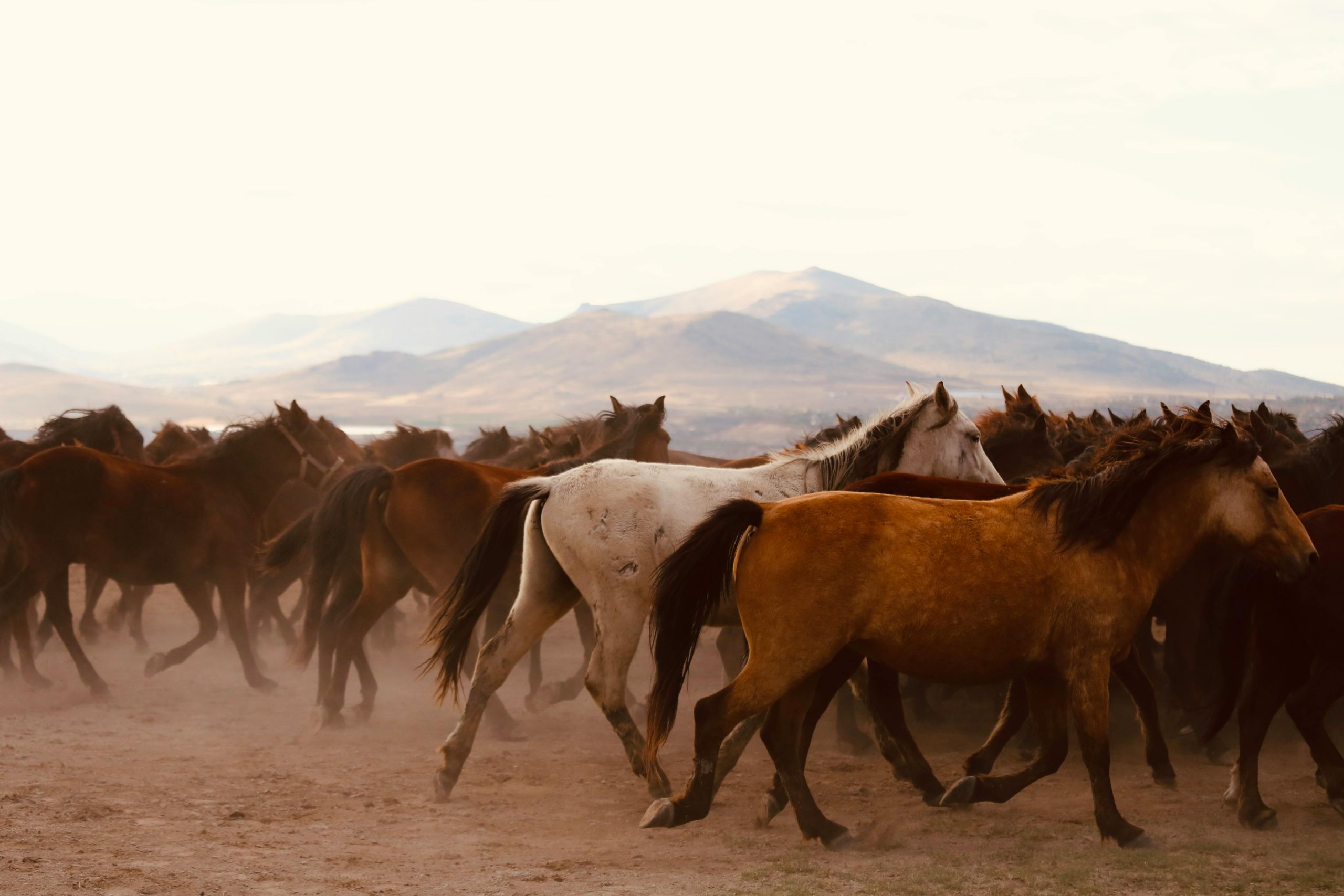
This Saturday, December 13, is National Horse Day. Congress designated this day back in 2004 to honor one of America’s most iconic animals—horses. But there’s something deeply Texan about this day that most of us have forgotten.
Once upon a time, Texas was horse country. Not in the romanticized cowboy-movie way. In the absolutely wild, completely untamed way. In the 19th century, a vast swath of South Texas was known as the Wild Horse Desert, an unforgiving landscape of chaparral and scrub patrolled by herds of mustangs. These bucking broncos and faithful mares became a central part of Texan folklore.
Then they disappeared. Almost all of them. And it’s a story you need to know.
When Texas Had a Million Wild Horses
By the late 1800s, there were over a million wild mustangs roaming Texas. A million. Early maps of the region labeled the plains with just two words: “Wild Horses.” Not “settlement.” Not “ranch land.” Just “Wild Horses.”
The first record of Spanish-imported mustangs in Texas dates to 1542. They likely got their name from the Spanish word mesteño, or “belonging to the stockmen.”
These weren’t just any horses. The Spanish mustang spread rapidly throughout the continent, and its agility, toughness, and endurance made it the favored horse of the ranch hand and frontiersman.
The Spanish mustang stands from thirteen to fifteen hands tall and weighs 750 to 1,000 pounds. They weren’t huge. But they were perfect—tough enough to survive Texas heat, smart enough to find water, and fast enough to escape predators.
They Built Our Cowboy Culture
Here’s what Hollywood gets wrong: Cowboys didn’t invent cowboy culture. Mustangs did. And not just mustangs—the Vaqueros (Mexican cowboys) who rode them shaped everything we think of as “Texas cowboy culture.”
Cowboys, while distinct in style and culture, inherited many skills and traditions from the Mexican Vaqueros. Generations of knowledge passed down preserved these practices, blending them into what became a uniquely Texan way of life.
The Vaqueros used mustangs to:
- Round up cattle across impossible terrain
- Herd livestock across vast distances
- Survive on minimal food and water
- Outrun threats and predators
According to western lore, the cowboy loves his horse even more than his sweetheart as his sturdy mustang pony helps keep him alive along the long, dusty trail.
That wasn’t just poetry. That was survival.
What Actually Happened to Them
So where did they all go? Though there aren’t any truly wild mustangs left in Texas, a small number continue to roam public lands in Western states. And since they gave rise to many modern breeds, like quarter horses, their lineage remains in other horses today: a symbol of a vanished, fondly remembered frontier.
Here’s the hard truth: Ranchers systematically removed them. In the 1900s, ranchers began turning domesticated horses loose onto public lands, where they bred with Colonial Spanish mustangs. This led to the wild blend of American mustangs living on Bureau of Land Management land nationwide today. As a result, purebred Colonial Spanish mustangs are extremely rare.
By the late 1800s, wild herds were disappearing from many areas, including Mustang Island. The once-abundant Texas mustangs gradually faded from the landscape, marking the end of an era.
The mustangs weren’t just disappeared. They were replaced. Bred out. Diluted. Modern horses—bigger, more “manageable,” less wild—took their place.
The Wild Horse Desert Today
Purebred Colonial Spanish mustangs are extremely rare. Concerted Spanish mustang breeding efforts began in the 1950s, as enthusiasts worked to preserve the breed using careful lineage registries. With around 65 horses, the 150-acre Karma Farms in Marshall is one of the largest breeders of Colonial Spanish horses in the state.
That’s it. Sixty-five horses representing thousands of years of Texas history and survival. Sixty-five horses from a landscape that once had over a million.
Why This Matters
Horses contribute billions to the U.S. economy. Whether they’re helping plow fields, move food and supplies into rural areas, move livestock on ranches, or provide therapeutic benefits, horses have woven themselves into the fabric of life in America.
But that’s just the modern story. The historical story is about identity. Culture. Heritage. The Wild Horse Desert wasn’t just a place. It was who we were.
The Western frontier painter Frederic Remington said in an 1888 Century Magazine interview: “Of all the monuments which the Spaniard has left to glorify his reign in America, there will be none more worthy than his horse.”
He was right. The mustang was our monument. And we let it disappear.
How to Celebrate National Horse Day This Saturday
Whether you’re a seasoned rider or have never been on a horse in your life, there are ways you can recognize the day.
Go horseback riding. Watch a classic horse movie like “Seabiscuit” or “Black Beauty.” Donate to horse rescue organizations. Learn about Colonial Spanish mustangs and where they’re being preserved.
Most importantly, remember what we lost. Remember that Texas was once covered in wild horses. Remember that mustangs didn’t just carry us—they shaped who we became.
The Legacy Lives On
Though there aren’t any truly wild mustangs left in Texas, their lineage remains in quarter horses and other modern breeds—a symbol of a vanished, fondly remembered frontier.
Every time you see a horse, you’re looking at a descendant of those wild mustangs that once made Texas legendary. Every time you think of a cowboy on a bucking bronco, you’re thinking about the partnership between man and mustang that built the American West.
This Saturday, December 13, when you celebrate National Horse Day, take a moment to think about what we had. And maybe, just maybe, think about what we could preserve for the future.
Because some monuments are worth saving.