

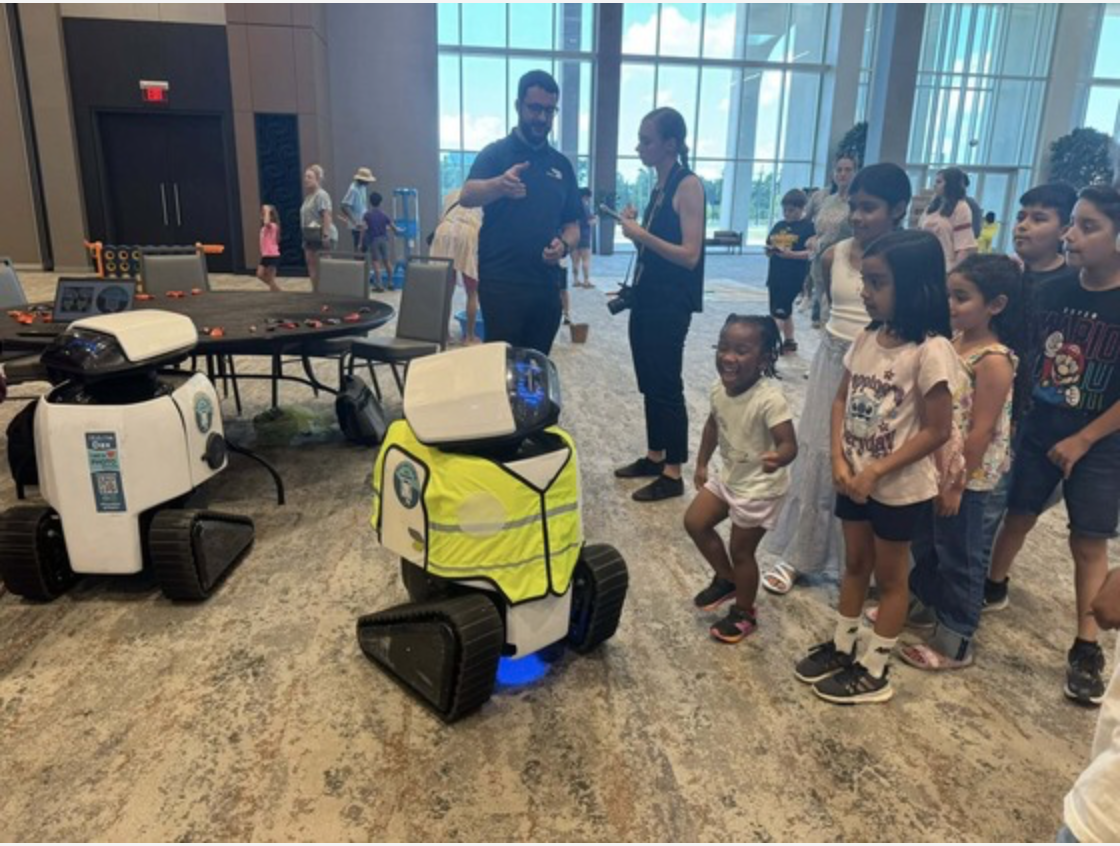
Starting June 10, a small fleet of friendly robots will roll through Tyler mapping sidewalks, curb ramps, and crosswalks to help the City plan for better accessibility — making Tyler the first city in East Texas to bring the technology home
If you spot a small robot trundling down a Tyler sidewalk this summer, do not be alarmed. It is on the job — and it would love a selfie.
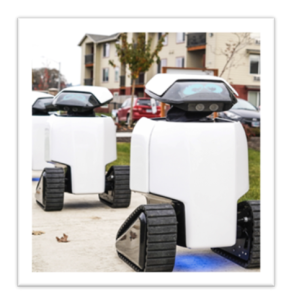
Beginning June 10, the City of Tyler is rolling out a new kind of summer project, one sidewalk at a time. A company called Daxbot is teaming up with engineering firm Kimley-Horn to send a fleet of robots out across town to gather information about how accessible Tyler’s sidewalks, trails, and crossings really are. The work feeds into the City’s ADA Self-Evaluation and Transition Plan — basically, a big-picture look at where the pedestrian network works well and where it needs fixing.
Here is the friendly part: these robots are built for sharing space with people. They are designed to yield to you, not the other way around. They only collect information about the pavement and pedestrian infrastructure, and they do not store any personal information about the people they pass.
What the Robots Are Looking For
Over about four weeks, the little fleet will document the real-world condition of Tyler’s walkways and flag spots where someone using a wheelchair, a walker, or a stroller might run into trouble. That is a lot of ground to cover: roughly 94.5 miles of sidewalks and trails, along with their curb ramps, 122 signalized intersections, and 59 transit stops.
Doing all of that by hand would take ages. The robots produce a more detailed and consistent record than traditional methods, and they do it faster and at lower cost.
“This effort will give us a clearer, more comprehensive picture of conditions across Tyler’s pedestrian network and will help inform future planning and prioritization,” said ADA Coordinator Michael Howell. “This methodology lets the project team cover more ground in less time. It also makes responsible use of project resources.”
Tyler Joins a Growing Texas Movement
These friendly robots are making their mark across Texas, and Tyler is proud to bring them to East Texas for the first time. A handful of cities across the state have already put the technology to work, and Tyler now joins that forward-thinking group.
Burleson, just south of Fort Worth, was the first Texas city to roll out the Daxbots for a sidewalk accessibility study back in January, covering more than 200 miles of sidewalks. One of its units even earned a name — a robot called Rook that became something of a local celebrity as it mapped the city block by block. Out in West Texas, Midland brought the robots in this spring, where the Permian Basin Metropolitan Planning Organization teamed up with the city and Kimley-Horn — the same engineering firm now working in Tyler — to assess local sidewalks for the same ADA goals.
The robots have popped up elsewhere in the state in other roles too, including a security-patrol deployment around northeast Austin and ADA route work on college campuses like the University of Texas at Austin and UT El Paso. Now it is East Texas’s turn, with Tyler leading the way as the first city in the region to bring this technology to its streets.
When and Where You’ll See Them
Daxbot will have six to eight robots out at a time, working during daylight hours, seven days a week, moving methodically through the City. A local support team will be on hand if any unit needs help. The whole field collection phase should wrap up in about four weeks.
“This approach enables consistent data collection across a large area while maintaining the project’s technical specifications,” said Erin Eurek, P.E., ADAC, the Kimley-Horn project manager.
Go Ahead — Say Hi (and Snap a Photo)
Residents are likely to run into the robots in public areas throughout the project, and the good news is they are friendly company. Daxbot actually welcomes robot selfies — so if you want a quick photo with one, go for it. The only ask is that you let the units keep moving and working without blocking their path. You may also notice the robots wearing little reflective vests to stay visible when crossing roads, and some carry a QR code you can scan to learn more about what they are doing.
One more thing worth knowing: when a robot finishes mapping a stretch of sidewalk, it will stop and enter “standby mode.” If you see one parked and sitting still, do not worry — it is just uploading its data and waiting for its next assignment. That is completely normal and does not mean anything is wrong.
So this summer, when a curious little machine rolls past you on a Tyler sidewalk, give it a wave. It is out there helping make the city’s walkways better for everyone — one curb ramp at a time.