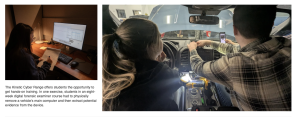

At a 22,000-square-foot facility in Huntsville, Alabama, the FBI has built a fake town — complete with houses, a hospital, and a power company — to train agents for crimes that increasingly hinge on digital evidence
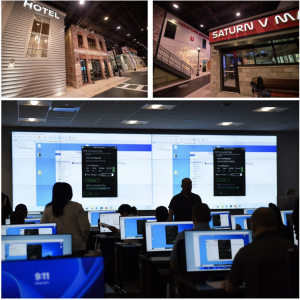
Step inside one of the FBI’s newest training facilities and you’ll find something that looks less like a classroom and more like a movie set: a miniature town with houses, hotel rooms, a hospital, a gas station, and even a power company. But every building is wired with real, functioning technology — and it’s all built to teach FBI agents how to crack the digital side of modern crime.
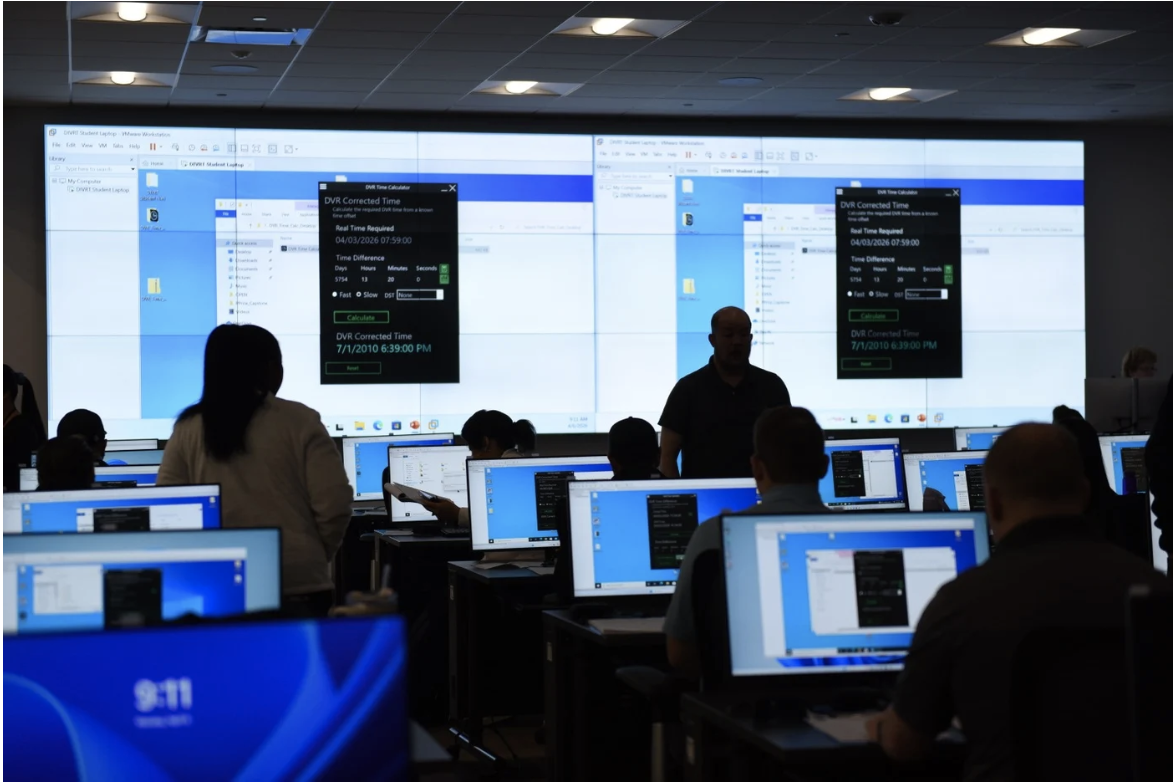
The facility is called the Kinetic Cyber Range, a 22,000-square-foot training environment on the FBI’s campus at Redstone Arsenal in Huntsville, Alabama. According to the FBI, the space resembles a small town built for investigations, with each room wired with the kind of systems, networks, and devices investigators would encounter in the real world. Since opening in February 2025, the facility has trained more than 1,400 students, including FBI personnel and partners from other agencies.
Learning by Doing — and by Messing Up
The whole idea represents a shift in how the Bureau trains its people. For years, much of this work happened at a desk. “In the past, you never left the classroom,” said Dave Beachboard, who manages the range, describing the old approach as mostly theory with a little hands-on practice. Now that model has been flipped: students get their hands dirty in realistic scenarios from the start.
In one exercise, students move through a home full of internet-connected devices and have to decide what to seize and what to leave behind. In another, they serve a search warrant at a business and work with system administrators to dig data out of a corporate network. And in an eight-week forensics course, students physically tear into a car — peeling back panels and tracing wires to extract the vehicle’s computer, which in a real case could reveal where a car had been and who was driving it.
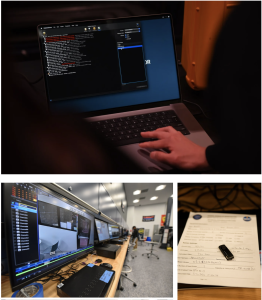
The conditions are deliberately uncomfortable. The FBI said its data center holds more than 200 running servers, and Beachboard described the experience for trainees bluntly: cold, cramped, noisy, dark, and miserable — exactly what real data-center work can feel like.

Where the Mission Comes Together
The range is also where different parts of the FBI’s work meet. The Operational Technology Division, which handles digital forensics, trains alongside the Cyber Division, which investigates computer intrusions that often span continents and rarely involve physical evidence.
For cyber investigators, the job looks different. “For us, our threat actors are overseas,” said Stephanie Cassioppi, who leads the unit running cyber training in Huntsville. “The odds are I’m never going to get my hands on their computer or their phone.” Instead, those investigators learn to trace where an intrusion came from, figure out how malware spreads, and follow digital trails across systems and jurisdictions.
More Than Just Technical Skill
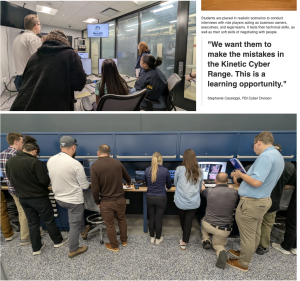
The training isn’t only about technology. Students conduct interviews with role players acting as business owners, executives, and legal teams, practicing how to explain what they’re collecting — and, just as importantly, what they’re not. In one high-pressure scenario, a simulated ransomware attack locks down a hospital network while alarms blare and role players react as if patients are at risk, forcing trainees to juggle the technical crisis and the human one at the same time.
That pressure is the point. “Cyber is not just technical,” Cassioppi said. “It’s also practicing those soft skills, the dealing with people.” And crucially, the range gives agents room to fail safely. “We want them to make the mistakes in the Kinetic Cyber Range,” she said — better to slip up in training than out in the field.
The FBI said the scenarios, all based on past cases, are updated regularly to keep pace with emerging threats, from new connected devices to drones to vehicle forensics. Back in the vehicle bay, once the students finish pulling data from the car, a tangle of wires and panels has become something usable — the kind of information that, in a real investigation, could become evidence. For now, it’s just practice. Next time, it won’t be.