
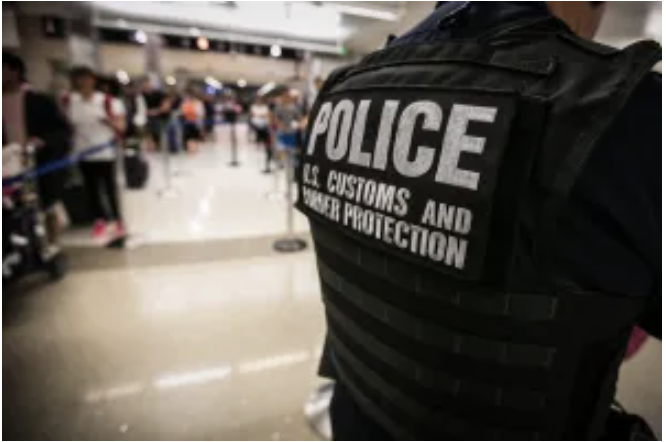
BALTIMORE — Four U.S. Customs and Border Protection personnel are being credited with helping save the life of a toddler who began choking while arriving on an international flight at Baltimore/Washington International Thurgood Marshall Airport, according to the agency.
CBP said the incident occurred Friday as the child and his parents, who had arrived from Germany, were waiting in the agency’s primary passenger inspection line.
According to CBP, the toddler began experiencing a medical emergency, prompting a CBP officer to immediately request medical assistance over the radio. A supervisory CBP officer, another CBP officer, and a CBP agriculture specialist responded while airport emergency medical services were also notified.
The agency said the child was taken to a nearby secondary inspection area, where responding personnel determined he was choking and having difficulty breathing.
According to CBP, officers performed the Heimlich maneuver and administered back blows. After the second round of back blows, the child expelled the object obstructing his airway and began breathing again.
CBP said personnel continued monitoring the child’s breathing and heart rate until emergency medical responders arrived.
Emergency medical services transported the child and his mother to a Baltimore-area hospital, where the child was reported to be in stable condition, according to the agency.
“We repeatedly train our frontline employees on CPR, AED, and other immediate life-saving measures to give travelers who experience a serious medical emergency in our inspection station a fighting chance to survive until EMS can arrive,” Adam Rottman, CBP Area Port Director in Baltimore, said in a statement.
What This Means for Travelers
Although CBP officers are primarily known for enforcing customs and immigration laws, they also receive emergency response training that allows them to assist travelers experiencing medical emergencies while awaiting professional medical care.
Incidents like this highlight the importance of immediate first aid during choking emergencies, particularly for infants and young children. Health experts say prompt recognition of choking and rapid intervention can significantly improve survival while emergency medical services are en route.
For parents and caregivers, organizations such as the American Red Cross and the American Heart Association recommend learning infant and child CPR and choking-response techniques, which can help stabilize a child until emergency responders arrive.
According to CBP, the child is expected to recover after receiving medical treatment.