

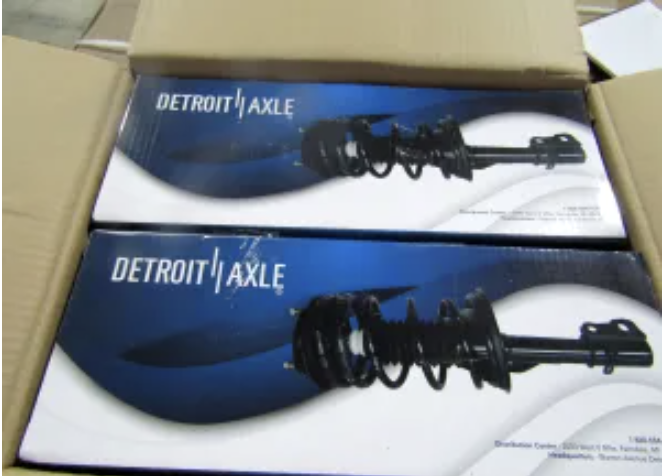
NORFOLK, Va. — U.S. Customs and Border Protection officers seized a shipment of automotive suspension parts valued at nearly $170,000 after determining the importer allegedly submitted fraudulent documents to conceal its identity, according to the agency.
CBP said officers at the Port of Norfolk seized the shipment on June 23 after an investigation into import documentation associated with cargo arriving from Hong Kong.
According to CBP, the shipment contained 1,602 front strut and coil spring assemblies and 20 automotive shock absorbers destined for an address in Altadena, California. Agency trade specialists appraised the shipment at $169,489.
CBP said officers first inspected the shipping container on May 27 and, before its arrival, worked with the customs broker to resolve discrepancies in the import paperwork.
According to the agency, officials received multiple versions of import documents that contained differing commodity values and buyer information, inaccurate invoice details, mismatched importer signatures, and what CBP determined was an invalid California driver’s license. The agency said the identification submitted appeared to be a sample driver’s license rather than a valid government-issued document.
Based on its investigation, CBP concluded the shipment violated 18 U.S. Code § 542, which prohibits importing merchandise into the United States through false or fraudulent statements or documentation.
“Fraud detection is a Customs and Border Protection trade enforcement priority and essential to protect the health and safety of American consumers and our nation’s physical and economic security,” Keri Brady, Area Port Director for the Norfolk-Newport News Area Port, said in a statement.
Brady said individuals and businesses that fail to properly identify themselves on import documentation raise significant concerns for customs officials and that CBP will continue enforcing federal trade laws at U.S. ports of entry.
What This Means for Consumers
While this seizure occurred in Virginia, it illustrates how CBP monitors international shipments entering the United States to identify suspected customs fraud before products reach the marketplace.
Cases involving false import documentation are not always tied to unsafe products. However, according to CBP, inaccurate or fraudulent paperwork can make it more difficult for authorities to determine who is responsible for imported goods, assess the proper customs duties, and verify compliance with U.S. trade laws.
For consumers, the case serves as a reminder that imported automotive parts purchased through online marketplaces or third-party sellers may not always come through legitimate supply chains. Purchasing replacement vehicle parts from reputable retailers and authorized distributors can help reduce the risk of receiving products with unknown origins or questionable quality.
CBP said trade enforcement remains a key part of its mission to protect consumers, support legitimate businesses, and maintain fair competition in U.S. commerce.
To report suspected customs or trade violations, contact U.S. Customs and Border Protection or the National Intellectual Property Rights Coordination Center at 1-866-IPR-2060.