
CYPRESS, Texas — If you’ve been scrolling social media lately, you may have seen some confusion swirling around Cy-Fair ISD and classroom wish lists. Here’s what’s actually going on, straight from the source, plus a few thoughts on how we can all pitch in for our teachers this year.
It started when Houston mom Aly Matei went looking for local teachers’ classroom wish lists online, hoping to donate a little something before the new school year kicked off. She came up mostly empty-handed, and understandably, she wanted to know why. Her post got people talking, and Houston media outlets followed up to find out what was actually happening.
Turns out, it’s not quite a ban, though it can definitely feel like one if you’re a teacher just trying to get a list up before the first bell rings. According to a statement CFISD gave to local media, the district has an approval process in place under Board Policy CDC (LOCAL) and District Regulation CDC-R, built around its two approved crowdfunding platforms, DonorsChoose.org and Amazon Classroom Wish List. Before a teacher’s list can go live online, they need to fill out an authorization form and get the green light from their campus principal. Once that’s done, the list is good to go and can be shared freely. The district says the goal is to make sure donor support lines up with real, verified classroom needs at specific campuses.
Still, plenty of teachers and parents are describing the practical effect as feeling a lot like a ban, since nothing can be posted or shared until that approval comes through. And based on some of the comments floating around since this story broke, Cy-Fair ISD may not be alone here, other Texas districts might be doing something similar, though that hasn’t been confirmed just yet.
Why These Wish Lists Matter So Much
Here’s the part that really tugs at the heart. Teachers didn’t start posting these lists for fun, they started because the need is real and it’s been growing for years. A recent survey from AdoptAClassroom.org found Texas teachers are spending an average of $895 of their own money each year just to keep their classrooms stocked, and a striking 97% of teachers say what their school provides simply isn’t enough. The typical school-supplied classroom budget sits around just $200 a year.
It’s not that districts don’t care, budgets everywhere are stretched thin right now. Rising costs for everything from fuel to insurance to basic art supplies have been squeezing school budgets across the state, and a recent Texas Tribune report found that even a hefty $8.5 billion boost in state funding wasn’t enough to keep some Texas districts from cutting jobs and closing campuses. When money gets tight, supply budgets are often one of the first things to shrink, even as salaries, utilities, and facilities stay locked in as fixed costs.
That’s exactly why wish lists through DonorsChoose and Amazon have become such a lifeline for so many classrooms, they’re often the difference between a well-stocked room and a teacher quietly dipping into her own paycheck, again.
A Little Note to Fellow Parents
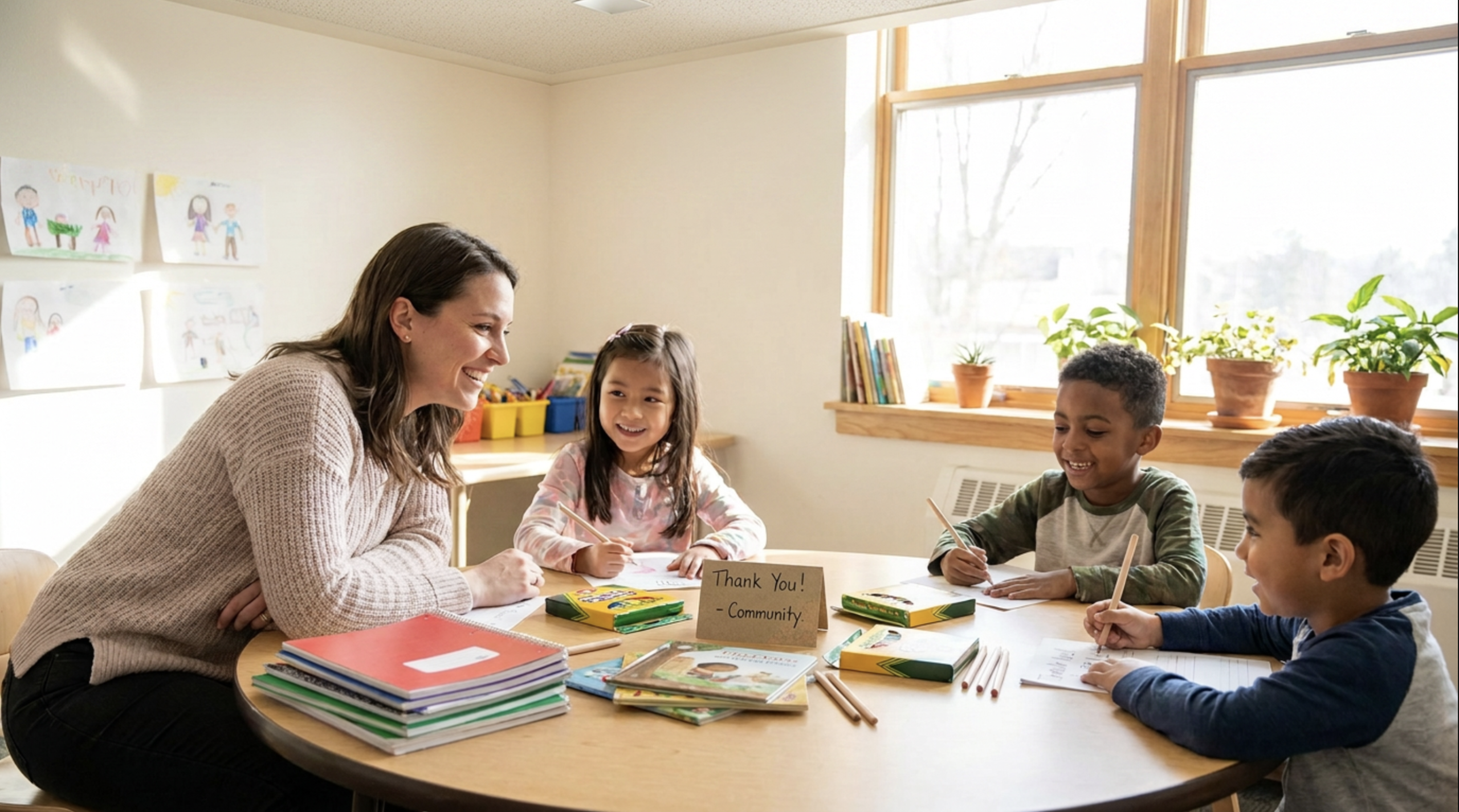
Here’s the thing worth remembering through all of this: whatever happens with the policy side, the need in our classrooms doesn’t go away, and neighbors showing up for each other is what makes a community like ours work.
If you’re able to help out your child’s teacher this year, even something small makes a bigger difference than you’d think. Those supplies rarely stay with just one kid, they get shared across the whole classroom, which means your support might just be the thing that helps a classmate too, maybe a family that’s having a tough year, or simply didn’t know the need was there. You never really know whose day you’re making easier.
And it doesn’t stop at supplies. Take a little time to actually get to know your child’s teacher this year. Think about it, that person spends more of your kid’s waking hours with them than almost anyone else outside your own home. A friendly hello, a thank-you note, or just checking in every now and then means more to teachers than most folks realize, and it makes a real difference for your child too.
It really does take a village to raise a kid, and here in Texas, our classrooms prove that year after year.