
Rabbit ears, taiko drums, and a thousand years of moon-viewing tradition come together as the Japan-America Society of DFW brings its largest annual celebration back to Haggard Park.
Haggard Park, Plano — Saturday, September 26, 2026, 6:00-10:00 p.m.
Long before telescopes and moon landings, people across East Asia were already gathering each autumn simply to look up and be grateful. That tradition arrives in North Texas again this September, as the Japan-America Society of Dallas/Fort Worth hosts its 26th annual Otsukimi Japanese Moon Viewing Festival at Haggard Park, located at 901 E 15th St in Plano. Admission is free.
A Tradition a Thousand Years in the Making
Otsukimi, meaning “moon-viewing,” traces its roots back to China’s Tang Dynasty, arriving in Japan during the Heian period between 794 and 1185 A.D. Japanese aristocrats, inspired by Chinese mid-autumn moon-viewing customs, began hosting elegant gatherings of their own, often aboard boats, so they could watch the moon’s reflection shimmer across the water while composing poetry. These early “moon banquets” appear in classic Japanese literature, including “The Tale of Genji.” What began as an exclusive pastime for nobility gradually spread to samurai families and commoners by the Edo period, evolving into the community-wide celebration it remains today. The custom continues to hold deep meaning across the region, marking not just the beauty of the full harvest moon but gratitude for the year’s rice harvest and hope for abundance in the season ahead.
The Moon Rabbit
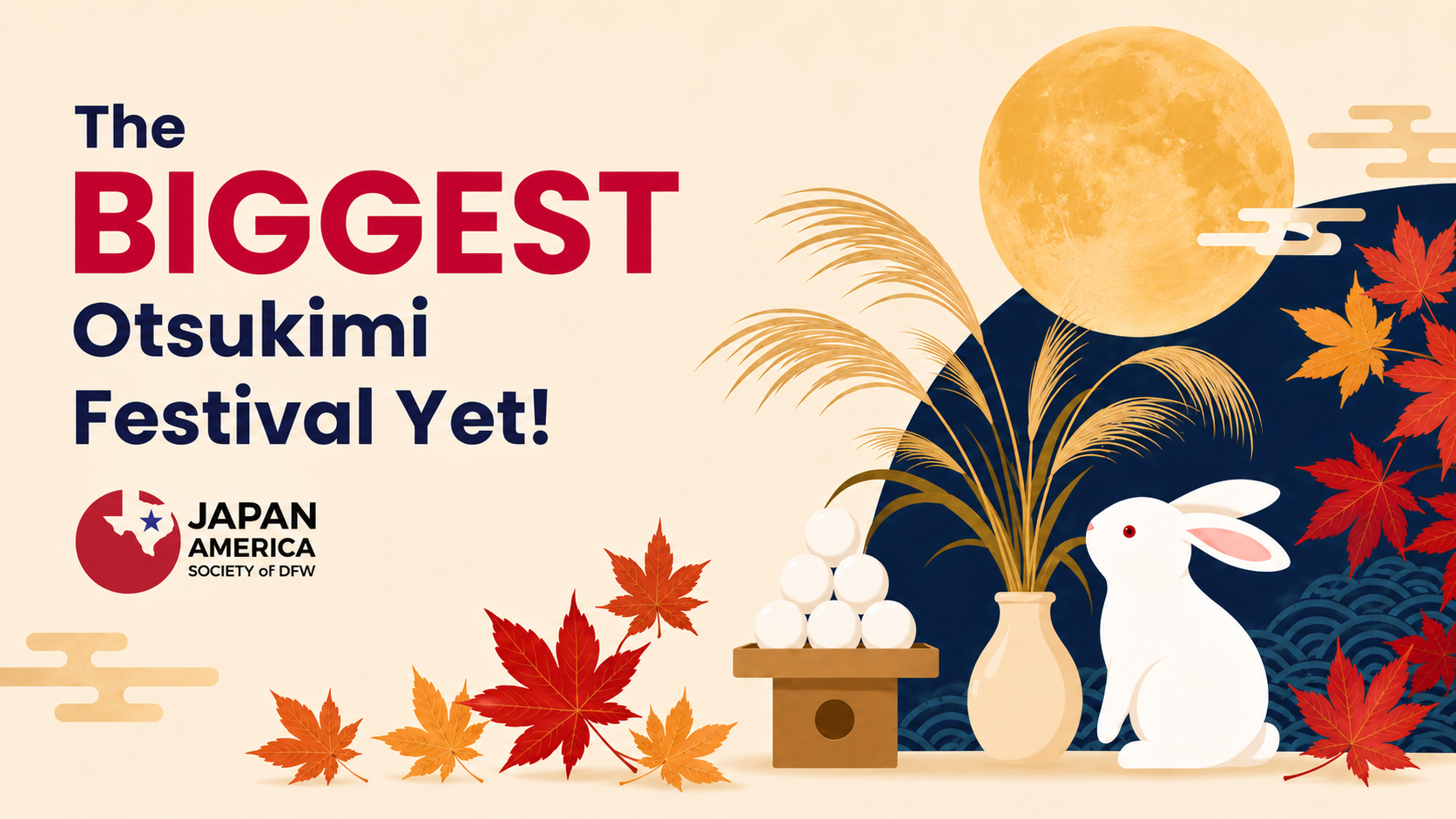
Central to Otsukimi is a piece of folklore nearly every Japanese child grows up with. While Western tradition often points out “the Man in the Moon,” Japanese culture instead sees a rabbit pounding mochi rice into paste on the moon’s surface, a legend tied to the word “mochizuki,” which means both “full moon” and echoes the phrase for pounding mochi. Rabbits are also considered protectors against evil spirits, which is why rabbit imagery shows up everywhere during the festival, including the DFW festival’s own tradition of letting kids make their own rabbit ear headgear.
Otsukimi Takes Root in Texas
The Japan-America Society of Dallas/Fort Worth first brought Otsukimi to North Texas more than two decades ago, and this year’s 26th annual celebration carries a fitting nickname: “The Biggest Otsukimi Festival Yet.” The festival has grown into one of the largest Japanese cultural celebrations in the region, drawing an estimated 6,000 attendees to Haggard Park in 2025 alone. This year’s program is expected to include the kind of lineup that’s become an Otsukimi staple in past years: traditional taiko drumming from Dallas Kiyari Daiko, shakuhachi flute performances, koto music, martial arts demonstrations, haiku readings, and a marketplace of vendors selling Japanese food, crafts, and collectibles. Organizers have said food trucks and merchandise vendors interested in participating should watch for the vendor application to open soon.
Similar Celebrations Around Texas
Plano isn’t the only place in the state marking the harvest moon this fall. The Japan-America Society of Houston hosts its own Otsukimi celebration, where families traditionally decorate with pampas grass, known as susuki, and enjoy rice dumplings called Tsukimi Dango. Fort Worth gets in on the tradition too, with the Modern Art Museum of Fort Worth’s “Modern by Moonlight” Otsukimi Festival, a ticketed evening event that includes a lantern launch into the museum’s reflecting pond alongside live music and Japanese-inspired food, honoring the heritage of the museum’s Japanese architect, Tadao Ando.
What to Expect at Haggard Park
Whether you’re a longtime admirer of Japanese culture or simply looking for a beautiful, family-friendly way to spend a September evening, the Otsukimi Moon Viewing Festival offers a rare chance to slow down, look up, and take part in a tradition that has connected people to the autumn moon for over a thousand years.
For more information and event updates, visit jasdfw.org/otsukimi-japanese-moon-viewing-festival.