

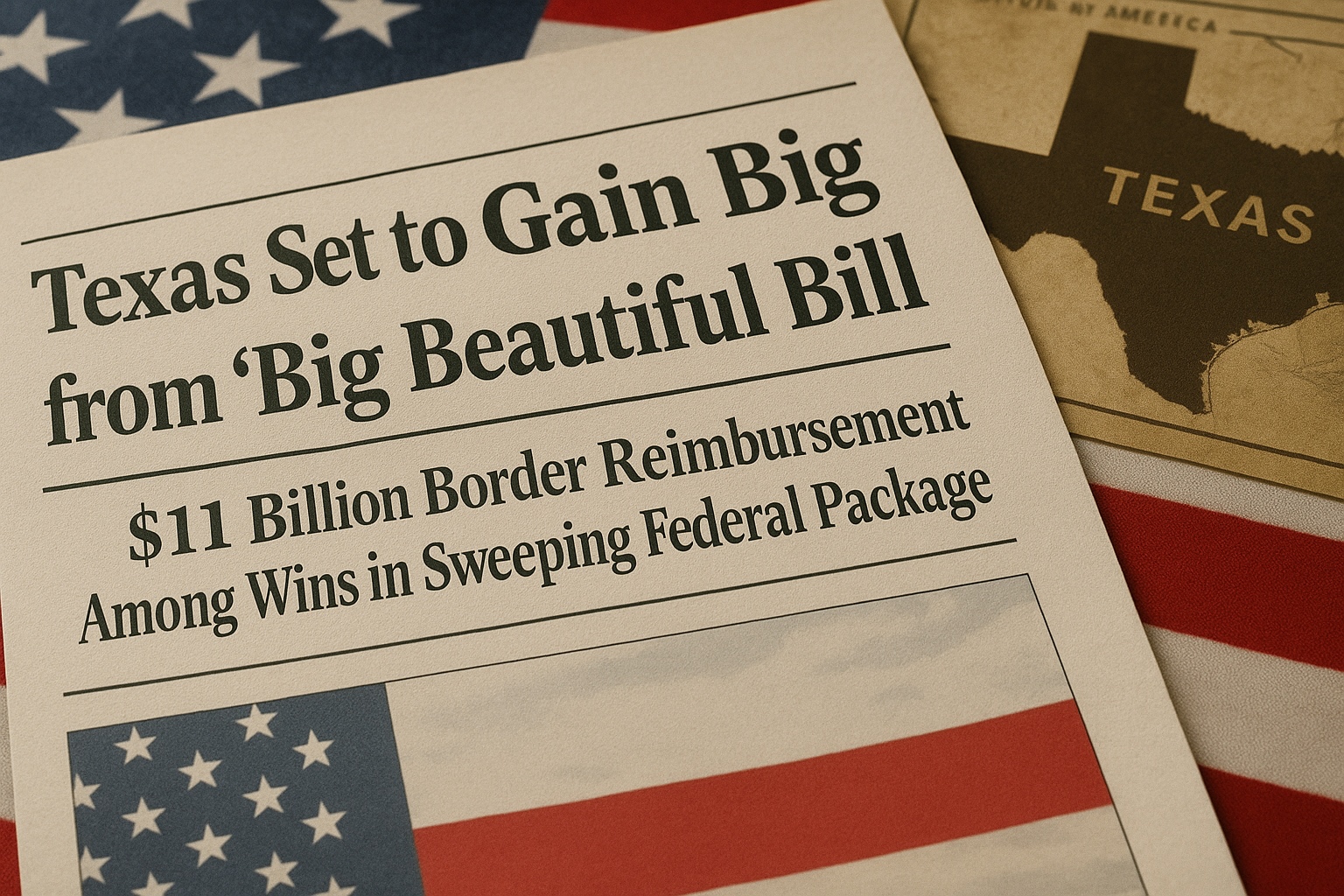
Austin, TX — Texas is poised to receive a multibillion-dollar windfall following the passage of the sweeping federal budget package known as the “Big Beautiful Bill.” Signed into law this week by President Trump, the 940-page legislation combines major tax reforms, defense spending, welfare restructuring, and border security funding—delivering a wide array of benefits to the Lone Star State.
Border Security: $11 Billion in Federal Reimbursement
Among the most significant provisions for Texas is a reimbursement of up to $11 billion for the state’s Operation Lone Star—a multiyear initiative led by Governor Greg Abbott to bolster border security in the absence of expanded federal enforcement. Since 2021, Texas has spent over $10 billion to fund the deployment of National Guard troops, expand physical barriers, and support law enforcement along the southern border.
Under the bill, Texas is expected to receive the largest share of the federal government’s new $13.5 billion border security reimbursement fund.
“This is a major victory for Texas taxpayers,” said Lt. Governor Dan Patrick. “We stepped up when Washington stepped back. Now, finally, we are being repaid for our leadership.”
Tax Relief and Incentives for Families and Businesses
The legislation also makes permanent the Trump-era tax cuts, extending reductions for individuals and corporations that were originally set to expire. Texans will benefit from:
- An expanded Child Tax Credit for working families
- New deductions for tips, overtime pay, and self-employment income
- SALT cap relief, easing tax burdens for higher-income earners in metropolitan areas
“These reforms will help every Texan, from rural ranchers to Houston restaurateurs,” said Rep. Mayra Flores (R-TX), who championed the bill’s passage in the House.
Boosts to Military and Energy Sectors
With Texas home to several major military installations and the heart of U.S. oil production, the bill’s increases in defense spending and energy incentives align closely with the state’s economic strengths. Funding will support base infrastructure, veterans’ services, and domestic fossil fuel production—sectors that play a critical role in the state’s job market and national security footprint.
Opposition Flags Budget Impact, Welfare Changes
Despite strong Republican support, the bill faced criticism from fiscal watchdogs and some Texas Democrats who warn the estimated $3 trillion cost over the next decade could deepen national debt. Others raised concerns over provisions that impose work requirements on Medicaid recipients and tighten eligibility for food assistance, which could impact low-income and rural Texans.
Long-Term Impact on Texas
While debate over the bill’s broader consequences continues, few disagree that Texas stands among the biggest winners. With reimbursements already moving forward and new tax provisions set to take effect in 2026, the legislation is expected to deliver lasting financial impact to communities across the state.
As Governor Abbott stated in a recent briefing, “This bill validates Texas’ leadership—and reinforces that our bold actions don’t just protect our borders, they also bring results.”