

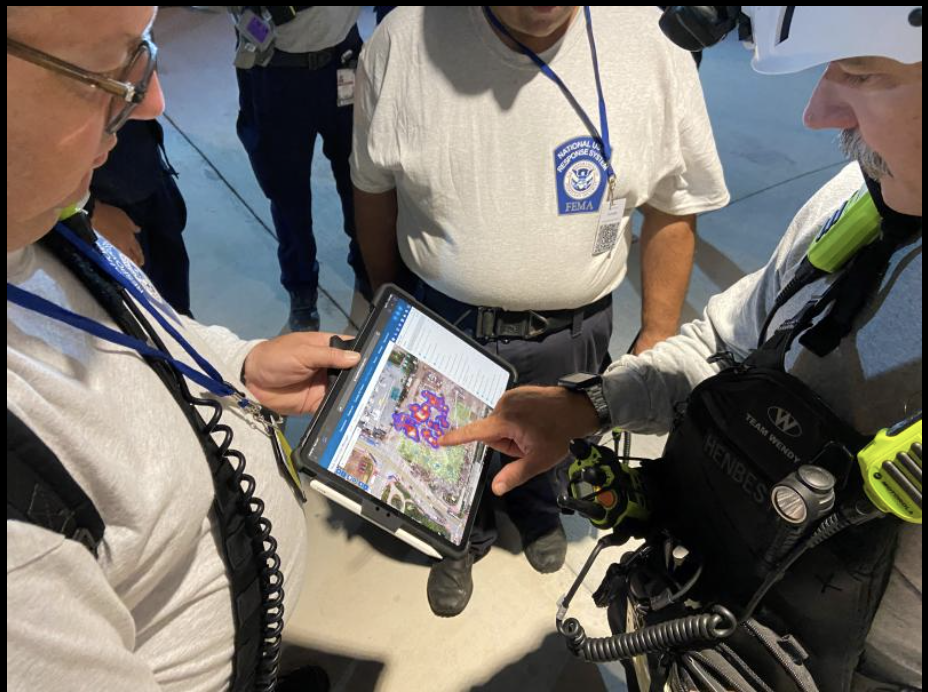
Remember those devastating July 4th floods that hammered Kerr County? While families were trapped on rooftops and cars were floating down the Guadalupe River, something incredible was happening behind the scenes. Search and rescue teams weren’t just winging it – they had a powerful tool most Texans have never heard of.
It’s called SARCOP, and it’s basically Google Maps for disaster response. And it’s been working overtime across Texas, North Carolina, New Mexico, Vermont, and even California this month.
What Makes This Different from Your Regular Emergency Response
Picture this: You’re a rescue team leader arriving at a flood scene. Normally, you’d have no clue what other teams have already searched, where they found people, or what areas are still dangerous. It’s chaos wrapped in good intentions.
But with SARCOP, every team sees the same live map. When Louisiana rescue teams arrived to help Texas, they could instantly see exactly where the local teams had been, what they’d found, and where help was needed most. No confusion, no duplicate searches, no wasted time.
“SARCOP allows field teams to access nearby resources and generate field status reports, improves transitions between shifts and team assignments, and allows for strategic decision-making during large-scale events,” explains Ronald Langhelm, who manages the program.
Translation: Instead of playing telephone with life-or-death information, everyone’s on the same page instantly.
The Numbers That’ll Blow Your Mind
Since 2021, this platform has been deployed during 225 active emergencies and 580 training exercises. That’s not just Texas – we’re talking coast-to-coast disaster response.
And here’s the kicker: It’s completely free for emergency agencies. Your tax dollars at work, actually working.
Real Stories from the Field
Jeff Saunders, who runs Texas A&M Task Force 1, put it perfectly after Hurricane Ian: “SARCOP has proven to be our go-to tool for not only effectively and quickly searching for citizens, but it’s also a very effective tool for collecting time-sensitive data during a disaster.”
But here’s what really matters – he called it “crucial to the safety of all of the responders in the area.” This isn’t just about finding victims faster. It’s about making sure the heroes don’t become casualties themselves.
During those Kerr County floods, teams were logging their discoveries in real-time. Found a survivor? It’s on the map immediately. Discovered a dangerous area? Every other team knows instantly. Assessed building damage? That intel goes straight to recovery teams.
Why This Matters to You
You might be thinking, “Cool tech story, but what’s this got to do with me?” Here’s the thing – this could be the difference between life and death if disaster hits your neighborhood.
Before SARCOP, rescue teams worked in isolation. Imagine calling 911 and having three different fire departments show up to the same address while your neighbor’s house burns down with no one coming. That’s what disaster response used to look like.
Now? When the next flood, hurricane, or wildfire hits Texas, you’ve got teams that can coordinate like a well-oiled machine. They know where you are, where you’ve been searched, and where help is needed most.
The Bigger Picture
This month alone, SARCOP handled not just Texas floods, but also emergencies in North Carolina, New Mexico, Vermont, and even a fireworks explosion in California. One platform, managing disasters from coast to coast.
“Prior to SARCOP, US&R teams operated as siloed autonomous resources. With it, they are all connected as incident support partners,” Langhelm notes.
That’s government speak for: “We finally figured out how to work together when it matters most.”
What’s Next
Right now, teams are still using SARCOP across Texas as recovery efforts continue. The platform works on Windows, Apple, and Android – meaning whether you’re a small-town volunteer fire department or a federal response team, you can plug right in.
The best part? This technology is getting better every disaster. Each flood, each hurricane, each emergency teaches the system something new about how to save lives more efficiently.
So the next time you see those rescue boats on the news, remember – behind every successful search and rescue operation, there’s probably a team using this incredible tool to make sure no one gets left behind.
Want to know more about how your tax dollars are protecting Texas? Check out the “Technologically Speaking” podcast episode with Ron Langhelm, or visit the DHS First Responder Capability page. Because understanding how your safety net works might just make you sleep a little better at night.