

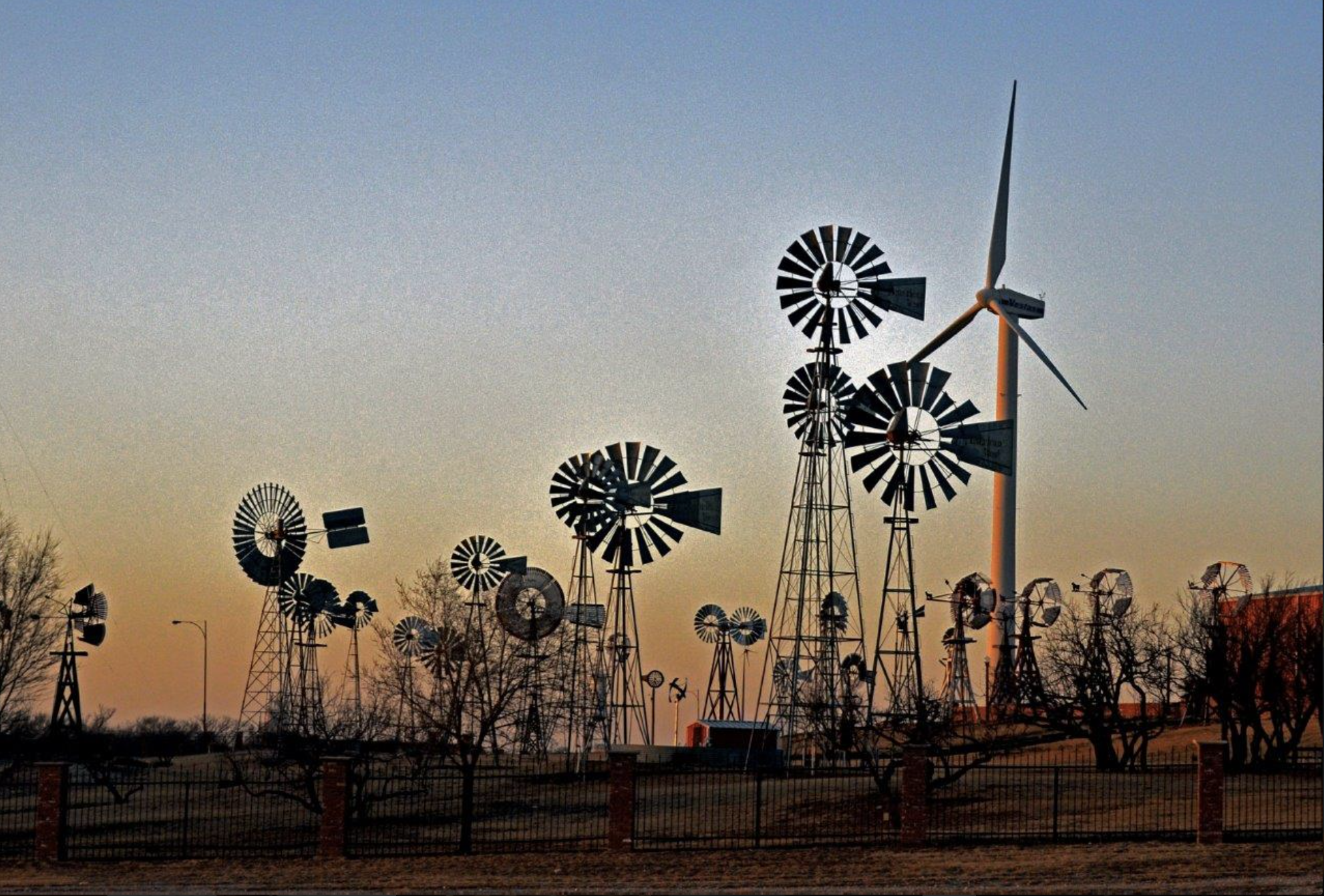
You’ve driven past thousands of windmills without giving them a second thought. But in Lubbock, there’s a place that will completely change how you see these spinning giants – and it’s way cooler than you’d expect.
Why This Place Exists (And Why You Should Care)
Back in the 1960s, Texas Tech professor Billie Wolfe was teaching housing design when she noticed something troubling in old farm photos: windmills were vanishing. These weren’t just rusty decorations – they were the lifeline that let people survive in places where water was scarce and electricity didn’t exist.
For 30 years, Wolfe traveled the country hunting down windmills and talking to the farmers who depended on them. In 1992, she struck gold – a massive collection of restored windmills in Nebraska was for sale. She bought the whole thing: 48 windmills, 171 weights, 56 pumps, and models.
What Makes This Museum Incredible
The American Windmill Museum at 1701 Canyon Lake Drive isn’t just displaying old farm equipment – it’s showing you how human ingenuity conquered impossible landscapes. This 28-acre site in Mackenzie Park houses the world’s largest public collection of restored windmills, from tiny backyard models to a massive 660KW Vestas wind turbine that actually powers the entire museum complex.
The main gallery spans 30,000 square feet and can fit windmills up to 25 feet in diameter indoors. By 2016, they’d filled that building and opened a second 33,000-square-foot space. That’s where things get really interesting.
The Model Train Paradise You Didn’t See Coming
Here’s where the museum gets unexpectedly awesome: they built a 6,600-square-foot model train layout that tells the story of how railroads and windmills worked together to open the American West. This isn’t your basement hobby setup – this is engineering art.
The layout uses G-scale trains (the big ones you’d find in gardens) running on 4,000 feet of stainless steel track. Trains travel two circuits – a lower 900-foot loop and an upper 2,100-foot circuit connected by the world’s largest spiral helix. This engineering marvel has 10 levels climbing a 2% grade for 450 feet with a 9-foot vertical rise.
The system can run 10 trains simultaneously, with 27 switches, 3 bridges, 1 tunnel, and 17 sidings. The centerpiece? A replica of 1940s downtown Lubbock complete with the original Lubbock Hotel and 36 scale windmills, all 3D-printed on site.
Why This Matters to Your Life
This isn’t just nostalgia – it’s about survival and innovation. Before electricity reached rural America, windmills pumped the water that kept entire communities alive. They powered lights, radios, and tools in places where the grid couldn’t reach. Today’s massive wind farms trace their DNA directly back to these pioneering machines.
The museum shows you how people used their brains to harness natural power long before anyone talked about renewable energy. These weren’t just farmers – they were engineers solving life-or-death problems with wind, metal, and determination.
Your Weekend Adventure
The American Windmill Museum proves that the most fascinating stories are hiding in plain sight. You’ll see rare wind chargers from the 1920s, learn how railroads used windmills to supply water for steam engines, and watch model trains circle through landscapes dotted with spinning mills.
Plus, you get to see a 165-foot-tall modern turbine that generates enough power to run the entire facility. That’s the past and future of wind power in one place.
The Takeaway
This museum takes something you thought was boring and reveals it as one of America’s greatest survival stories. From a Texas Tech professor’s passion project to the world’s premier windmill collection, it’s proof that the best adventures come from the most unexpected places.
American Windmill Museum, 1701 Canyon Lake Dr., Lubbock, TX 79403. Because sometimes the most interesting things are the ones spinning right over your head