DALLAS — U.S. Customs and Border Protection hosted its 2026 Trade and Cargo Security Summit in Dallas, September 8-10, bringing together government and industry leaders to focus on strengthening supply chain security, according to the agency. This year’s theme, “Knowing Your Supply Chain to Remain Compliant and Mitigate Risk,” centered on the shared responsibility between government and industry to protect the U.S. economy while supporting lawful trade.
Department of Homeland Security Secretary Markwayne Mullin, in remarks to the summit, said the agency is protecting the homeland every day and can’t afford to take its focus off that mission. Mullin said that work isn’t possible without the partnership of industry, ensuring the right technology, supplies, infrastructure, and supply chains are functioning correctly.
The summit, also known as TCSS 2026, drew 1,300 in-person attendees and 3,000 virtual participants, according to CBP, bringing together importers, exporters, carriers, brokers, attorneys, trade associations, other government agencies, members of Congress, and the press for discussions with CBP leadership on the agency’s priorities and initiatives.
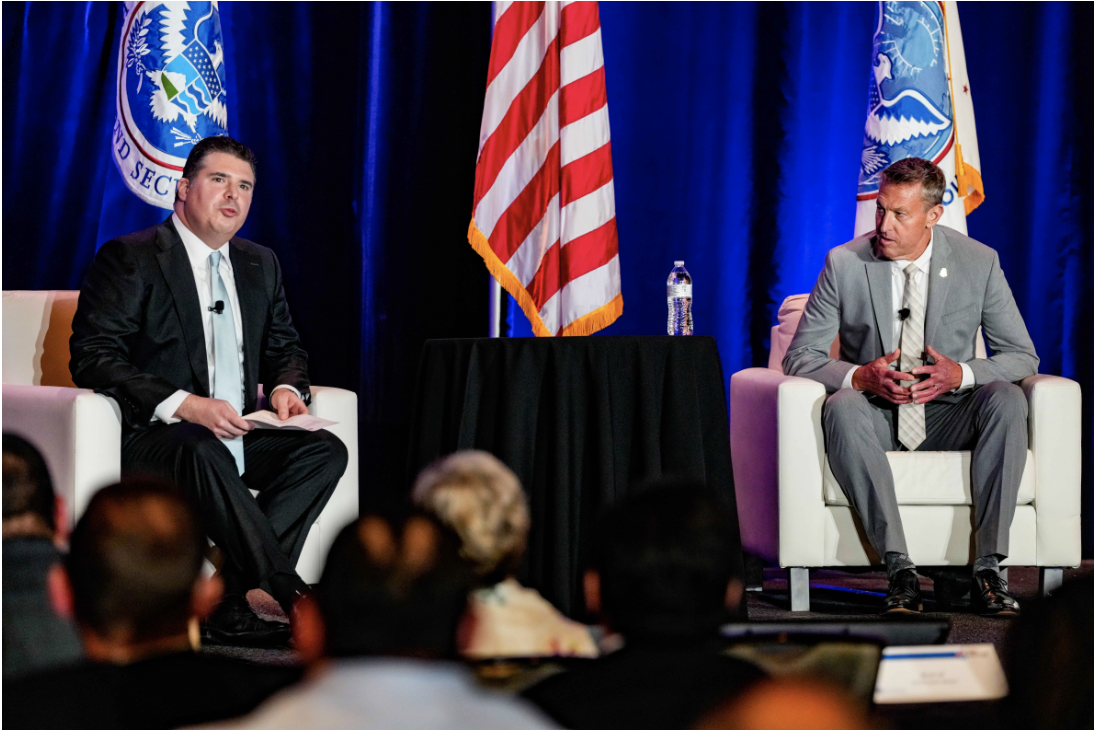
During a fireside chat with Executive Director Christopher Siepmann of CBP’s Office of Trade Relations, CBP Commissioner Rodney S. Scott addressed several topics, including the role CBP plays in the emerging AI landscape, the connection between economic, border, and national security, and the agency’s commitment to core values around forced labor enforcement. Scott said the country’s economic security is critically important, but said sticking to core beliefs and standing for human rights carries equal weight.
Trade enforcement remained a central focus throughout the summit’s panels, breakout sessions, keynote addresses, workshops, and listening sessions, according to CBP. Attendees heard from agency leaders on the importance of identifying supply chain and cargo risks earlier, along with fostering partnerships that enable faster, smarter targeting while keeping lawful commerce moving.
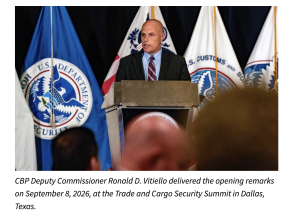
CBP Deputy Commissioner Ron Vitiello opened the event, discussing topics including the Strengthening Customs Enforcement Executive Order, illegal transshipment, forced labor enforcement, modernization of the Automated Commercial Environment system, Enforce and Protect Act investigations, and broader supply chain security. Vitiello said both CBP and the trade community have critical roles to play in ensuring the country’s economic security, national security, and prosperity, adding that the summit exists to strengthen supply chain security and protect the integrity of U.S. markets.
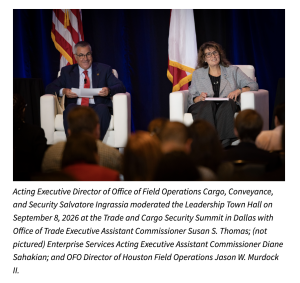
During a leadership town hall, CBP senior officials reinforced the importance of understanding a business’s full supply chain. Executive Assistant Commissioner Susan S. Thomas, of CBP’s Office of Trade, said companies need to do their due diligence now, calling supply chain compliance everybody’s responsibility. Thomas said each entity in a supply chain must own its own compliance, noting that importers shouldn’t rely solely on a broker or freight forwarder to validate their supply chain.
The summit also gave the trade community a chance to provide direct input to CBP officials. The agency encouraged attendees to submit formal comments on its Advance Notice of Proposed Rulemaking titled “Heightened Import Disclosures for Supply Chain Visibility.” Siepmann said the agency added three listening sessions this year specifically focused on the Strengthening Customs Enforcement Executive Order, aiming to prioritize two-way communication between the trade community and CBP as the agency moves forward.
Beyond the formal sessions, TCSS 2026 offered attendees additional resources, including Global Entry interviews for applicants in conditional status, 45-minute one-on-one appointments with the ACE Help Desk, in-person assistance from the Customs Trade Partnership Against Terrorism portal team, and continuing education credits for customs brokers. This year’s summit also featured a new Supply Chain Traceability Brainstorming Session competition. Acting Executive Director Salvatore Ingrassia, of CBP’s Office of Field Operations Cargo, Conveyance, and Security, said participating teams developed recommendations on programs, technology, and tools to help the agency improve visibility into upstream supply chains, calling the summit a rare opportunity to hear novel ideas that could help solve real challenges.