
Operation Turf War dismantled a multi-state drug trafficking organization in West Virginia and Maryland with 32 arrests, 20-plus firearms, 13 kilograms of cocaine, and the FBI’s first-ever large-scale deployment of Rapid DNA technology in the field. It was just the opening shot.
On June 2, the FBI fired the first major salvo in what could be the most aggressive violent crime offensive in the bureau’s recent history. Operation Turf War — a multi-month investigation that culminated in synchronized takedowns across West Virginia and Maryland — netted 32 narcotics and weapons-related arrests, dismantled a drug trafficking organization that had been operating across state lines, and introduced a forensic tool that fundamentally changes how fast the FBI can identify and act on criminal networks.
It also kicked off Operation Summer Heat 2.0 — a 95-day, nationwide violent crime campaign that FBI Director Kash Patel says will replicate the Turf War model in communities across the entire country.
What Operation Turf War Accomplished
The investigation behind Operation Turf War began in August 2025, initiated by a task force officer from the Martinsburg Police Department embedded with the FBI Pittsburgh Field Office’s Eastern Panhandle Drug and Violent Crime Task Force. In January 2026, the task force executed six search warrants in a single day, accelerating the pace of the investigation. By June 2, they were ready to move.
Over the course of the investigation and the June 2 takedown, the FBI and its partners seized approximately 13 kilograms of cocaine, about 110 pounds of marijuana, approximately two ounces of psychedelic mushrooms, and between 5 and 10 grams of fentanyl. They also seized more than 20 firearms, various magazines and ammunition, 29 cellular devices, and approximately $273,035 in cash.
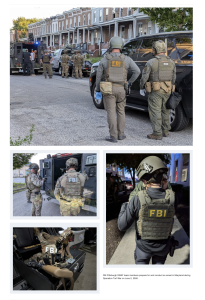
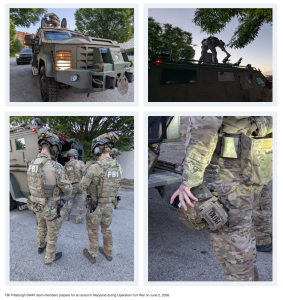
Seven SWAT teams from the FBI’s Pittsburgh, Baltimore, and Washington field offices participated alongside more than 100 FBI Pittsburgh personnel — including special agents, intelligence analysts, tactical specialists, and professional staff — as well as the Bureau’s Criminal Division, Laboratory Division, Operational Technology Division, and Information Management Division.
Federal, state, and local partners included Homeland Security Investigations, the U.S. Marshals Service, the U.S. Attorney’s Offices for the Northern District of West Virginia and the District of Maryland, the West Virginia Air National Guard, Maryland State Police, West Virginia State Police, the Washington/Baltimore High Intensity Drug Trafficking Area task force, and multiple county and municipal law enforcement agencies.
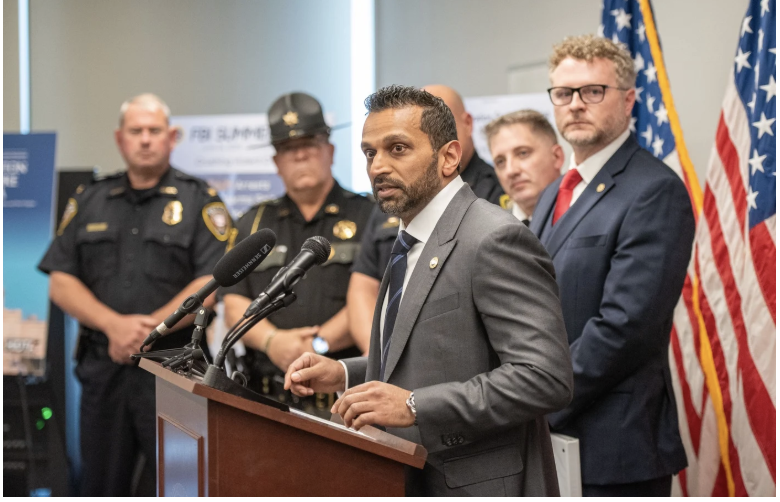
“Operation Turf War was this FBI answering the call of a community that needed it the most,” said FBI Director Kash Patel. “This was a massively successful operation right in West Virginia with nearly three dozen individuals arrested using sophisticated techniques, confidential informants, and precise collaboration across the entire FBI enterprise with our partners. This is exactly what partnerships are supposed to look like.”
A Forensic First — Rapid DNA in the Field
Operation Turf War made history in a second way, beyond the arrests. The FBI Laboratory Division deployed its Rapid DNA system to the field in support of the operation — the first-ever large-scale operational deployment of the technology in the FBI Pittsburgh area of responsibility, and only the third such deployment in Bureau history.
Rapid DNA analysis allows investigators to take a simple mouth swab from an arrestee and generate a complete DNA profile within two hours — with no DNA laboratory, no human intervention, and no waiting period. That profile can then be immediately searched against the FBI’s Combined DNA Index System — the national database of DNA profiles connected to unsolved crimes — within a single day.
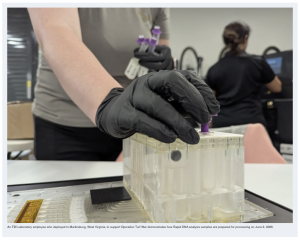
“We have a program now for state and local jurisdictions where we can immediately arrest an individual, have their DNA collected and swabbed, run it against all of our databases and intelligence systems, and immediately populate derogatory information, outstanding search warrants for co-conspirators and other perpetrators around the country,” Director Patel said. “That is moving at the speed in which we need to move to combat violent crime in this country.”
The practical implications are significant. An arrest that previously might have taken weeks or months to connect to unsolved crimes elsewhere in the country can now generate actionable intelligence within hours — on-site, at the point of arrest, before suspects are even processed.
Operation Summer Heat 2.0 — 95 Days, Nationwide
Operation Turf War was not just an investigation — it was the opening operation of Summer Heat 2.0, the second annual iteration of the FBI’s seasonal violent crime campaign. For the next 95 days, the FBI has committed to deploying the same coordinated, multi-agency, intelligence-driven model across American communities nationwide.
“For the next 95 days, the entire country will see this FBI replicating these exact efforts across America with Operation Summer Heat,” Director Patel said. “We’re just getting started.”
Summer Heat 2.0 follows the blueprint established by the first iteration of the campaign — intensive, compressed enforcement periods targeting drug trafficking organizations, violent crime networks, and gang activity in communities that have been most heavily impacted. The use of Rapid DNA, confidential informants, multi-agency SWAT coordination, and the full analytical resources of the FBI’s support divisions will be standard across all Summer Heat 2.0 operations.
For communities in Texas and across the country, the message from the FBI is direct: the next 95 days will bring more operations like Operation Turf War to more cities.
For more information on FBI enforcement operations and the Summer Heat initiative, visit fbi.gov.