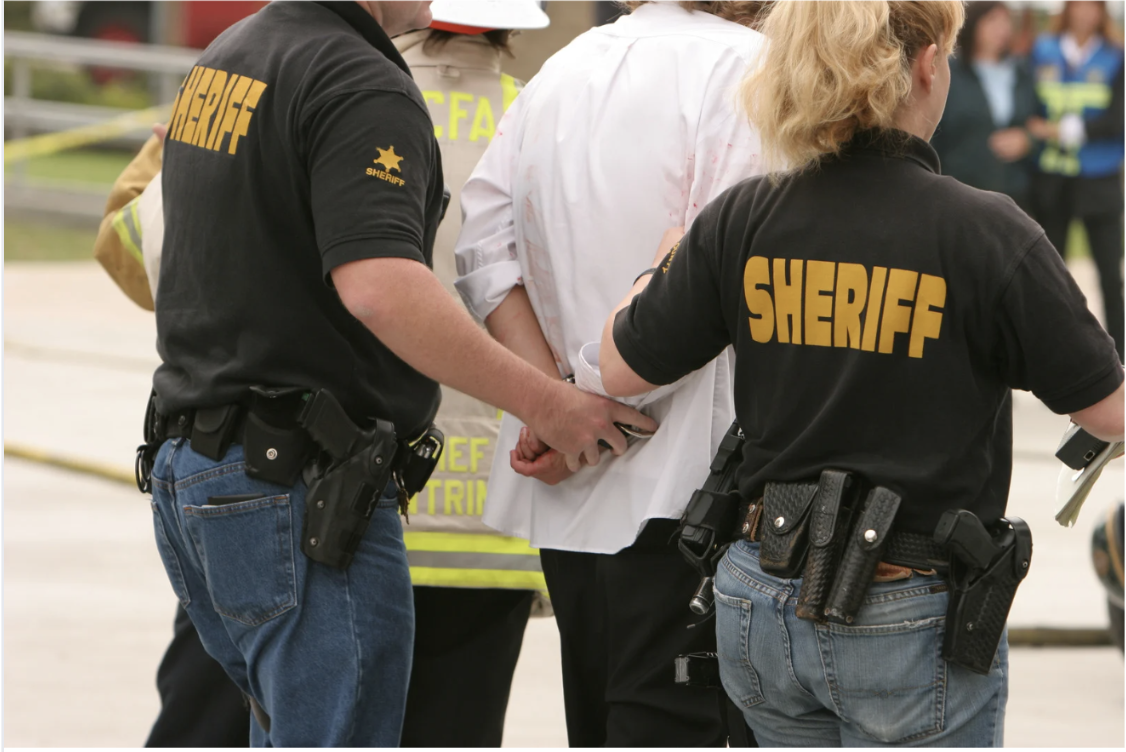
The Justice Department just announced something huge: a massive federal operation focused specifically on solving violent crimes in Indian Country has brought results. Over 760 cases are now getting real investigative power. Criminals are being charged. Victims are getting justice. And families are finally getting answers.
This matters. Not just because of the numbers, but because Indigenous communities across the country—including in the Southwest and throughout the nation—have been waiting for this kind of federal focus for decades.
The Crisis That’s Been Ignored
Here’s what most people don’t know: Indigenous peoples face violence at rates that are staggering and completely disproportionate to the rest of America.
More than four in five American Indian and Alaska Native women have experienced violence in their lifetime, including more than half who have experienced sexual violence. More than 1.5 million American Indian and Alaska Native women have experienced violence in their lifetime. American Indian and Alaska Native females experience some of the highest rates of homicide compared to other groups.
In 2016, there were 5,712 reports of missing American Indian and Alaska Native women and girls, but the federal missing persons database only logged 116 of those cases. Think about that. Nearly 5,700 people reported missing. The federal system tracked 116. That gap isn’t a glitch. That’s systemic failure.
American Indian and Alaska Native people make up a much higher percentage of missing persons cases in federal databases than they do in the general U.S. population.
Operation Not Forgotten: What Just Happened
The Justice Department deployed 64 FBI personnel across 10 field offices in a six-month surge focused specifically on Indian Country violent crimes and missing or murdered Indigenous persons. This was the longest and most intense national deployment of FBI resources to address Indian Country crime to date.
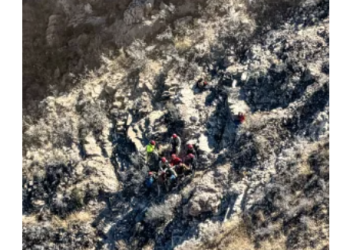
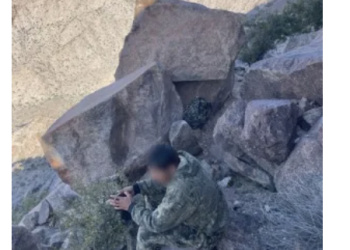
These personnel worked alongside 36 personnel from the Bureau of Indian Affairs Missing and Murdered Unit. Combined, they provided investigative and intelligence support by assisting in over 330 investigations. The BIA team also provided technical support and expertise through ground-penetrating radar, underwater cameras, and sonar searches.
The results speak for themselves.
The Numbers
In Fiscal Year 2025 alone, the FBI’s Indian Country initiatives accomplished the following: 1,260 individuals charged, 1,123 arrests, 304 weapons recovered, and 458 child victims identified or located.
Over the last three years, Operation Not Forgotten has provided investigative support to over 760 cases. Combined, these operations resulted in 249 arrests, 235 subjects charged, 109 subjects convicted, and services were provided to nearly 2,000 victims and victim family members.
Real Cases, Real Justice
These aren’t abstract statistics. These are real people who finally got justice.
Three people were indicted on federal charges after a previously unsolved murder in New Mexico in 2020. Austin Begay, 31, was charged with first-degree murder in the shooting death of Zachariah Shorty, an enrolled member of the Navajo Nation. Two more suspects were also charged with crimes related to concealing the murder.
Renaldo Descheny, 43, is charged with assault with a dangerous weapon and using and carrying a firearm during and in relation to a crime of violence for allegedly strangling and striking a woman in the face with a firearm.
Armondo Paul, 25, was arrested after officers responded to a stabbing at a Shiprock residence. Officers found the victim deceased with a neck wound believed to be from a bladed weapon. Paul is charged with second-degree murder.
Keanu Lee, 33, was arrested after being charged with three counts of aggravated sexual abuse, one count of sexual abuse, one count of kidnapping, and one count of assault resulting in serious bodily injury.
Marvin Albert Wauneka, 40, was sentenced to 40 months in prison for causing a high-speed drunk driving crash on the Navajo Nation that killed two passengers and seriously injured another.
Antoine Scott, 28, was sentenced to 28 months in federal prison after assaulting a passenger on the Warm Springs reservation.
These aren’t cold cases anymore. They’re solved. Perpetrators are in prison. Families have answers.
Why This Took So Long
The Missing and Murdered Indigenous peoples crisis is centuries in the making and will take a focused effort and time to unravel the many threads that contribute to the alarming rates of these cases. For too long, the crisis has been overlooked and underfunded.
The problem isn’t just individual criminals. It’s jurisdictional chaos. It’s tribal lands where multiple law enforcement agencies have overlapping and unclear authority. It’s data systems that don’t talk to each other. It’s cases falling through cracks that have existed for generations.
What’s Happening Now
Operation Not Forgotten just announced results from its third deployment. But this is part of a bigger effort that includes bipartisan legislation like Savanna’s Act and the Not Invisible Act. These laws are meant to improve coordination between federal, state, tribal, and local law enforcement. They’re meant to fix data collection. They’re meant to make sure cases don’t disappear.
The U.S. Department of Justice is committed to addressing the persistent violence endured by Native American families and communities across the country. This work is being viewed as a priority for law enforcement components across the federal government.
The Bottom Line
For decades, Indigenous communities have been asking for federal resources and federal focus. They’ve asked for investigators. They’ve asked for attention. They’ve asked for justice.
Operation Not Forgotten proves that when the federal government actually shows up and commits resources, things change. Criminals get arrested. Victims get found. Families get answers.
But 760 cases solved is just the beginning. At the beginning of Fiscal Year 2025, the FBI’s Indian Country program had approximately 4,300 open investigations, including over 900 death investigations, 1,000 child abuse investigations, and more than 500 domestic violence and adult sexual abuse investigations.
There’s still a lot of work to do. But for the first time in generations, Indigenous communities see federal law enforcement showing up with real resources and real commitment.
That matters.