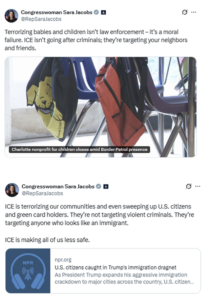


On Monday, November 24, four House Democrats—Rep. Juan Vargas, Rep. Mike Levin, Rep. Sara Jacobs, and Rep. Scott Peters—visited the ICE San Diego Field Office and requested to meet with Dennis Mauricio Rojas-Molina, a man arrested for kidnapping and battery of a spouse.
This meeting is now sparking a major controversy about who Democrats are defending and why.

Who Is Dennis Mauricio Rojas-Molina?
Rojas-Molina is a Honduran national with a criminal history in the United States. Here’s his record:
2015: Arrested by U.S. Border Patrol near Lukeville, Arizona. Released into the country by the Obama administration.
October 2, 2015: An immigration judge ordered his removal from the United States.
October 14, 2015: Deported.
Unknown Date: Re-entered the United States illegally.
May 3, 2025: Arrested by San Diego Sheriff’s Office for kidnapping and battery of a spouse—domestic abuse charges.
He’s currently in ICE custody facing removal proceedings again.
Why Democrats Met With Him
The four representatives didn’t publicly explain their specific reason for the meeting. But Democratic advocacy on behalf of detained immigrants typically focuses on:
- Due process concerns
- Bail and bond considerations
- Family separation issues
- Conditions of detention
What’s unclear: did they meet with him as a constituent service? As part of broader immigration advocacy? To discuss his case specifically? The statement from DHS doesn’t clarify their stated purpose.
The Controversy
DHS Assistant Secretary Tricia McLaughlin released a scathing statement: “Democrats once again chose to stand with a criminal illegal alien over American citizens. This criminal illegal alien these Democrat lawmakers met with has been charged with kidnapping and domestic abuse. It begs the question: have they met with his victim?”
Her point is sharp: if the lawmakers are advocating for Rojas-Molina’s rights, what about the rights of his alleged victim—the spouse he’s charged with kidnapping and battering?
The Larger Argument
This incident is being framed as part of a bigger debate about how Democrats approach immigration enforcement:
DHS Position: Democrats protect criminal illegal aliens instead of supporting law enforcement. They claim ICE doesn’t target serious criminals, but the data shows 70% of people arrested by ICE have criminal convictions or pending charges.
Democratic Position: (Not stated in this release, but typically) Immigration enforcement often sweeps up people with minor offenses or no criminal record. Due process matters. Detention conditions matter. Family separation is a legitimate concern.
What The Data Actually Shows
According to DHS: 70% of illegal aliens arrested by ICE have criminal convictions or pending charges. This figure doesn’t include people wanted for violent crimes in other countries, individuals with INTERPOL notices, human rights violators, gang members, or terrorists.
So DHS is claiming that ICE is genuinely targeting serious criminals—not just everyday undocumented immigrants.
The question: does the Rojas-Molina case support or contradict that claim?
DHS framing: He’s exactly the type of dangerous criminal we target. He has a kidnapping and domestic abuse charge. He’s already been deported once and came back illegally.
Potential counter-argument: One meeting with one defendant doesn’t prove anything about broader enforcement patterns.
The San Diego Context
San Diego is a border city with significant immigration advocacy activity. All four House members represent California districts with large immigrant populations. Their districts include many constituents who are undocumented or have family members who are undocumented.
Meeting with detained immigrants is part of constituent service in these areas. But meeting with someone charged with kidnapping and domestic abuse is politically risky.
For Texas Context
This dynamic plays out in Texas too. Border representatives from South Texas meet with detained immigrants. Immigration advocates argue for due process. Law enforcement argues that serious criminals need to be removed.
The difference here: the person being advocated for is charged with serious violent crime—not immigration violations alone, but kidnapping and domestic abuse.
That makes the political calculus different.
What Happens Next
Rojas-Molina will go through removal proceedings. If convicted of the kidnapping and battery charges, that becomes part of his immigration case. Either way, ICE is seeking to deport him.
The question for the House Democrats: will they comment on why they met with him? Will they defend the meeting? Will they clarify what they were trying to accomplish?
And the broader question: how do politicians navigate the tension between advocating for immigrants’ rights and the reality that some detained immigrants have serious criminal charges?
The Political Reality
This is a politically loaded situation for Democrats:
Advantage DHS/Republicans: A House Democrat delegation meeting with someone charged with kidnapping and domestic abuse looks like they’re prioritizing immigrant advocacy over victim protection.
Challenge for Democrats: Explaining why this meeting was necessary or appropriate without appearing to minimize the victim’s experience.
For Democratic representatives in border areas, immigration advocacy is core to their constituency. But choosing to advocate for someone charged with violent crime against a spouse is politically difficult to defend.
The Bigger Picture
This incident feeds into broader political arguments about:
- Whether Democrats are “soft on crime”
- Whether immigration advocates care about victims
- Whether due process protections enable dangerous people to stay in the country
- Whether law enforcement should be the primary voice in immigration decisions
Each side has arguments. But this specific case—kidnapping and domestic abuse—makes it harder for Democrats to make their case.
Key Facts:
Dennis Mauricio Rojas-Molina:
- Honduran national
- Previously arrested 2015, deported 2015
- Re-entered illegally (unknown date)
- Arrested May 3, 2025, for kidnapping and battery of spouse
- Currently in ICE custody
House Democrats Who Met With Him (Nov. 24):
- Rep. Juan Vargas (California)
- Rep. Mike Levin (California)
- Rep. Sara Jacobs (California)
- Rep. Scott Peters (California)
ICE Statistics:
- 70% of ICE arrests involve people with criminal convictions or pending charges
- Additional arrests involve wanted fugitives, INTERPOL notices, terrorists, gang members
Status: Removal proceedings ongoing