
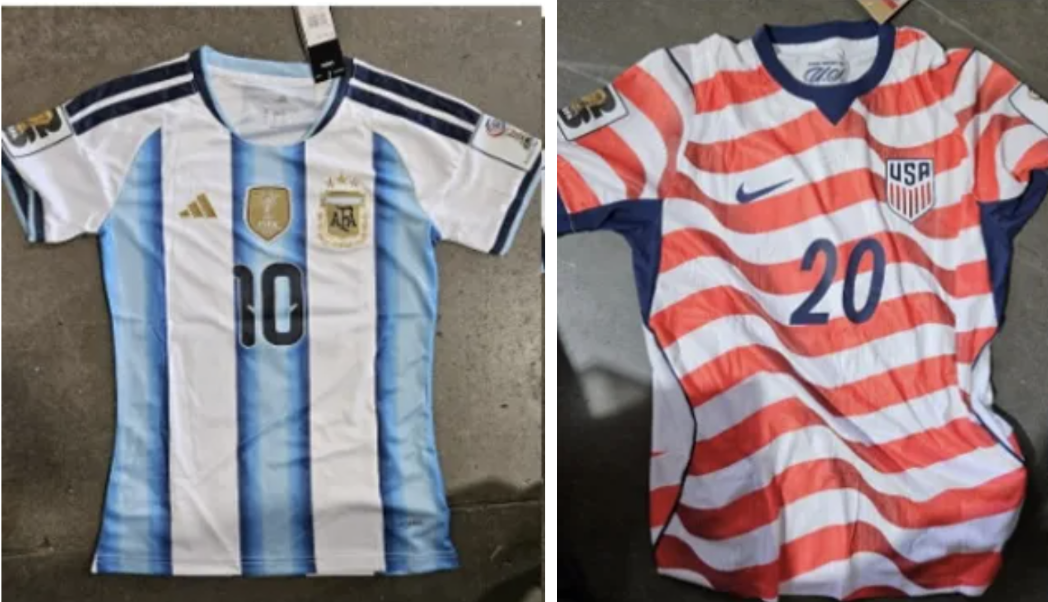
HOUSTON — U.S. Customs and Border Protection officers at George Bush Intercontinental Airport seized nearly 20,000 counterfeit FIFA World Cup 2026 items with a total manufacturer’s suggested retail price of just under $9 million, according to the agency.
Officers from the IAH Trade Enforcement Team seized items including jerseys, shorts, shot glasses, hand fans, soccer balls, whiskey decanters, and even soccer jerseys made for dogs, all found to violate intellectual property rights tied to trademarks owned by FIFA, according to CBP. The counterfeit merchandise included national team jerseys representing the United States, Mexico, Portugal, France, Germany, Brazil, Spain, Argentina, and Ecuador.
CBP Area Port Director Roderick Hudson said the agency plays a significant role in protecting American consumers from low-quality and potentially dangerous counterfeit items, adding that global criminal networks often deceive sports fans and harm American consumers and businesses. Hudson said CBP works to protect the public, the local economy, and businesses that follow the law.
According to CBP, the agency routinely uses intelligence gathering and analysis of past trends before, during, and after major events such as the Super Bowl and World Cup, and this enforcement action targeted recipients accepting shipments that violate intellectual property rights tied to the FIFA World Cup 2026 and related merchandise. The agency said similar operations nationwide have resulted in the seizure of thousands of additional items.
CBP said most of the seized shipments originated from China and were destined for locations both within and outside the United States.
The agency said the growth of e-commerce has made it easier for consumers to purchase products online, but that same access has given counterfeit and pirated goods more ways to enter the U.S. economy, with counterfeit commodities funding smugglers and organized crime. According to CBP, consumers often believe they are buying genuine products before realizing the items are substandard.
Beyond sports merchandise, CBP said commonly counterfeited items include fake medications, perfumes, cosmetics, children’s toys and costumes, fashion, jewelry, luxury products, and unsafe electronics and automotive parts, which the agency says can pose serious health and safety risks due to inferior or harmful materials.
CBP is urging consumers to shop only from reputable online sources. The agency said e-commerce sales have contributed to large volumes of low-value, small packages entering the country, and that more than 90% of all counterfeit seizures occur within the international mail and express shipping environment, a channel commonly used for small e-commerce packages destined for the U.S. According to CBP, many of these shipments carry the same health, safety, and economic security risks as larger, containerized shipments.
CBP encourages the public to report suspected intellectual property violations to the National Intellectual Property Rights Coordination Center at 1-866-IPR-2060.