

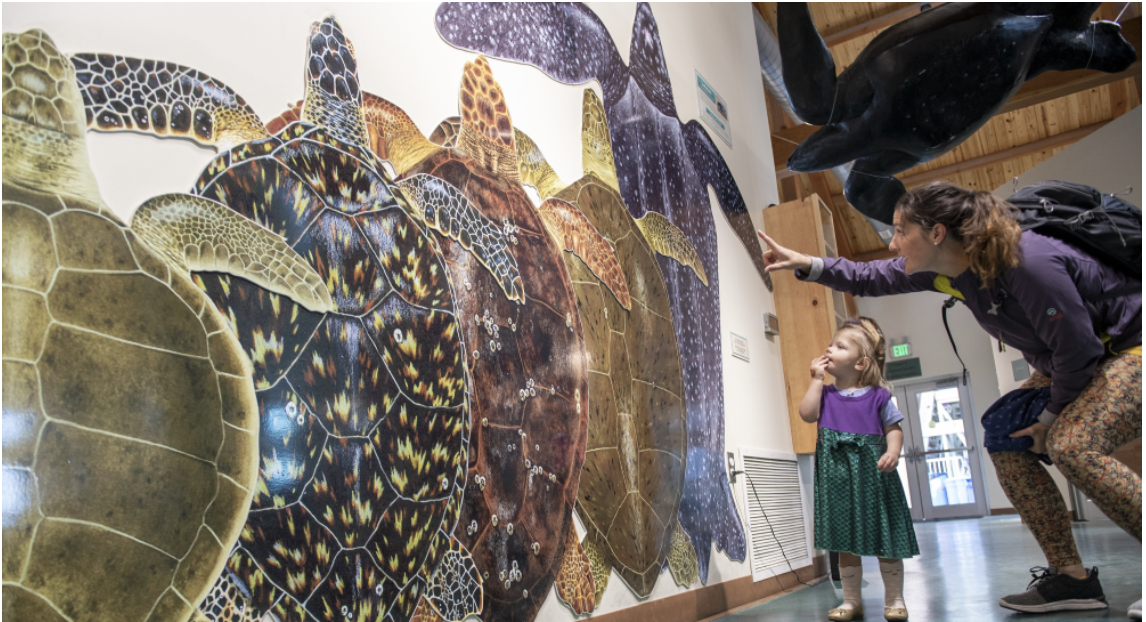
Texas Parks and Wildlife Department is taking on the role of state coordinator for the Sea Turtle Stranding and Salvage Network, and Texans up and down the coast have a new reason to get to know their neighbors in the water — plus the phone number that can save a life
Sea turtle emergency hotline: 1-866-TURTLE-5 (866-887-8535), available 24 hours a day. Public hatchling releases at Padre Island National Seashore run May through August — Hatchling Hotline: 361-949-7163.
Well neighbor, let’s talk about one of Texas’s quietest and most magical natural stories. Along our 400-plus miles of Gulf coast, five species of sea turtles come and go every year — swimming, nesting, hatching, and sometimes needing our help. All five of them are federally listed as either endangered or threatened, and every single one has a Texas story worth knowing. And now, with Texas Parks and Wildlife Department stepping up as the new state coordinator for the Sea Turtle Stranding and Salvage Network, Texans have both a fresh reason to care and a clear phone number to call when it counts.
The five species who share our shore
Meet your Texas coast neighbors, ranked from smallest to largest.
The Kemp’s ridley is the smallest sea turtle in the world — barely two feet long and topping out at about 100 pounds — and it’s also the most endangered. It’s the state’s headline turtle, and there’s a good reason. Kemp’s ridleys nest almost exclusively along the Gulf coasts of Texas and Mexico, which makes Texas a genuinely critical piece of the species’ survival on Earth. They’re also the only sea turtle that nests during the day, and their mass nestings — called an arribada, Spanish for “arrival” — are one of the most extraordinary sights in the animal kingdom. In 2026, an estimated 476 Kemp’s ridley nests have been confirmed along the Texas coast so far this season.
The hawksbill takes its name from the beak-shaped mouth it uses to eat sponges, and it has one of the most beautiful shells in the sea — a striking amber-and-brown pattern. Hawksbills are rare visitors to Texas beaches; the only confirmed nest was documented at Padre Island National Seashore in 1998. But divers and offshore fishermen occasionally spot hawksbills wedged between rocks around jetties or hanging out near artificial reefs and offshore platforms.
The green sea turtle is the one you’re most likely to actually see up close. Young greens hang out around the jetties and rocks all along the coast, munching on seagrass and algae in the shallow bays. If you’ve ever spotted a turtle head popping up near the ship channel jetties at the northern end of Mustang Island or around Packery Channel south of Corpus Christi — good chance it was a green. Their numbers took a devastating hit in the 1800s from overharvest and severe freezes, but Dr. Donna Shaver, chief of Sea Turtle Science and Recovery at Padre Island National Seashore, says they’re finally repopulating Texas waters.
The loggerhead is a big, powerful reptile that can weigh up to 400 pounds. Named for its enormous head, its jaws are strong enough to crush conch shells. Loggerhead nests on Texas beaches are rare — usually just a handful confirmed each year — but sightings around the Flower Garden Banks National Marine Sanctuary, about 100 miles off the Texas coast, are a highlight for divers who make it out there.
The leatherback is the giant of the group and one of the strangest animals in the ocean. Weighing up to 2,000 pounds and covered with a leathery, ridged shell rather than a hard one, leatherbacks prefer deep water and feed almost entirely on jellyfish and other soft-bodied creatures. Leatherback nests are almost unheard of in Texas — a 2008 discovery at Big Shell Beach on Padre Island was the first confirmed presence of the species nesting here in recent memory. If you ever see one, you are witnessing something truly rare.
Padre Island: the epicenter of Texas sea turtle life
There’s exactly one place in the state where nests from all five species have been documented, and that’s Padre Island National Seashore. The park’s Division of Sea Turtle Science and Recovery has been running one of the most successful sea turtle conservation programs in the world for more than 30 years, and every summer from May through August, they hold public hatchling releases on the beach — a genuinely magical experience where families gather at sunrise to watch dozens of tiny Kemp’s ridley babies waddle across the sand and swim off into the Gulf.
Kemp’s ridley hatchlings are about the size of a nacho chip. Volunteers walk them right up to the crowd for photos before turning them loose to catch a wave. If you’ve never taken your kids to one, put it on the list this summer. It is one of those quiet, unforgettable Texas moments. To find out when the next release is scheduled, call the Hatchling Hotline at 361-949-7163. Releases are typically held at 6:45 a.m. because sea turtle hatchlings are most active in the cool of the morning.
How Texans can help
Here’s the part every coastal Texan needs to know. Sea turtles run into trouble along the Texas coast constantly. Boat strikes, entanglement in fishing line, plastic ingestion, jetty rock traps, and sudden cold snaps (turtles are cold-blooded and can get “cold-stunned” when Gulf temperatures drop fast) all take a toll. And every year, Texans up and down the coast are the difference between a rescued turtle and a lost one.
If you find a sea turtle in distress on the beach, in the water, or accidentally hooked on a fishing line — do not push it back into the water. Call the sea turtle emergency hotline immediately at 1-866-TURTLE-5 (866-887-8535). The line is answered 24 hours a day, and a trained responder will walk you through what to do until help arrives.
If you’re fishing and accidentally hook a turtle, do not cut the line and let it swim off with a hook still in it. That’s a slow tragedy. Call the hotline, keep the turtle calm, and let the pros safely remove the hook.
If a turtle appears cold, unresponsive, or trapped in rocks — call the hotline, and if it’s safe, keep an eye on the animal until responders arrive. Do not attempt to pick up or move an adult turtle on your own. They’re wild animals, they can weigh hundreds of pounds, and stress can make injuries worse.
Texas Parks and Wildlife’s new role
Here’s the news that prompted all this. Texas Parks and Wildlife Department is now the state coordinator for the Sea Turtle Stranding and Salvage Network, or STSSN — the network of nonprofits, universities, aquariums, national park staff, and volunteers who respond to and rehabilitate stranded sea turtles on the Texas coast. Under TPWD’s new coordinator role, the agency will support these organizations while continuing its own sea turtle conservation and recovery work.
For everyday Texans, that means the state has a clearer chain of command for sea turtle emergencies, more organized coordination among rescue groups, and a stronger foundation for the long-term recovery of these species. It’s a quiet but genuinely meaningful step for anybody who cares about the coast.
Places to see (and support) sea turtles up close
If you’d like to meet sea turtles without waiting for a wild encounter — or you’d like to support the organizations doing this work — Texas has three destinations worth a visit.
Sea Turtle Inc. on South Padre Island has been rescuing and rehabilitating injured Texas sea turtles since 1977, releasing between 40 and 100 recovered turtles back into the Gulf every year. Their facility is open to the public and features permanent-resident turtles who couldn’t be released back to the wild, plus behind-the-scenes rehabilitation tanks and a full educational experience. It is one of the great small-museum stops on the Texas coast.
Texas Sealife Center at 14220 South Padre Island Drive in Corpus Christi is a nonprofit rescue and rehabilitation center for coastal and aquatic wildlife across South Texas, including sea turtles.
Texas State Aquarium in Corpus Christi has resident sea turtles on display in gorgeous exhibits, and it’s an easy family-friendly stop for anyone traveling the coast.
Why this all matters
Here’s the honest read, neighbor. Kemp’s ridley nesting numbers dropped by 99.4 percent from the 1940s to the 1970s — the species was, functionally, almost gone. Then in 1978, U.S. and Mexican biologists launched a joint effort to rescue eggs, protect nesting beaches, require turtle-excluder devices on fishing trawlers, and rebuild a second nesting colony at Padre Island National Seashore. The 2026 nesting season is the 48th year of that bi-national partnership. Every hatchling that scuttles into the Gulf on a Padre Island morning is proof that quiet, patient conservation work actually pays off. But sea turtles remain endangered, and the coastal community that keeps an eye out for them is what keeps that momentum going.
So this summer, if you’re headed to the coast — whether you’re camping at Mustang Island, fishing the jetties at Port A, or spending a family week at South Padre — save this number in your phone: 1-866-TURTLE-5 (866-887-8535). Then keep an eye on the water. Look out for tracks in the sand. Take the kids to a hatchling release. Support the folks at Sea Turtle Inc. and the Sealife Center. And know that every rescue, every release, every phone call from an alert Texan on the beach is a piece of a comeback story that’s still being written.
Texans love our sea turtles. And they love us right back.
For more information on TPWD’s sea turtle work, visit tpwd.texas.gov. For public releases at Padre Island National Seashore, visit nps.gov/pais.
See you at the shore, neighbor. And save that number.