

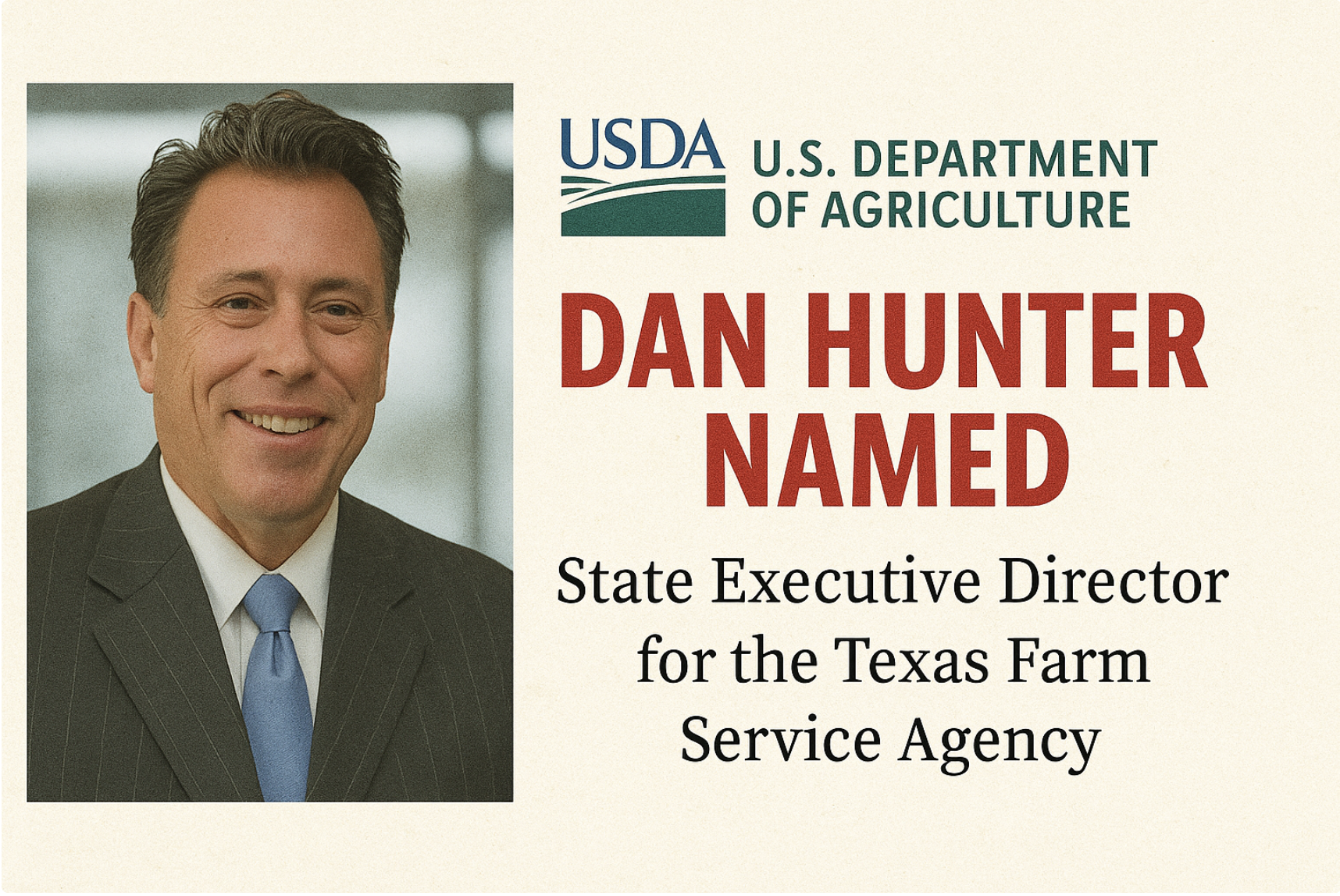
Texas farmers and ranchers have a new advocate in Washington. Dan Hunter has been appointed as State Executive Director for the Texas Farm Service Agency, bringing decades of agricultural leadership experience to one of the most important federal positions affecting Texas agriculture.
Hunter comes to the role with impressive credentials that suggest he’ll be a strong voice for the Lone Star State’s diverse agricultural community. Most recently serving as Assistant Commissioner for the Texas Department of Agriculture, he understands both the challenges facing Texas producers and the bureaucratic landscape they navigate daily.
What Hunter Brings to the Table
Hunter’s background reads like a roadmap of Texas agriculture. His previous role as Executive Director of a worldwide research institute within the Texas A&M University System shows he understands the science and innovation driving modern farming. But it’s his hands-on experience with commodity industries that really sets him apart.
He’s held leadership positions in both the cotton and peanut industries—two crops that are absolutely critical to Texas’s agricultural economy. Cotton alone generates billions for the state, while peanuts represent a growing sector for many Texas producers. Hunter’s service on numerous commodity boards means he’s not just familiar with these industries—he’s helped shape their direction.
Why This Matters for Texas
The Farm Service Agency controls billions in federal programs that can make or break Texas agricultural operations. From crop insurance and disaster assistance to conservation programs and farm loans, FSA decisions directly impact thousands of Texas farming and ranching families.
Having someone who understands Texas agriculture from the ground up—literally—means programs can be administered with the kind of practical knowledge that comes from working within the state’s unique agricultural landscape. Hunter knows the difference between managing cotton in the High Plains versus rice in the Gulf Coast, and that kind of regional expertise matters when disaster strikes or programs need tailoring.
What to Expect from Hunter’s Leadership
Based on his track record, Texas producers can expect several key priorities:
Industry-Focused Problem Solving: Hunter’s commodity board experience suggests he’ll approach challenges with the practical mindset of someone who’s actually worked in these industries. Expect solutions that make sense on the farm, not just in the office.
Research-Driven Innovation: His time with the Texas A&M research institute indicates he values science-based approaches to agricultural challenges. This could mean better integration of new technologies and practices into federal programs.
Texas-First Advocacy: Having worked within the Texas Department of Agriculture, Hunter understands the state’s unique needs and will likely be a strong advocate for Texas-specific solutions within federal programs.
Relationship Building: His extensive commodity board service shows he knows how to work across different agricultural sectors. This collaborative approach could help bridge gaps between different producer groups competing for limited federal resources.
The Bottom Line
Texas agriculture just got someone who speaks its language in a position to make real differences. Hunter’s combination of state government experience, research background, and commodity industry leadership suggests he’ll be both an effective administrator and a strong advocate for Texas producers.
For farmers and ranchers who’ve sometimes felt disconnected from federal agricultural programs, Hunter represents someone who’s actually walked in their boots. That kind of practical experience, combined with his policy background, could translate into more responsive and effective program delivery when Texas agriculture needs it most.
In a role where understanding both Washington politics and Texas dirt roads matters equally, Dan Hunter appears uniquely qualified to serve both masters well.