

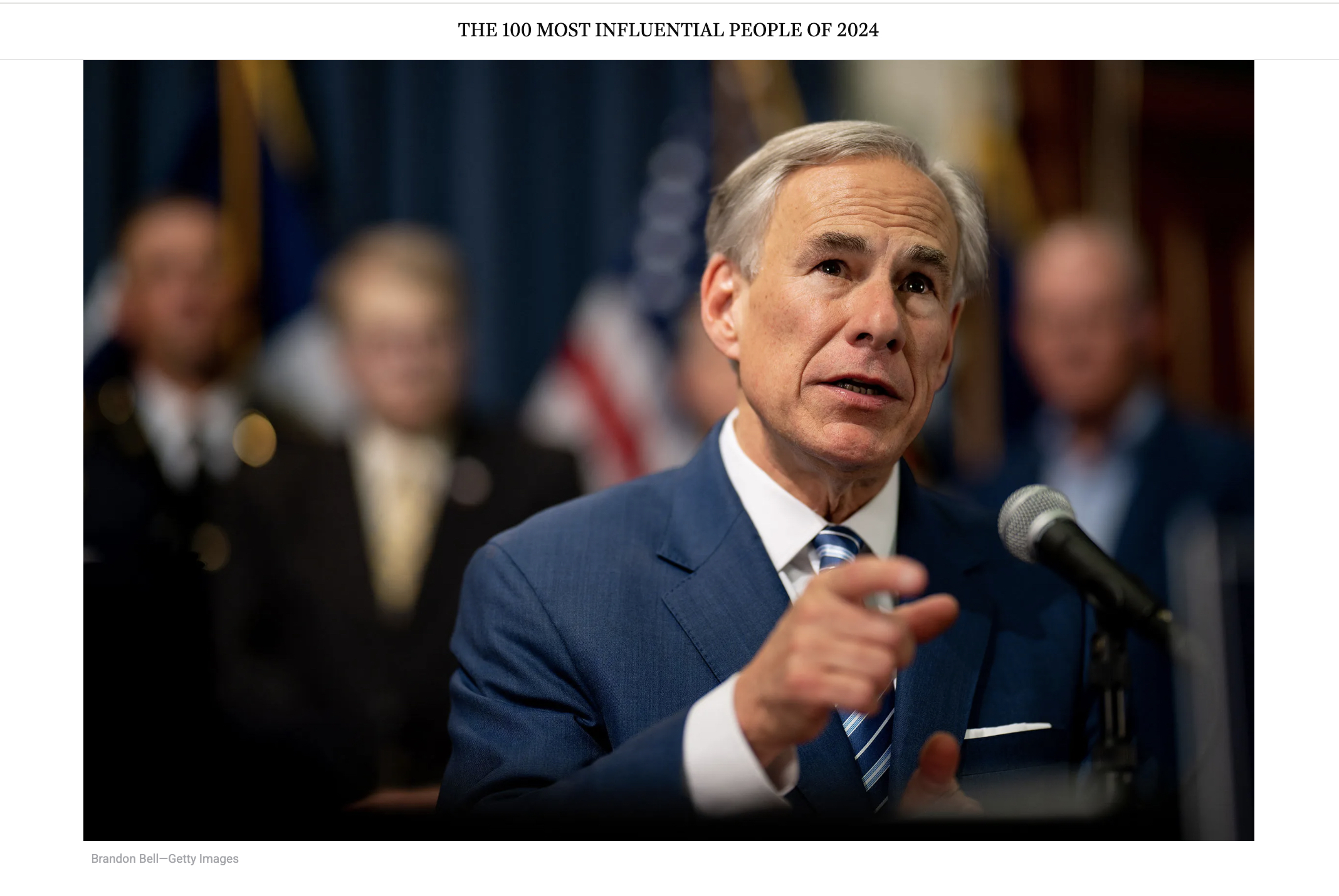
AUSTIN — Your governor just got recognized as one of the most powerful people on the planet, and that recognition could mean big changes for how the rest of the world sees Texas — and how much influence your state has in national politics.
Governor Greg Abbott landed on TIME magazine’s 2024 list of the 100 most influential people in the world, putting him alongside global leaders, tech moguls, and celebrities. But what does this mean for you as a Texas resident?
Why Abbott Made the List
TIME didn’t pick Abbott because he’s popular — they picked him because he’s effective at getting what he wants, even when it makes people mad.
Room Reader: TIME describes Abbott as “a talented room reader” who has “proved adept at simultaneously throwing red meat to his conservative base while tempering pushback from the state’s liberal enclaves.” Whether you love it or hate it, he knows how to work different audiences.
Taking on Washington: As TIME magazine puts it, Abbott has “masterfully needled Washington, through both unending legal challenges and agitating stunts.” From energy regulations to immigration policies, he’s made Texas the go-to state for challenging federal authority in court.
Economic Success: Under Abbott’s leadership, Texas has built what he calls “the eighth-largest economy in the world.” Companies keep moving here, jobs keep growing, and other states are trying to copy what Texas is doing.
What This Recognition Means for Texas
More National Attention: When your governor is on the same list as world leaders, national media pays more attention to what’s happening in Texas. That can mean more business investment, but also more scrutiny of state policies.
Political Influence: Abbott’s recognition positions him as a major player in national Republican politics. If Donald Trump doesn’t run again or loses, Abbott could be one of the top candidates to lead the party nationwide.
Policy Impact: Other states are already copying Abbott’s approaches to border security, business regulation, and energy policy. Texas increasingly sets the example that other conservative states follow.
The Reality Behind the Recognition
Abbott’s path to this recognition hasn’t been smooth. TIME’s analysis specifically mentions “some glaring missteps” including his handling of major crises:
The Winter Storm Crisis: When the power grid failed during the 2021 ice storm, hundreds of Texans died and millions lost power for days. Abbott’s handling of that crisis drew national criticism and showed the limits of Texas’s go-it-alone approach to energy.
Uvalde Response: Abbott initially praised the police response to the Uvalde school shooting, only to backtrack when details emerged about the delayed response that may have cost lives.
Divisive Policies: While Abbott’s base loves his aggressive stances, they’ve also made Texas a flashpoint for national political battles over immigration, abortion, and voting rights.
What Your Neighbors Are Saying
Supporters argue: Abbott has made Texas a national leader that other states look to for solutions. They point to job growth, business relocations, and the state’s willingness to challenge federal overreach.
Critics worry: Abbott’s focus on national politics and controversial policies is dividing the state and potentially hurting Texas’s reputation with businesses and families who might want to move here.
The middle ground: Many Texans appreciate the state’s economic success but wish Abbott would focus more on fixing problems at home — like the power grid, school funding, and healthcare access.
The Bigger Picture for Texas
Abbott’s recognition reflects something bigger: Texas has become impossible to ignore in national politics. Whether it’s business leaders looking for friendly regulations, politicians studying successful campaigns, or policy experts tracking new approaches to governance, everyone’s watching what Texas does.
If you’re a business owner: Abbott’s national profile could bring more investment and attention to Texas markets.
If you’re a parent: Abbott’s education and social policies are now being copied by other states, making Texas a testing ground for national debates.
If you’re planning your future: Texas’s growing national influence could mean more opportunities, but also more political tension as the state becomes a bigger target for criticism.
What Comes Next
With this recognition, Abbott isn’t just governing Texas anymore — he’s positioning himself as a national leader. That could mean:
- More aggressive policies designed to grab national attention
- Increased federal pushback against Texas initiatives
- Greater scrutiny of how state policies affect regular Texans
- Potential presidential ambitions that could reshape state priorities
Bottom Line
Whether you voted for Abbott or not, his spot on TIME’s most influential list means Texas is now firmly in the national spotlight. That brings opportunities — more business investment, more political influence, more attention to Texas successes.
But it also brings challenges. Every policy decision gets national scrutiny. Every mistake gets magnified. And increasingly, what happens in Texas doesn’t stay in Texas.
For better or worse, your governor has made Texas a state that the whole world is watching. Now the question is: where does he take it from here?