

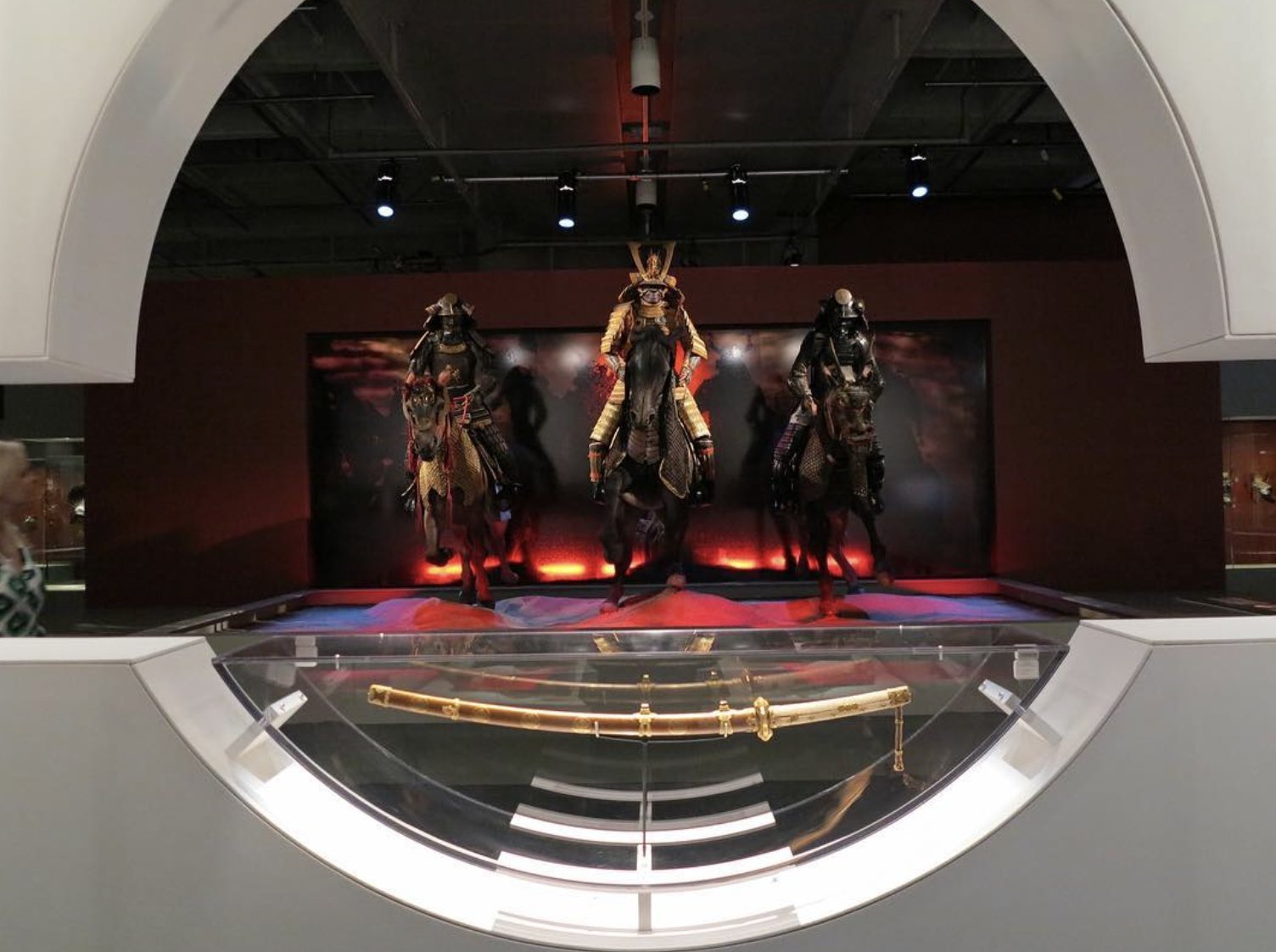
Forget everything Hollywood taught you about samurai. The real warriors were so much more fascinating than any movie could capture – and you can come face-to-face with their actual armor, swords, and stories right here in Dallas.
Tucked away in the Harwood District sits The Ann & Gabriel Barbier-Mueller Museum: The Samurai Collection, and it’s about to blow your mind. This isn’t some dusty collection of old weapons. This is one of the largest samurai museums in the world, housed in a gorgeous 1927 building that used to be St. Ann’s School. And it’s the only museum of its kind in the entire United States.
Warriors Who Lived and Died by Honor
Here’s what makes samurai culture so incredible: these weren’t just skilled fighters – they were bound by a code so strict it governed every moment of their lives. The concept of loyalty wasn’t just important to them; it was everything. A samurai would literally follow his master into death rather than live with the shame of surviving him.
This wasn’t movie drama – this was real life for nearly a thousand years. When a samurai’s lord died, many would perform seppuku (ritual suicide) to join him in death. They believed that true honor meant your loyalty outlasted your own life. Imagine being so committed to your principles that death seemed preferable to compromise.
But here’s where it gets really fascinating: the purest samurai were said to possess spiritual power that went beyond physical combat. Legend tells of warriors so virtuous they could imprison even the sly fox demons that terrorized villages. These weren’t just stories – they reflected a culture that believed true strength came from moral purity as much as sword skill.
Art That Could Save Your Life
Walk through the Samurai Collection and you’ll see armor that’s simultaneously brutal and beautiful. Each piece tells a story about the warrior who wore it. That intricate ironwork wasn’t just decoration – it was a matter of life and death. The curves, the colors, the family crests embedded in the metal – everything had meaning.
The helmet alone could take months to craft. Armorers would hammer iron plates into fantastic shapes, then add decorations that identified the warrior’s family and displayed their wealth. Some masks were designed to terrify enemies, complete with animal hair mustaches and layers of colored lacquer that gleamed like blood in battle.
But here’s the thing that’ll give you chills: this armor was flexible enough to allow a warrior to move gracefully in combat, yet strong enough to stop a sword blow that could split a tree. The craftsmanship is so precise that modern metallurgists still study these techniques.
Where Pageantry Met Violence
Samurai culture was this incredible contradiction – simultaneous beauty and brutality. A warrior might spend the morning composing poetry about cherry blossoms, then spend the afternoon practicing cuts that could slice through armor. They were expected to be artists, philosophers, and lethal fighters all at once.
The armor reflects this perfectly. Look closely at the pieces in the museum and you’ll see that every rivet, every curve, every decorative element serves both aesthetic and practical purposes. This wasn’t just protection – it was wearable sculpture that announced who you were and what you stood for.
A Family’s Thirty-Year Obsession
Ann and Gabriel Barbier-Mueller didn’t just collect samurai artifacts – they became obsessed with understanding the culture behind them. For over thirty years, they’ve been acquiring pieces that represent the artistic peak of Japanese warrior culture, from the 5th to the 19th century.
Their focus wasn’t on quantity but on finding pieces that captured the sculptural quality and artistic detail that made samurai armor legendary. The result is a collection that tells the complete story of a warrior culture unlike anything the world has ever seen.
Why Your Kids Will Love This Place
Here’s the best part: The Samurai Collection knows how to make history come alive. Every first Saturday of the month, they host Family Day with hands-on activities that let kids experience what it was like to be a samurai armorer.
Your kids can forge their own helmet and mask, learn the ancient art of USHIDASHI (shaping metal plates from behind), and even create their own chainmail. They’ll discover that KUSARI (chainmail) was so well-made that samurai could fold entire suits for easy travel during the peaceful Edo period.
The museum provides templates and origami instructions so kids can make their own samurai helmets at home. And if they share their creations on social media with #IRONKIDS, they become part of the museum’s community of young samurai enthusiasts.
More Than Just a Museum Visit
The Samurai Collection sits in the heart of the Harwood District, where you’ll find art from Japan and around the world scattered throughout the neighborhood. Make it a full day – explore the historic buildings, grab lunch at one of the local spots, and soak in the culture.
And here’s something special: parts of this collection are currently touring museums across the United States, Canada, South America, and Europe. People around the world are coming to understand what Dallas already knows – this is one of the most important collections of samurai art anywhere.
The Real Legacy
Standing in front of 800-year-old armor worn by actual warriors, you start to understand something profound about human nature. These samurai weren’t mythical figures – they were real people who chose to live by principles so demanding that most of us can barely imagine them.
They created a culture where honor mattered more than life, where artistic beauty was inseparable from martial skill, and where loyalty was measured not in years but in generations. In a world that often feels like it’s losing its moral compass, there’s something powerful about witnessing the artifacts of people who never compromised their principles.
Your Weekend Adventure Awaits
The Samurai Collection is located at 2501 N. Harwood Street in Dallas, and it’s waiting to change how you think about courage, honor, and what it means to live by a code.
Whether you’re fascinated by history, amazed by craftsmanship, or just looking for something completely different to do with your family, this museum offers an experience you literally cannot get anywhere else in America.
Come see what happens when pageantry meets violence, when beauty serves brutality, and when honor becomes more important than life itself. The samurai are waiting to tell their stories – and trust me, they’re better than any movie you’ve ever seen.
Ready to meet some real warriors? Dallas is about to introduce you to the most fascinating culture you’ve never fully understood.