
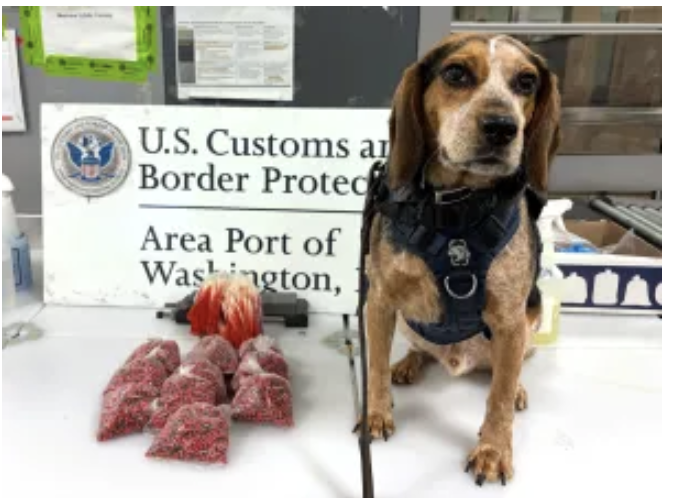
STERLING, Va. — Freddie, a six-year-old beagle who works as an agriculture detector dog for U.S. Customs and Border Protection at Washington Dulles International Airport, has fully returned to duty a year after being assaulted by a traveler, and last month recorded his 200th contraband detection of June alone, according to the agency.
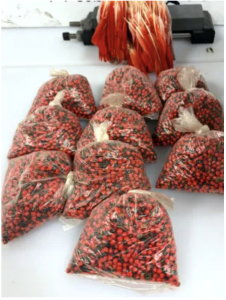
CBP said Freddie’s most recent find came Tuesday, when the beagle alerted to the checked baggage of a U.S. citizen returning from Nigeria. During a secondary examination, CBP agriculture specialists discovered nine bags of Jequirity bean seeds — weighing just over half a pound — along with 170 red tail feathers from the African gray parrot, the agency said. The traveler was released; the feathers are being turned over to inspectors with the U.S. Fish and Wildlife Service.
The June 30 detection marked Freddie’s 200th referral for a secondary examination in the month of June, the agency said.
That the beagle is still on the job at all — let alone posting numbers like that — is what makes the story remarkable. On June 26, 2025, according to CBP, Freddie was working the baggage belt with his handler when he alerted to agricultural products in the checked bag of a 70-year-old Egyptian traveler. The man kicked Freddie in the ribs hard enough to send the small beagle airborne, the agency said. He was later convicted for harming an animal used in law enforcement and removed from the United States. Freddie spent two weeks recovering from his injuries before returning to work.
“Freddie is resilient. What occurred a year ago was despicable, and pained him greatly, but it hasn’t stopped him from continuing his vital role alongside all of our Customs and Border Protection agriculture detector dogs in protecting our nation’s agricultural resources and economic security,” CBP Area Port Director Christine Waugh, of the Area Port of Washington, D.C., said in a statement.
The items intercepted this week both carry regulatory weight. According to CBP, Jequirity bean plants — also known as rosary pea — are common in tropical regions, and their seeds, sometimes called “cat eye seeds,” contain toxic levels of a compound called abrin. The seeds are used in a range of cultural and spiritual practices, including prayer beads, drums, talismans, and ceremonial teas, the agency said. Because of the seeds’ extreme toxicity, they are strictly prohibited or regulated in the United States.
The African gray parrot, meanwhile, is classified as an endangered species and receives the highest level of international protection under the Convention on International Trade in Endangered Species of Wild Fauna and Flora, according to CBP. The agency said the birds are among the most trafficked species in the illegal wildlife trade because of their intelligence and their ability to closely mimic human speech. Each African gray parrot has 12 red tail feathers, and those feathers are used in African spiritual rituals, cultural ceremonies, jewelry, and masks.
CBP agriculture specialists work to prevent the introduction of foreign plant pests, animal diseases, and potential agricultural bioterrorism into the United States. On a typical day last year, according to CBP, agriculture specialists across the country confiscated 4,691 prohibited plant, meat, animal byproduct, and soil items and intercepted 222 insect pests at U.S. ports of entry.
Source: U.S. Customs and Border Protection