
A new Department of Homeland Security data-sharing partnership with private industry is designed to speed up smarter, less intrusive security screening at U.S. airports — including DFW, IAH, Austin-Bergstrom, San Antonio International, and every other airport Texans fly through
WASHINGTON — The Department of Homeland Security’s Science and Technology Directorate has published new details on how it is working with private industry to modernize the security screening technology used at U.S. airports and ports of entry — an effort that officials say could ultimately affect what every Texas air traveler experiences at the security checkpoint.
According to DHS, the Science and Technology Directorate (S&T) is developing a Cooperative Research and Development Agreement, or CRADA, called the Screening System Data Sharing Consortium, which is designed to bring together security equipment manufacturers, algorithm developers, testing labs, synthetic data companies, and the Transportation Security Administration into a single collaborative marketplace for advancing threat detection technology.
The department framed the effort as part of its broader push to modernize screening at the country’s more than 450 domestic commercial airports and at land and sea ports of entry — a category that includes every airport Texans use for business and family travel, from Dallas-Fort Worth International and Houston’s George Bush Intercontinental to Austin-Bergstrom, San Antonio International, El Paso International, Lubbock, and beyond.
Why this matters for Texas travelers
According to DHS S&T, the goal of the new consortium is to help TSA deploy multiple third-party algorithms — the software that actually detects potential threats — across different types of security screening equipment at the same time. Currently, DHS said, algorithm developers struggle to obtain enough diverse data to reliably train their machine-learning models, which limits how quickly new threat-detection capabilities can be certified and rolled out at real-world checkpoints.
The department said the new data-sharing marketplace is intended to accelerate that training process by allowing approved companies to pool large volumes of screening data, which would then be used to improve the algorithms that screen every bag, cargo shipment, and traveler moving through TSA checkpoints.
Practically, DHS said, that means faster development of technologies that could:
Reduce the frequency of pat-downs at the checkpoint.
Make screening less intrusive for travelers with mobility issues, medical devices, or accessibility needs.
Improve detection of hidden threats without slowing down passenger flow at busy airports.
For Texas travelers — who move through some of the busiest airports in the country — those changes would affect the everyday experience of flying. DFW alone processed more than 87 million passengers in recent years, and IAH is one of the largest hubs in the Southern U.S. Any TSA-certified upgrade rolls out across all of them.
The February 2026 industry day
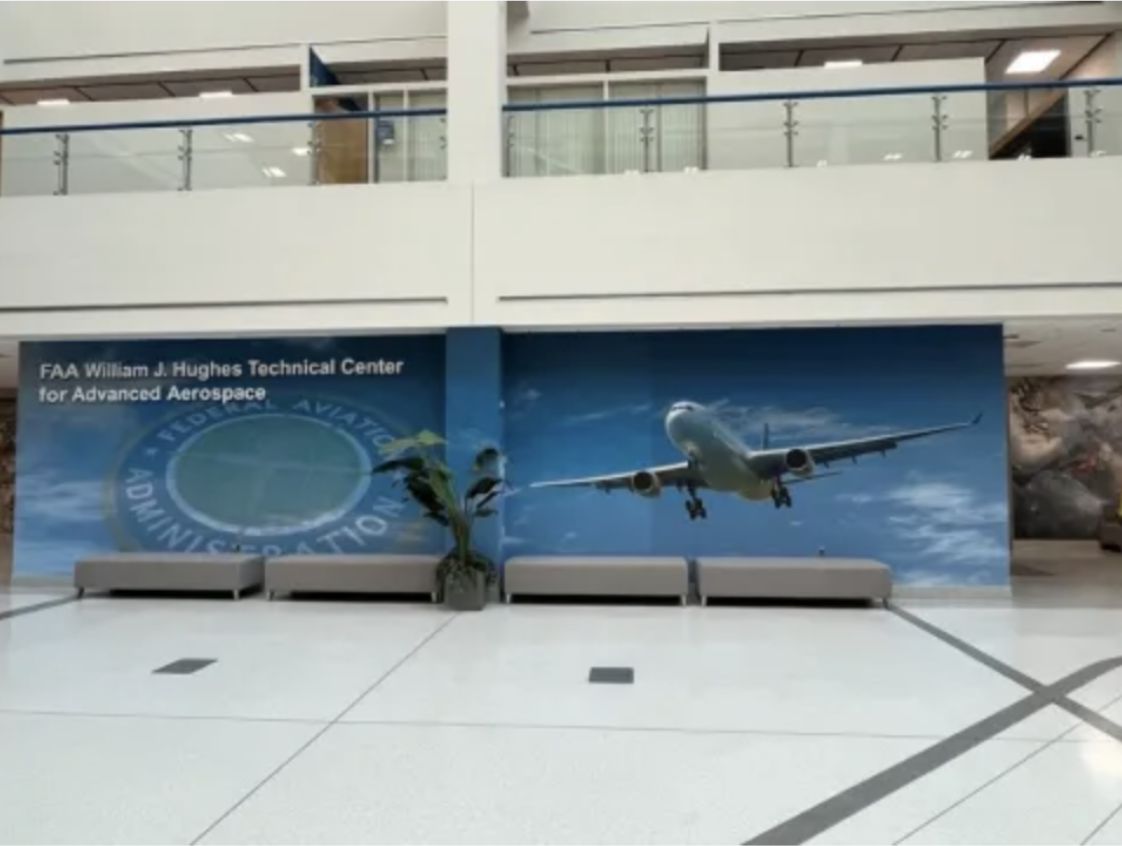
According to DHS, the S&T Transportation Security Laboratory hosted a two-day industry day in mid-February at the Federal Aviation Administration’s William J. Hughes Technical Center for Advanced Aerospace in New Jersey. The event drew companies from a variety of sectors — including AI and machine learning developers, synthetic data companies, and security screening equipment manufacturers — to discuss how to share data more effectively and how to move toward open-architecture screening systems.
According to the department, discussions at the industry day focused on how to efficiently share large amounts of data, how to use AI in daily security operations, and how to apply computer-generated synthetic data to train screening algorithms. The industry day was also used to gather input on the framework for the Screening System Data Sharing Consortium itself, including membership rules, data-handling protocols, and how the government would structure the partnership going forward.
“The advantage of bringing industry together is that this problem is too big for one organization to solve alone. TSL doesn’t have the resources, and individual industry members can’t collect and curate the amount of data they need to train and test their algorithms,” Transportation Security Laboratory Director Dr. Christopher Smith said in a statement. “Together, we can manage that process in a way that expedites the delivery of validated technologies to our TSA customer.”
What’s next: the RCA Data Transfer Hub
According to DHS, TSA is currently developing a cloud-based data repository — called the RCA Data Transfer Hub — that would house data collected by both screening equipment and algorithm developers. Once operational, the department said, the hub would allow approved partners to securely upload, store, and access the datasets needed to train and improve threat-detection systems.
The consortium is envisioned as a “collaborative marketplace” connecting algorithm developers, equipment manufacturers, software developers, testing laboratories, synthetic data providers, and end users, DHS said.
According to the department, the Transportation Security Laboratory will apply targeted guidelines on the types of data shared with third parties, ensuring compliance with classification standards for restricted materials. The Laboratory tests, evaluates, and certifies new screening technologies for nationwide deployment.
“It takes a community to drive innovation, which is why S&T and TSL are grateful for all of our industry partners who are taking the next step in advancing the transportation security screening landscape,” Smith said in a statement.
A word for Texas travelers
Here’s the practical takeaway. The technology in this pipeline — smarter AI algorithms, less intrusive screening, faster checkpoints — is the technology that will eventually roll out at every commercial airport in Texas. TSA certifications happen at the national level, and once a screening system is approved, it deploys across the country. Anything DHS S&T develops in New Jersey today is something a Texas grandmother going through security at El Paso, a college student flying home from Austin, or a business traveler at DFW is likely to encounter over the next several years.
For Texans who fly, especially those with medical devices, mobility limitations, or accessibility needs, the direction of this research matters. Modernized screening tech has the potential to significantly reduce pat-downs and secondary screenings that many travelers find stressful, invasive, or physically difficult.
DHS S&T said continued industry input will shape how the consortium is structured moving forward. More information on the Science and Technology Directorate’s screening work is available at dhs.gov/science-and-technology.
Source: U.S. Department of Homeland Security, Science and Technology Directorate