

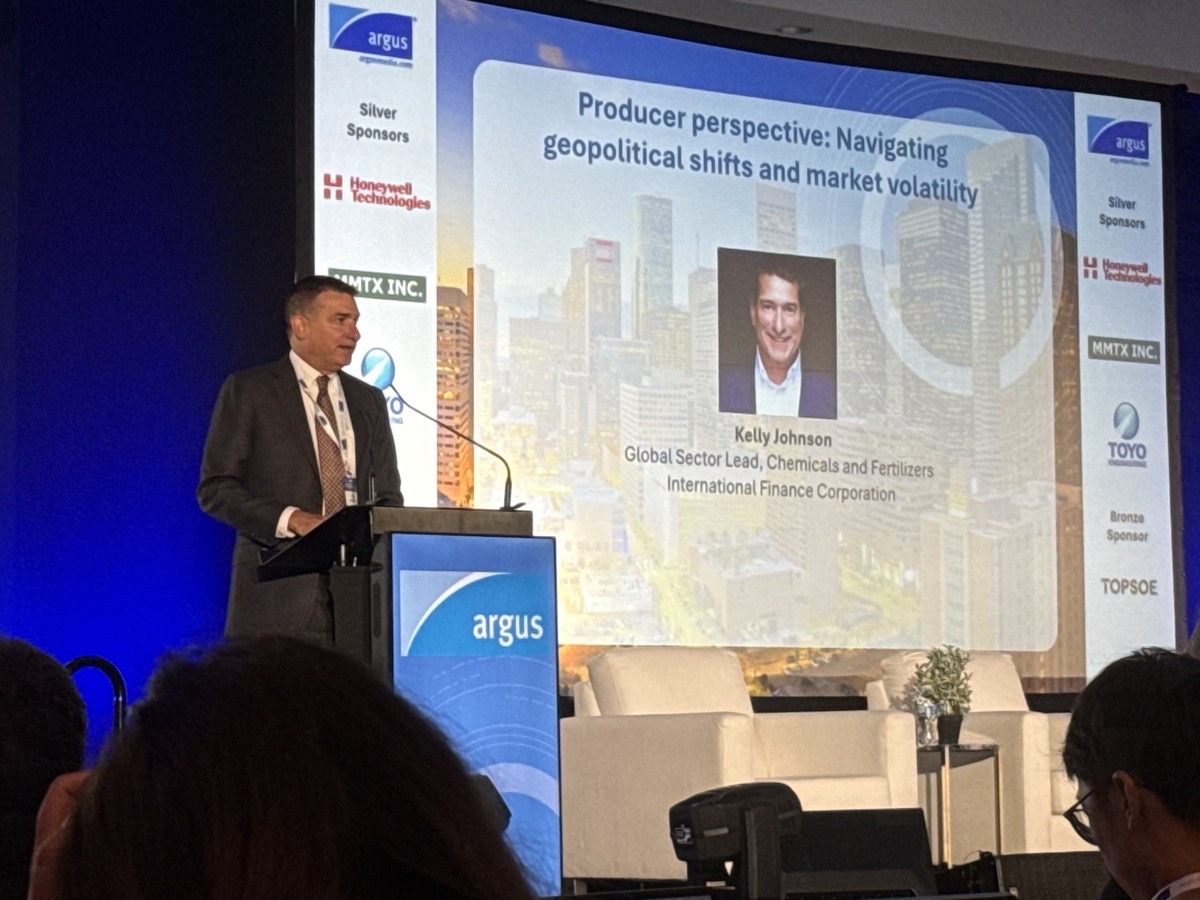
HOUSTON—Energy and chemical industry representatives met Sept. 21–23 at the Argus Methanol & Ammonia Conference to discuss supply risks, rising natural gas demand and rules affecting the use of alternative shipping fuels.
Held at the Hyatt Regency Houston/Galleria, the conference added ammonia to Argus Media’s established methanol event. Methanol is used to make chemicals and fuel, while ammonia is a major ingredient in fertilizer. Natural gas costs and disruptions to global trade affect both industries.
Producers, buyers and analysts discussed prices, supply and demand, and ways to reduce emissions from production.
Companies Seek More Reliable Supplies
Conflict, sanctions and shipping risks are changing how companies plan methanol and ammonia projects, said Kelly Johnson, global sector lead for chemicals and fertilizers at the International Finance Corporation.
These risks can raise transportation, insurance and commodity costs, Johnson said. Natural gas prices also play a major role in determining production costs.

Companies are responding by finding cheaper raw materials, using more suppliers and shipping routes, and considering production in new locations. Some are keeping larger inventories to reduce the risk of shortages.
IFC, a member of the World Bank Group, provides loans and equity financing for private businesses in developing countries. Its projects include chemical and fertilizer plants and facilities designed to produce fewer emissions.
Johnson said investors increasingly consider whether a project can withstand unexpected disruptions. Holding extra supplies and using several sources may cost more, but can help a business continue operating when markets change.
Clearer Rules Needed for Shipping Fuels
Methanol and ammonia could help reduce shipping emissions, but clearer rules are needed to encourage investment, panelists said.
Carlos Torres of Bunker Holding, Sima Santhakumar of Baker Hughes and Stergios Stamopoulos of ABS said methanol is ahead of ammonia in shipping use. Methanol-powered vessels are already operating, more are on order, and facilities for supplying the fuel to ships are expanding.
Ammonia needs more port facilities and additional safety measures before it can be used widely.
The panel said uncertainty over International Maritime Organization rules is slowing investment. Shipowners are reluctant to sign long-term fuel purchase agreements without knowing future requirements. That makes it harder for fuel producers to finance new plants.
 Regional rules and emissions targets set by companies that hire ships also influence fuel choices.
Speakers said shipping companies need several fuel options and vessels that can adapt as prices and regulations change. Fuel producers, ports and shipowners also need to coordinate their investments.
They noted that the emissions benefits of methanol and ammonia depend on how the fuels are made.
Torres and Stamopoulos estimated that low-carbon methanol could reach a 10 percent share of the marine fuel market around 2029–2030. Their estimates for ammonia ranged from 2032 to 2035, depending on regulatory progress.
LNG Exports Increase Competition for Gas
Growing liquefied natural gas exports are increasing competition for U.S. gas supplies, said Jason Womack, editor of Argus Natural Gas Americas.
Womack described how the United States changed over two decades from a country preparing to import large amounts of LNG to the world’s largest exporter.
As Gulf Coast exports grow, utilities in the Southeast are competing more directly with LNG terminals for natural gas, he said.
New and expanded pipelines are helping move gas from the Permian Basin to markets. More projects are planned to supply Gulf Coast export terminals.
Womack said strong supplies and above-average storage levels helped limit gas price increases despite high summer electricity demand. Producers are also becoming more willing to cut output when prices fall too low.
Data centers could add substantial demand, he said, although estimates remain uncertain.
Investment Depends on Buyers and Reliable Supply
The related Argus Sustainable Marine Fuels Conference began in Houston on Sept. 23, continuing discussions about shipping’s future fuel needs.
Speakers at the methanol and ammonia conference pointed to several conditions needed for growth: clear rules, buyers willing to make long-term commitments, and facilities that can reliably produce and deliver fuel.
New shipping markets could create demand for both commodities. Whether planned projects move forward will depend on their ability to control costs, secure customers and keep supplies moving through disruptions.