
Thirty-four years. That’s how long Cynthia Gonzalez’s family has been waiting for answers. Thirty-four years since she disappeared on September 17, 1991, leaving her home to meet a client. Thirty-four years since her body was found shot multiple times in rural Johnson County. Thirty-four years of a cold case, dead ends, and hope that faded but never quite died.
Then something incredible happened. A group of college students in a criminology class at the University of Texas at Arlington asked the right questions—and cracked the case wide open.
On November 6, 63-year-old Janie Perkins was arrested on a charge of capital murder. The cold case that no one could solve? Solved. The family that waited three decades? Finally getting answers.
The Case That Nobody Could Crack
On September 17, 1991, Cynthia Gonzalez was reported missing by her ex-husband. She was 25 years old. She worked as an adult entertainer and had left her Arlington home the night before to meet with a client. Her car was found abandoned just hours later in a neighborhood.
Five days later, police found her body dumped on private property in rural Johnson County. She had been shot multiple times and was decomposing. Detectives pursued numerous leads through the years, but they never made an arrest. The case went cold.
For 34 years, detectives chased leads. For 34 years, her daughter Jessica Roberts—who was just 6 years old when her mother was murdered—waited and hoped someone would finally find out who did this.
A Wild Partnership Changes Everything
Here’s where it gets interesting. Arlington Police Department doesn’t have a full-time cold case unit. Detectives work on unsolved murders between active cases, which means cold cases move slowly—if they move at all.
So the police department made an unconventional decision: partner with University of Texas at Arlington’s Department of Criminology and Criminal Justice.
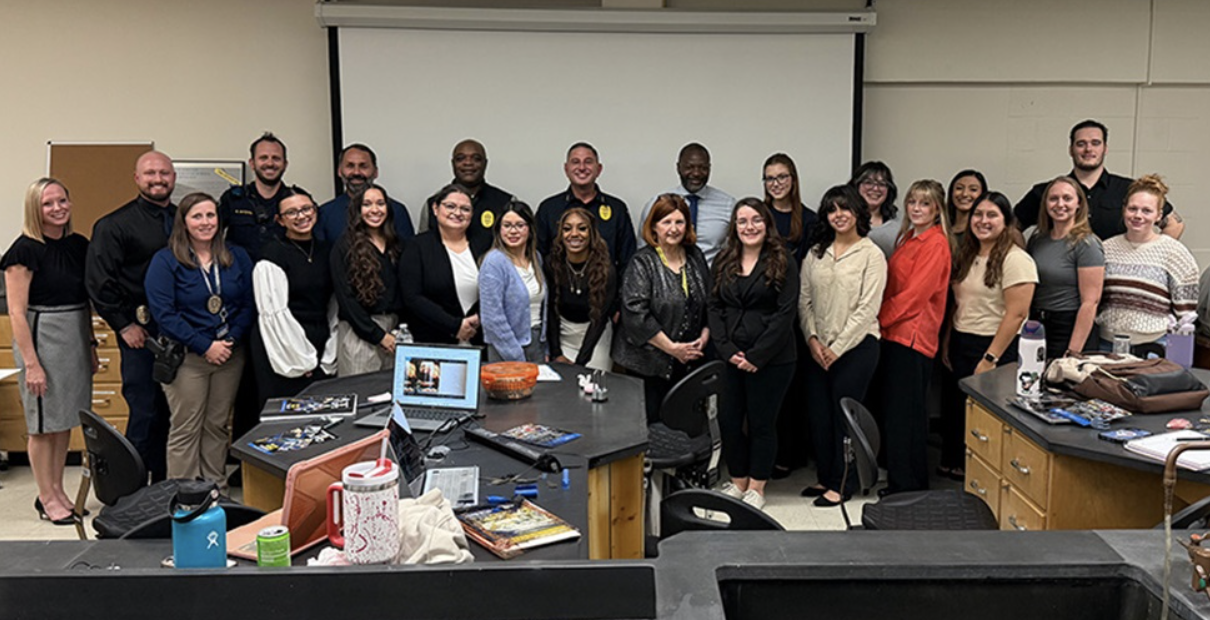
At the start of the fall 2025 semester, UTA launched a brand new advanced course where select students would review real cold cases. Fifteen criminology students were divided into three groups. Each group got one unsolved Arlington murder to investigate. Cynthia Gonzalez’s case was one of them.
The students got access to everything—case files, police reports, lab results, witness statements. The only thing they couldn’t touch was physical evidence. Then they started digging.
The Fresh Eyes That Solved It
The students went to work. They combed through 400-500 files. They looked at crime scene photos. They read police reports written three decades earlier. And they started noticing things.
They discovered that Cynthia Gonzalez and Janie Perkins were friends. They hung out together. But here’s what caught the students’ attention: they shared a romantic partner.
Several weeks before the murder, that partner told Janie Perkins he was ending things with her to be with Cynthia Gonzalez. Then, days later, Cynthia was dead.
The students wrote up questions about Janie Perkins and sent them to the detectives. They wanted to know more about this connection, about this motive, about why someone who had been investigated in the original case was never charged.
What Detectives Found When They Looked Again
When detectives re-examined the files based on the students’ questions, they discovered something shocking: witnesses had come forward over the years saying Janie Perkins admitted to being involved in the murder. She had told people specific details about the killing—details that only someone directly involved would know.
Detectives compared those witness statements to the physical evidence. Everything aligned.
Here’s what they also found in the original files: In the 1990s, Perkins couldn’t provide an alibi for where she was the night Gonzalez went missing. She failed two voluntary polygraph tests when asked if she killed Gonzalez or knew who did. She made statements to investigators saying she was glad Gonzalez was dead. She even said she’d thought about killing her or having someone else do it.
But polygraph tests aren’t admissible in court. Perkins maintained her innocence. Without evidence that would hold up in court, there was nothing to charge her with.
Until now.
With witness statements that aligned with evidence, detectives had enough to move forward. After consulting with the Tarrant County District Attorney’s Office, they filed capital murder charges against Janie Perkins.
On November 6, 2025, the U.S. Marshals North Texas Fugitive Task Force located Perkins in Azle, Texas, and took her into custody without incident.
The Family Finally Gets Answers
Jessica Roberts, Cynthia’s daughter, had no idea any of this was happening. She didn’t even know her mother’s case had been assigned to the UTA program until police called her with news of the arrest.
“I was shocked to get the phone call that not only was my mom’s case already presented to this program, that it had been solved,” Roberts said at a press conference. “I was just beside myself. I only found out last Thursday. It has been a process, and I’m still processing this.”
But then she talked about the students. Her voice filled with gratitude.
“I am so grateful for this program and so proud of these students at UTA and so thankful for the time they have spent and the effort they have put into this case,” Roberts said. “This has been a working case for 34 years and so many people have been involved in this case, not just these students but friends and family members.”
A 6-year-old girl finally knows who killed her mother. After 34 years, her family has answers.
Why This Matters Beyond This One Case
Police Chief Al Jones put it this way: “When we launched our cold case partnership with UTA, we always hoped we’d get an outcome like this one day. I don’t think any of us expected that lightning would strike the first time. I want to sincerely thank the students for their work and dedication to this case. I also want to thank UTA faculty for embracing this program. We hope this is just the first of more to come.”
This is just the beginning. Nearly all 15 students in the course say they intend to pursue careers as forensic scientists, crime scene investigators, or law enforcement officers. They just proved they have what it takes.
And Arlington Police isn’t stopping. The same class of students is currently reviewing two other cold cases. Fresh eyes. Real evidence. Real lives hanging in the balance.
The partnership continues next semester. More cases will be reviewed. More families might get the answers they’ve been waiting for.
The Takeaway
A college homework assignment just solved a 34-year-old murder. Fifteen criminology students did what police hadn’t been able to do in three decades. They asked questions. They dug deeper. They connected dots that nobody else had connected.
This is what justice looks like when people refuse to forget. When a family doesn’t give up hope. When a police department is willing to try something new. When students take their work seriously because they understand real lives depend on it.
Cynthia Gonzalez waited 34 years for justice. She finally got it—thanks to kids in a college classroom who cared enough to ask the right questions.