

Found your legal spot to light them off? Good. Now here’s how to make sure the only thing that goes boom is the firework — keeping your kids, your pets, and all ten fingers safe this Fourth of July
So you’ve checked the rules and found a legal place to set off your fireworks — nice work, neighbor. Now comes the part that really matters: doing it safely. Every Fourth of July, emergency rooms across Texas fill up with burns and injuries that were completely preventable. The good news is that a handful of simple habits keeps the night fun instead of frightening. Here’s your playbook.
Before You Light Anything
A little prep goes a long way. Set yourself up for a safe show with these basics:
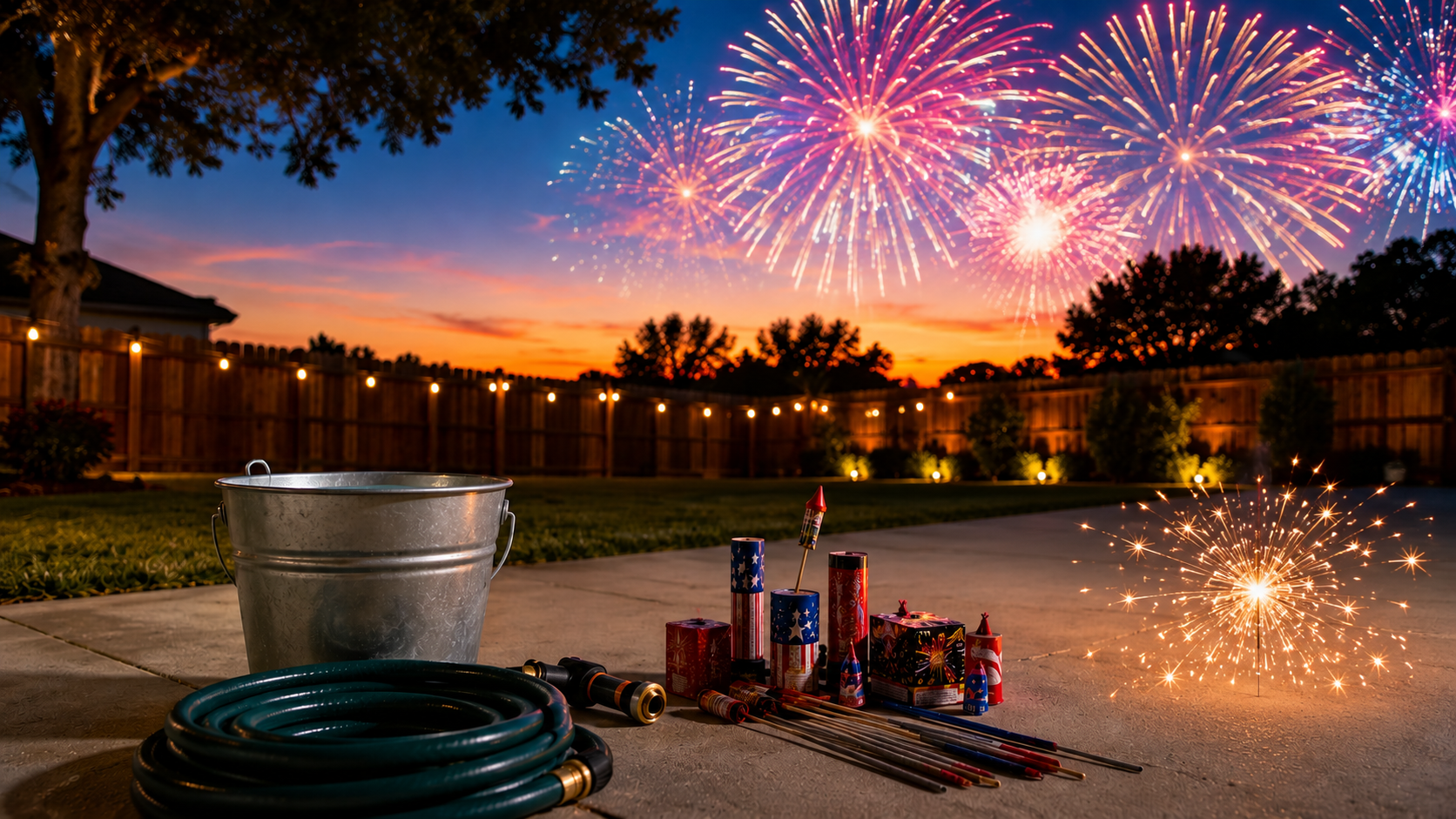
Keep water close at hand — a bucket, a garden hose, or both. You’ll want it for emergencies and for soaking spent fireworks afterward. Pick a wide-open, flat, hard surface like a driveway or bare dirt, well away from your house, dry grass, leaves, brush, and anything that can catch fire. Texas summers are tinder-dry, and a stray spark in dead grass is all it takes to start a fire. Read the label on each firework and follow the directions — they’re there for a reason. And keep your fireworks stored in a cool, dry place until you’re ready, never in your pocket.
The Do’s
Here’s how to actually run the show:
Light one firework at a time, then back away quickly to a safe distance. Never lean over a firework as you light it — keep your face and body clear. Always point fireworks away from people, pets, houses, and vehicles. Have a sober adult in charge of lighting everything; this is not a job to hand off after a few beers (more on that below). Light fireworks on the ground, never in your hand, and never try to hold one as it goes off. Keep spectators well back, behind the person lighting, not off to the sides where a tipped-over firework could reach them.
The Don’ts
And here’s what sends people to the ER every single year:
Never relight a “dud.” If a firework doesn’t go off, don’t go back to it right away and don’t try to light it again — it could still blow. Wait a good 15 to 20 minutes, then soak it in water. Never mix fireworks and alcohol. It’s a tempting combination on a holiday, but drinking and lighting explosives is how serious injuries happen. Designate a sober “fireworks captain” the same way you’d designate a driver. Never point or throw fireworks at another person, even as a joke. Never set them off in glass or metal containers, which can turn into shrapnel. And never try to make your own fireworks or alter the ones you bought.
A Special Word on Kids and Sparklers
Here’s one that surprises people: sparklers are responsible for a huge share of fireworks injuries, especially among little kids. They look harmless, but a sparkler burns at up to 1,800 degrees — hot enough to melt some metals and cause nasty burns in an instant. If you hand them to children, keep a close adult right there, have kids hold them at arm’s length away from their body and clothes, allow only one at a time, and drop the spent sparklers straight into your water bucket (those wires stay scorching hot long after the sparkle dies). Better yet, for the youngest kids, swap sparklers for glow sticks or confetti poppers and save the real thing for the grown-ups.
Don’t Forget the Four-Legged Family
Fireworks are pure terror for a lot of pets — the booms and flashes send dogs and cats bolting, and the Fourth of July is one of the biggest days of the year for lost animals. Keep your pets indoors in a quiet, secure room during fireworks, ideally with a TV or fan running to muffle the noise. Make sure they’re wearing current ID tags and that their microchip info is up to date, just in case. Tire them out with a good walk earlier in the day, and never bring them along to a fireworks display. A calm, safe pet at home beats a frantic search through the neighborhood later.
When the Show’s Over
Don’t quit being careful just because the finale’s done. Soak every used firework — and any duds — in a bucket of water before throwing them away, so nothing reignites in your trash can overnight. Do a quick sweep of your yard and surrounding area for smoldering debris, especially in dry grass. And keep that hose handy until you’re sure everything’s cold and out.
If Something Goes Wrong
For a minor burn, cool it with running water and cover it loosely — don’t use ice, butter, or ointments. For anything serious, like a deep burn, an eye injury, or a hand injury, get medical help right away and call 911. Eye injuries in particular should never be rubbed, rinsed, or pressed — just get to the ER. And if a fire starts that you can’t immediately put out with your water and hose, call 911 first and worry about the fireworks later.
The Bottom Line
Fireworks can be a blast — the good kind — when you respect them. Keep water close, stay sober, keep one adult in charge, watch the kids and the sparklers, protect your pets, and soak everything when you’re done. Do that, and you’ll wrap up the night with great memories and everybody’s eyebrows still intact. Happy Fourth, neighbor — celebrate smart out there.
Next in the series: where to buy real, legal fireworks in Texas — and how to spot the scams and fly-by-night sellers trying to take your money.