

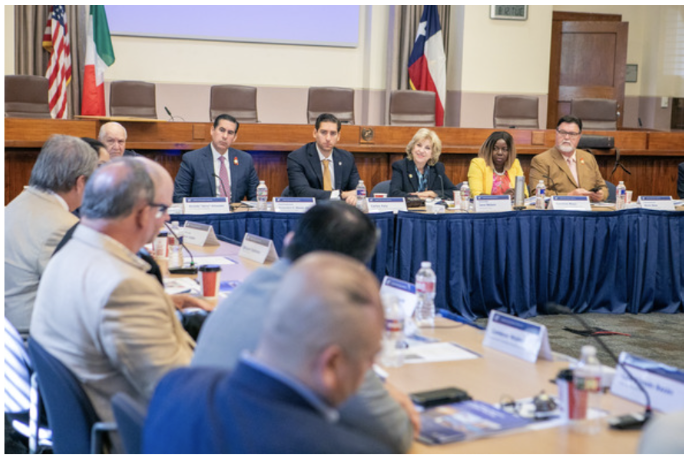
The Texas Border Trade Advisory Committee (BTAC) convened in Austin today for a high-level discussion on strengthening the economic lifelines that connect Texas with Mexico and drive billions of dollars in trade through the Lone Star State.
Chaired by Texas Secretary of State Jane Nelson, the meeting brought together state leaders, trade experts, and binational stakeholders to tackle key legislative developments and infrastructure priorities that affect communities and commerce along the Texas-Mexico border.
Why Border Trade Matters to Texas
“Our international ports of entry are critical to Texas’ economic strength,” Secretary Nelson emphasized during the meeting. “Today’s meeting reinforced our shared commitment to improving cross-border infrastructure, streamlining logistics and supporting policies that benefit communities on both sides of the border.”
The stakes are significant. Texas handles more trade with Mexico than any other state, with cross-border commerce supporting hundreds of thousands of jobs and generating billions in economic activity. The efficiency of border crossings directly impacts everything from manufacturing supply chains to fresh produce reaching American grocery stores.
Key Topics and Updates
Committee members heard comprehensive briefings on several critical initiatives:
89th Legislative Session Panel: Discussion of recent legislative developments affecting border trade and infrastructure funding.
Texas-Mexico Border Transportation Master Plan: Updates on this comprehensive blueprint for improving transportation networks and reducing bottlenecks at international crossings.
Border Region Connectivity Plan: Progress report on efforts to enhance connectivity and mobility across the border region.
Binational Collaboration
Representatives from the Mexican border states of Tamaulipas, Nuevo León, Chihuahua, and Coahuila provided detailed briefings on cross-border infrastructure projects and economic development initiatives. These partnerships are essential since trade flows require coordination on both sides of the border to be effective.
The presence of both Mexican and Canadian Consuls General highlighted the international scope of Texas trade relationships and the importance of maintaining strong diplomatic and economic ties with key trading partners.
High-Level Participation
The meeting’s roster reflected the priority Texas places on border trade issues:
- Secretary of State Jane Nelson (Committee Chair)
- Mayor Kirk Watson of Austin
- Senator Sarah Eckhardt
- Travis County Judge Andy Brown
- Transportation Commissioners Alvin New and Alex Meade
- Consuls General of Mexico and Canada
The Committee’s Role
The Border Trade Advisory Committee was created specifically to provide guidance to the Texas Department of Transportation (TxDOT) on border trade and transportation-related issues. The committee meets regularly as part of Texas’ strategy to maintain its position as a global trade leader while ensuring border operations remain strong, secure, and efficient.
This regular convening process allows state officials to stay current on evolving trade patterns, infrastructure needs, and policy changes that could affect the flow of goods and people between Texas and its international partners.
Looking Forward
As supply chains continue to evolve and nearshoring brings more manufacturing closer to the U.S.-Mexico border, the work of committees like BTAC becomes increasingly important. The infrastructure decisions made today will determine Texas’ competitiveness in international trade for decades to come.
The committee’s focus on both physical infrastructure improvements and policy streamlining reflects the complex nature of modern border trade, where success depends on coordination across multiple levels of government and various stakeholder groups.
For Texas communities along the border, these discussions translate into jobs, economic opportunity, and the infrastructure investments needed to handle growing trade volumes while maintaining security and efficiency at international crossings.