
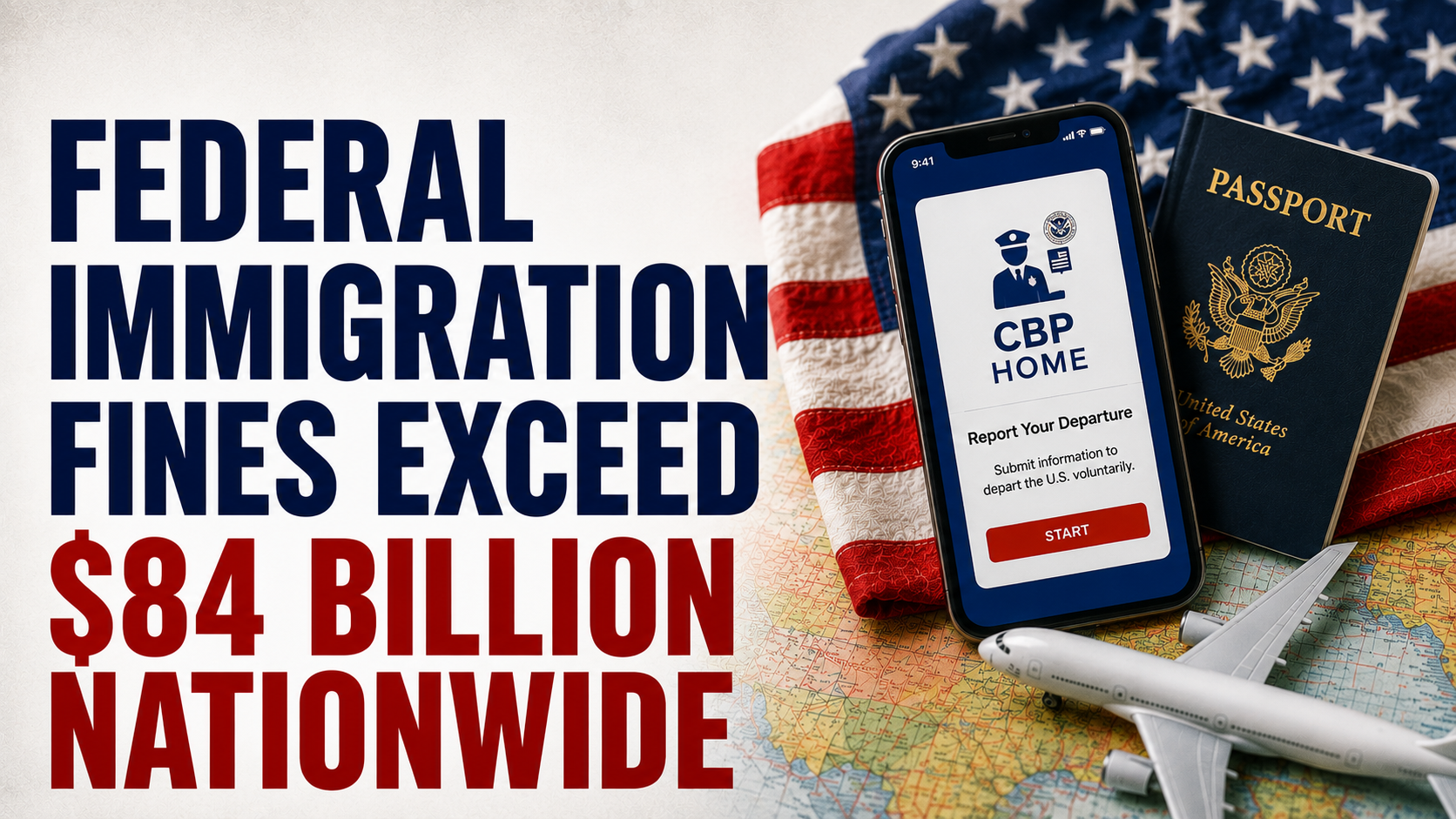
WASHINGTON — The Department of Homeland Security has announced that it has issued more than 103,000 civil immigration fines totaling approximately $84 billion to individuals in the United States who did not voluntarily depart after receiving a final order of removal, according to the department.
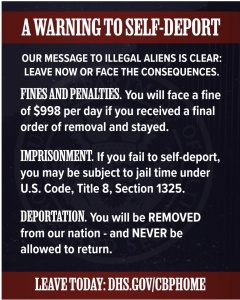
According to DHS, the fines have been issued since the beginning of the current Trump administration and reflect enforcement of a federal statute that permits civil penalties of up to $998 per day for individuals who fail to depart the U.S. after an immigration judge or federal authority has issued a final order of removal. The fines are civil, not criminal.
How the enforcement mechanism works
According to DHS, in June 2025 the department and the U.S. Department of Justice announced a streamlined process for issuing these civil fines. Under the updated procedures, the department said:
The 30-day notice period previously required before a fine could be issued has been eliminated.
DHS immigration officers are authorized to send fines to individuals by regular mail.
The process for contesting fines has been shortened.
The changes have significantly increased the pace at which the department can issue fines, according to DHS.
Fines forgiven for those who use the CBP Home app
Here’s the alternative DHS is highlighting alongside the fines. According to the department, individuals subject to a final order of removal can avoid these civil penalties by using the CBP Home app to arrange voluntary departure. Under the current program, DHS said, individuals who depart using the app receive:
Forgiveness of any civil fines or penalties for failing to depart.
A free government-arranged flight to their country of origin.
A $2,600 exit bonus paid upon confirmed departure.
According to DHS, the offer applies to individuals who use the CBP Home app before enforcement action is initiated against them.
Statement from the Assistant Secretary
“Under President Trump and Secretary Mullin, DHS is working faster than ever before to remove criminal illegal aliens from our country,” Acting Assistant DHS Secretary Lauren Bis said in a statement. “Our message to illegal aliens is clear: LEAVE NOW. If you don’t you will face the consequences, including fines, arrest, and deportation. Illegal aliens have a choice: They can use the CBP Home app and receive a free flight home and $2,600, or be fined, arrested, and deported.”
Context and background
According to the U.S. Citizenship and Immigration Services, the civil penalty for failure to depart after a final order of removal was established in Section 274D of the Immigration and Nationality Act and has been a feature of federal immigration law for years. Under the current administration, enforcement of the provision has been significantly expanded, and the streamlined process announced in June 2025 has accelerated the pace at which fines are issued.
DHS did not specify what portion of the $84 billion in issued fines has been collected. Federal civil fines against individuals subject to removal proceedings may be difficult to collect in practice due to financial circumstances or departure from the country.
How this affects Texans and Texas
Texas has one of the largest populations of individuals in immigration proceedings of any state in the country. Texas immigration courts — located in San Antonio, Houston, Dallas, and El Paso — issue final orders of removal that can trigger the $998-per-day civil penalty under this framework. Any Texan or Texas family with a member currently in immigration proceedings or subject to a final order of removal may be directly affected by both the fines and the alternative CBP Home app process.
Texas has also been at the forefront of coordinated federal, state, and local immigration enforcement in recent years, including the state’s ongoing implementation of Senate Bill 4 and various 287(g) partnerships between ICE and Texas county sheriff’s offices.
Legal debate over the fines
The civil penalty structure and the streamlined enforcement process have been the subject of ongoing legal debate. Immigrant rights advocates and some legal scholars have raised concerns about due process protections in the shortened contest process, the elimination of the 30-day notice period, and the constitutional questions raised by the size of the fines relative to individuals’ financial capacity. The federal government has argued that the fines are authorized under existing federal law and are being applied consistent with statutory authority.
Resources
Individuals with questions about the CBP Home app, voluntary departure, or the civil fine process can find information at the U.S. Citizenship and Immigration Services website at uscis.gov. Anyone facing immigration proceedings should consult with a qualified immigration attorney about their specific circumstances.
Source: U.S. Department of Homeland Security