
Today marks the fifth annual National Fentanyl Awareness Day. Since President Trump took office in January 2025, CBP has seized more than 12,700 pounds of fentanyl before it could reach American communities.
Today, the Department of Homeland Security is observing National Fentanyl Awareness Day — remembering the lives this drug has destroyed and honoring the customs and border protection officers who intercept it before it reaches American streets.
National Fentanyl Awareness Day was founded by Song for Charlie and families who lost loved ones to fentanyl overdoses. Now in its fifth year, the observance brings together law enforcement, public health organizations, schools, corporations, and families across the country to raise awareness about the dangers of illegally made fentanyl — and to promote actions that can save lives.
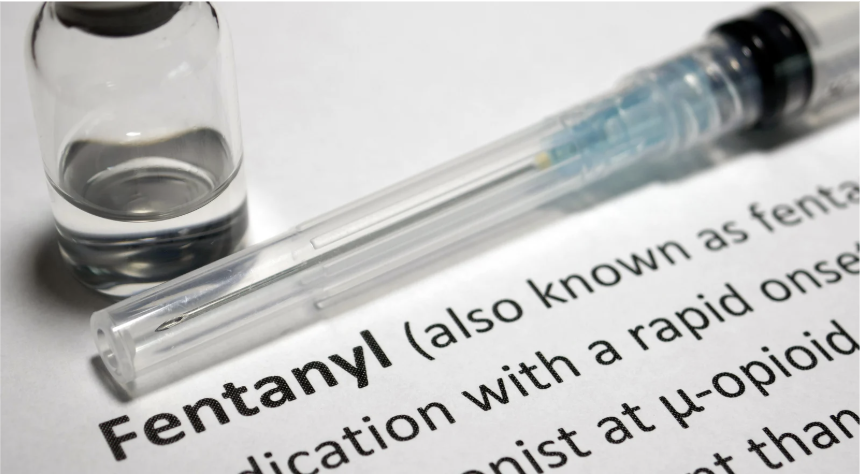
Fentanyl is a synthetic opioid between 50 and 100 times more potent than morphine, often laced into other illicit drugs without the user’s knowledge. Just two milligrams — the equivalent of a few grains of salt — can be fatal. A single counterfeit pill, indistinguishable from a legitimate prescription medication, can kill. In 2023, under the Biden Administration, fentanyl claimed the lives of nearly 73,000 Americans — the equivalent of a sold-out football stadium — while shattering families across every corner of the country.
The Numbers Under the Trump Administration
Since President Trump returned to office in January 2025, U.S. Customs and Border Protection has seized 12,743 pounds of fentanyl at the border — a volume that represents an enormous number of potential deaths prevented.
“The Biden administration left our border wide open for drug cartels to pour drugs into the country and profit off of killing Americans,” said Acting Assistant Secretary Lauren Bis. “Under President Trump, we are dismantling drug cartels. Thanks to our secure border, we have cut down the flow of fentanyl and other deadly drugs into our communities. We have saved countless American lives by stopping these poisons from entering the country.”
A Mother’s Story — and a New Law
Behind the statistics are real families. Anne Fundner is one of the Angel Mothers whose son’s death has become a driving force behind federal action on fentanyl. Her 15-year-old son Weston died after unknowingly taking a fentanyl-laced pill — one of the thousands of counterfeit pills that cartels produce to mimic legitimate prescription medications.
In August, Fundner stood alongside President Trump as he signed the Halt All Lethal Trafficking of Fentanyl Act into law. The legislation classifies fentanyl-related substances under Schedule I of the Controlled Substances Act, giving law enforcement agencies including CBP and Homeland Security Investigations greater authority to crack down on fentanyl trafficking and imposing stiffer penalties on those who traffic it.
What Texas Sees at the Border
Texas ports of entry sit on the front lines of fentanyl interdiction. CBP officers at crossings like Pharr, Hidalgo, Laredo, and El Paso regularly intercept fentanyl shipments — often concealed in commercial trucks, passenger vehicles, and cargo containers. The seizures reported in recent weeks from South Texas crossings are part of this broader national effort to stop the cartels that manufacture and distribute fentanyl from flooding American communities with the drug.
For Texas families, this fight is personal. Fentanyl does not discriminate by age, background, or community — it has taken teenagers in suburban neighborhoods, young adults at parties, and adults who had no idea what they were actually taking.
What to Know About Fentanyl
Fentanyl is now the leading cause of death for Americans aged 18 to 45. From 2020 to 2024, 75 percent of overdose deaths among young people ages 10 to 19 involved fentanyl — often through counterfeit pills they had no idea were laced. Counterfeit pills are manufactured to look identical to legitimate prescription medications — Xanax, Adderall, Percocet, and others. There is no way to identify a fentanyl-laced pill by sight, taste, or smell.
Naloxone, also known as Narcan, can reverse a fentanyl overdose if administered quickly. It is available without a prescription at most Texas pharmacies. Carrying Narcan is one of the most meaningful steps any family can take.
How to Help Today
Share information with your family, your kids, and your community. Talk to teenagers about counterfeit pills — nearly half of U.S. teens are unaware that pills sold online or on the street are often laced with fentanyl. Follow and share on social media using the hashtags #NationalFentanylAwarenessDay, #StopOverdose, and #NFAD2026.
If you or someone you know is struggling with substance use, SAMHSA’s National Helpline is available 24 hours a day, 7 days a week at 1-800-662-4357. The service is free, confidential, and available in English and Spanish.
For Texas-specific resources visit hhs.texas.gov/services/mental-health-substance-use. For more information on CBP’s ongoing fentanyl interdiction efforts, visit cbp.gov/border-security/frontline-against-fentanyl. For the DEA’s Faces of Fentanyl memorial exhibit, visit dea.gov/fentanylawareness.