
U.S. Customs and Border Protection’s Survivor Advocates stand beside grieving families not just at the funeral — but for years afterward. This is their story.
Every May, National Police Week brings law enforcement agencies, families, and communities together to honor those who made the ultimate sacrifice in service to the country. For U.S. Customs and Border Protection — America’s largest law enforcement organization with more than 69,000 men and women protecting the nation’s borders by ground, air, and sea — that week carries a weight that goes beyond ceremony.
At the heart of CBP’s tribute to its fallen is the annual Valor Memorial and Wreath Laying Ceremony in Washington, D.C. — a moment of solemn remembrance where names are engraved in memoriam and families are surrounded by the agency that their loved ones served. But for CBP, honoring the fallen does not end when the ceremony does.
The Promise That Survivor Advocacy Keeps
When a CBP officer or agent dies in the line of duty, the agency’s chaplains, peer support teams, honor guard, and leadership rally around the family immediately. The funeral is handled with full honors. The community shows up. And then — as it does in so many institutions — the formal support gradually steps back as personnel return to their duties.
Survivor Advocates are the ones who stay.
Established in 2018, CBP’s Survivor Advocacy program was built specifically to fill that gap — to carry the agency’s fundamental promise forward from ceremony into everyday life: You will always be part of our CBP family.
Survivor Advocates stand beside families of fallen colleagues and by the families of those lost to suicide, helping survivors navigate one of the most difficult periods any human being can face. They do not disappear after the burial. They remain — in the weeks, the months, and often the years that follow a loss — available for whatever the family needs.
What Survivor Advocates Actually Do
The work is both practical and deeply personal. Survivor Advocates help families navigate the paperwork and bureaucratic complexity that follows a Line of Duty Death, working alongside Retirement and Benefits specialists to ensure survivors access the benefits they are entitled to as quickly as possible. In moments of acute grief, the last thing a family should be doing is fighting through forms and systems alone.
Advocates also connect families with crisis intervention support, grief counseling resources, and mental and emotional health services — through CBP programs and through national, state, and local community organizations. They identify scholarship opportunities for surviving children, some of which can be secured years before a child enters college, giving families the ability to invest in their child’s future even in the midst of loss.
And perhaps most importantly, Survivor Advocates build community. Families who have lost someone to the same calling — who carry the same kind of grief — find each other through the connections that Advocates help facilitate. Over time, that community of shared loss becomes a source of strength.
Honoring the Fallen at the Valor Ceremony
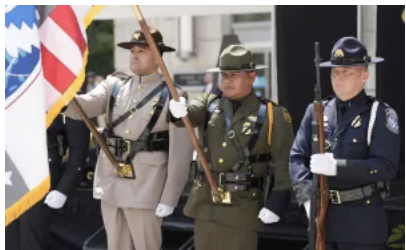
The annual Valor Memorial and Wreath Laying Ceremony is the most visible moment of CBP’s commitment to its fallen heroes. Survivor Advocates play a key role in the event — ensuring names are engraved in memoriam, supporting families throughout the ceremony, and helping facilitate meaningful engagement with CBP leadership. For many families, it is one of the most powerful days of the year — a reminder that the sacrifice of their loved one is not forgotten by the agency they served.
Joining This Work
CBP welcomes dedicated, service-minded individuals who feel called to this kind of sustained, meaningful service. The role requires steadiness, resilience, and a genuine commitment to walking alongside others through their most difficult moments — not as a temporary presence, but as a lasting one.
Those interested in becoming a Survivor Advocate can explore current opportunities at usajobs.gov. Service members approaching their separation date are encouraged to apply through the Department of Defense SkillBridge Program, which allows transitioning military members to gain civilian work experience before leaving service.
“With every act of care, Survivor Advocates ensure the sacrifices of our fallen are honored and their families remain a cherished part of the CBP community,” the agency said. “The courage of those who gave everything will never be forgotten. Their legacy endures in the lives they touched and the nation they served.”
For more information on CBP’s mission and programs, visit cbp.gov.
CBP hosts the 2025 Valor Memorial and Wreath Laying Ceremony in Washington, D.C.